
研究炔烃插入金(III)的反应
Interrogating the Insertion of Alkynes into Gold(III).
作者信息
Martín Jaime, Schörgenhumer Johannes, Nevado Cristina
机构信息
Department of Chemistry, University of Zurich, Winterthurerstrasse 190, Zurich, CH 8057, Switzerland.
出版信息
JACS Au. 2025 Feb 26;5(3):1439-1447. doi: 10.1021/jacsau.5c00056. eCollection 2025 Mar 24.
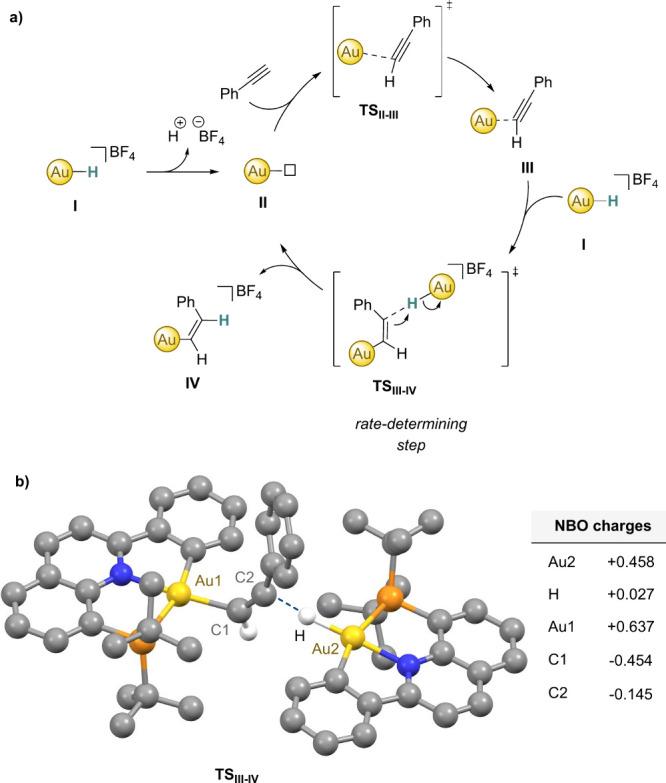
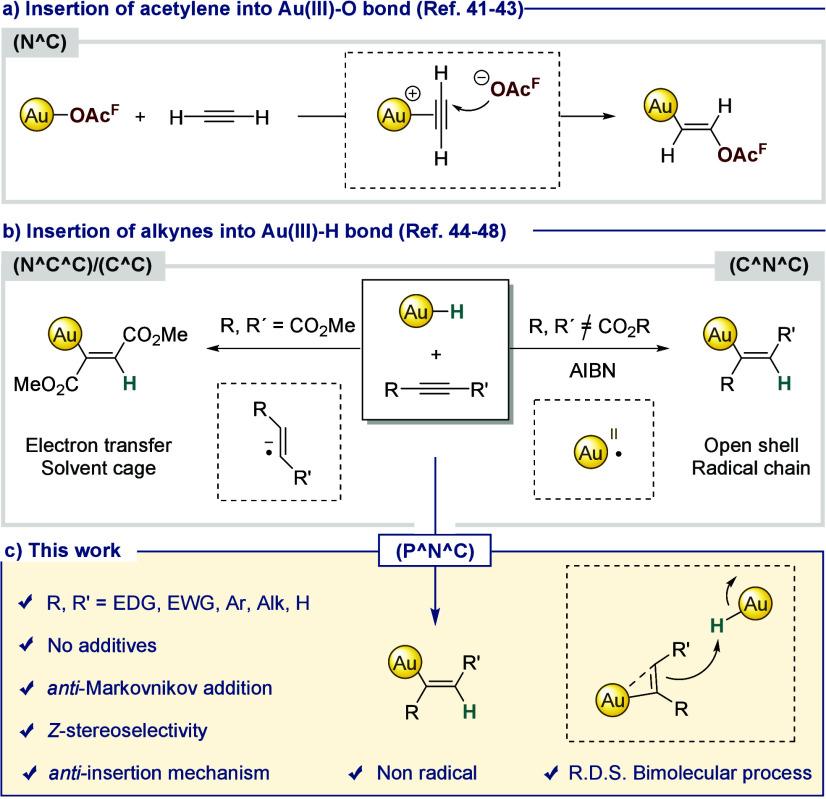
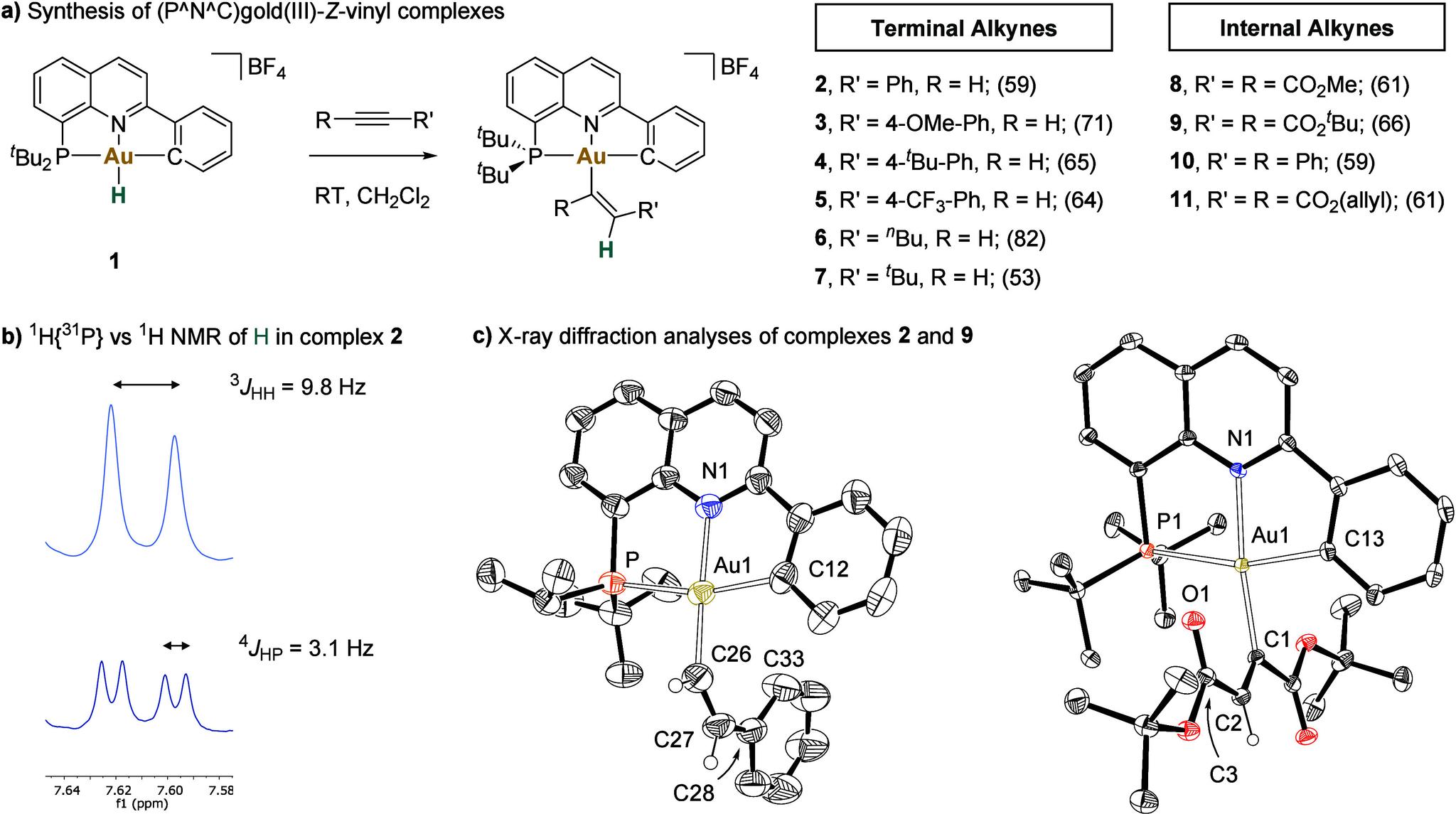
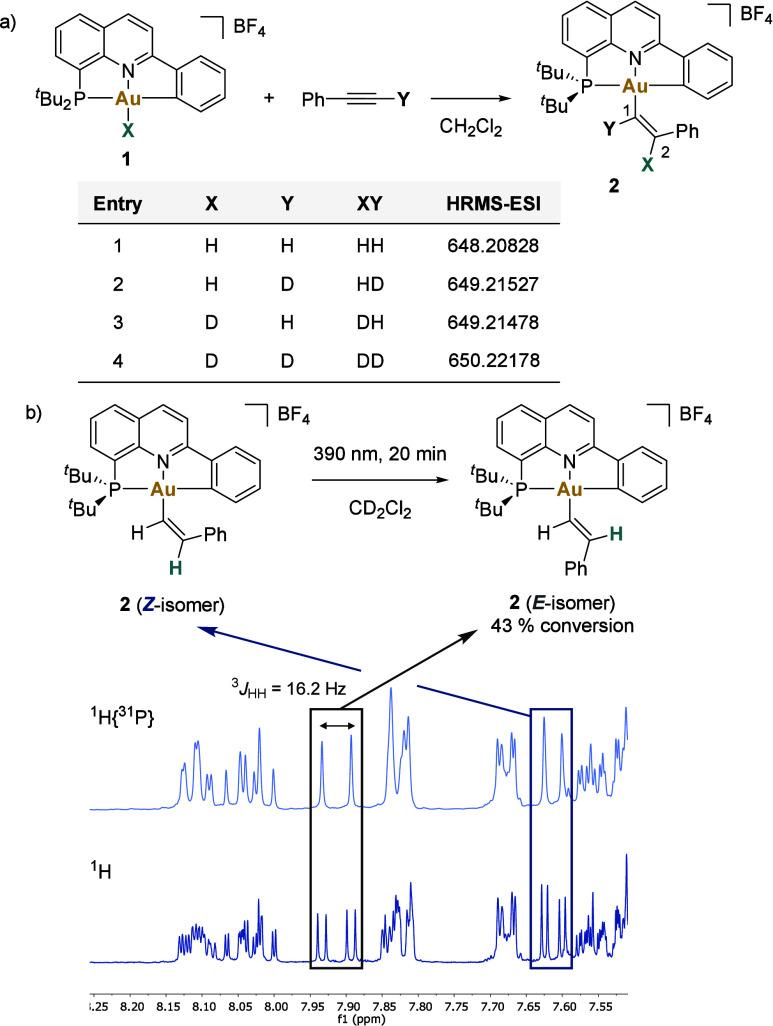
Alkyne hydrofunctionalizations are a powerful strategy to efficiently build up structural complexity. The selectivity of these reactions is typically governed by the interaction between the alkyne and a metal-hydride, which commonly proceeds via a well-understood -insertion mechanism. In contrast, -insertions are far less common, with proposed mechanisms often extrapolated from literature precedents rather than grounded in direct experimental evidence. While gold complexes rank among the most efficient catalysts for such transformations, the mechanistic understanding of the key alkyne insertion step remains incomplete. In this study, we demonstrate that stable gold(III)-hydrides, featuring a (PNC) ligand, undergo selective insertion of alkynes to yield the corresponding -Markovnikov -vinyl complexes. A combination of control experiments, kinetic studies, and computational analyses reveals a nonradical, bimolecular insertion process, in which water plays a pivotal role by accelerating the reaction and potentially stabilizing a highly reactive, T-shaped gold(I) intermediate. Notably, this is the first demonstration of the insertion of both activated and unactivated terminal and internal alkynes into a gold(III)-hydride complex.
炔烃氢官能化是一种有效构建结构复杂性的强大策略。这些反应的选择性通常由炔烃与金属氢化物之间的相互作用决定,其通常通过一种广为人知的插入机制进行。相比之下,插入则要少见得多,所提出的机制往往是从文献先例推断而来,而非基于直接的实验证据。虽然金配合物是此类转化中最有效的催化剂之一,但对关键炔烃插入步骤的机理理解仍不完整。在本研究中,我们证明了具有(PNC)配体的稳定金(III)氢化物会发生炔烃的选择性插入,生成相应的马氏规则的乙烯基配合物。一系列对照实验、动力学研究和计算分析揭示了一个非自由基的双分子插入过程,其中水通过加速反应并可能稳定一种高活性的T形金(I)中间体而发挥关键作用。值得注意的是,这是首次证明活化和未活化的端炔和内炔均能插入到金(III)氢化物配合物中。


 Zotero 插件