
白藜芦醇对慢性粒细胞白血病细胞关键基因的调控及DNA片段化作用
Resveratrol-Induced Modulation of Key Genes and DNA Fragmentation in Chronic Myeloid Leukemia Cells.
作者信息
Alhawamdeh Laith, Almajali Belal, Atoom Ali M, Saad Hanan Kamel M, Madi Razan, Al-Jamal Hamid Ali Nagi
机构信息
Department of Medical Laboratory Sciences, Faculty of Allied Medical Sciences, Al-Ahliyya Amman University, Amman 19328, Jordan.
School of Biomedicine, Faculty of Health Sciences, Gong badack Campus, University Sultan Zainal Abidin, Kuala Nerus 21300, Terengganu, Malaysia.
出版信息
Asian Pac J Cancer Prev. 2025 Mar 1;26(3):905-911. doi: 10.31557/APJCP.2025.26.3.905.
OBJECTIVE
Chronic myeloid leukemia (CML) is a hematologic malignancy characterized by the BCR-ABL1 fusion gene, which drives the uncontrolled proliferation of myeloid cells. Despite advancements in treatment, resistance to conventional therapies remains a significant challenge. Resveratrol, a natural polyphenol, has garnered attention for its potential therapeutic properties, including its ability to modulate key genes and induce apoptosis in cancer cells. This study investigated the effects of resveratrol on apoptosis, cell cycle regulation, and DNA fragmentation in CML cells.
METHODS
K562 CML cells were treated with resveratrol, and their effects were analyzed through CCK-8 assay for cell viability, TUNEL assay for DNA fragmentation, and real-time PCR for gene expression. Key apoptotic genes (BCL-2, AIF, BAX) were assessed alongside survival-related genes (CASP3, PGC1α, Cyclin-D1, p53) to evaluate resveratrol's anti-proliferative and pro-apoptotic potential.
RESULT
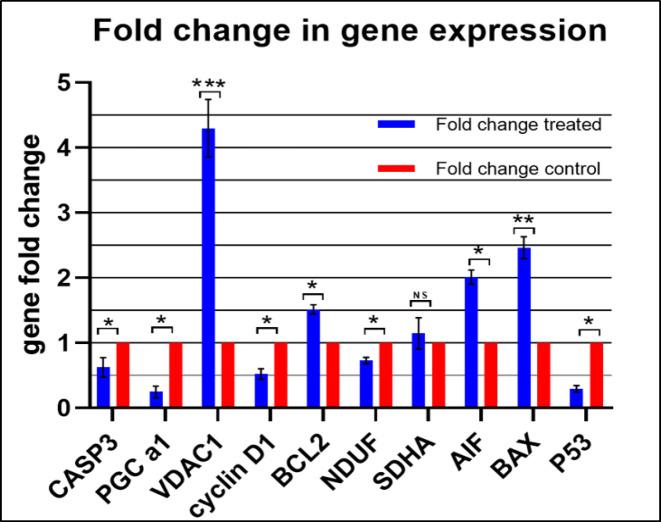
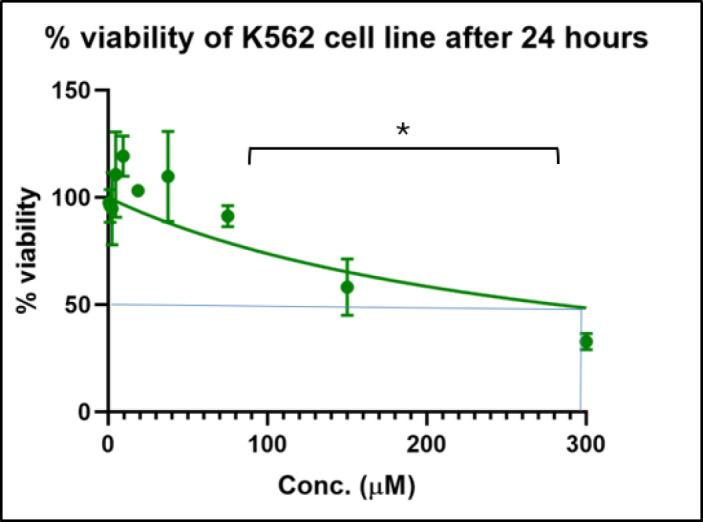
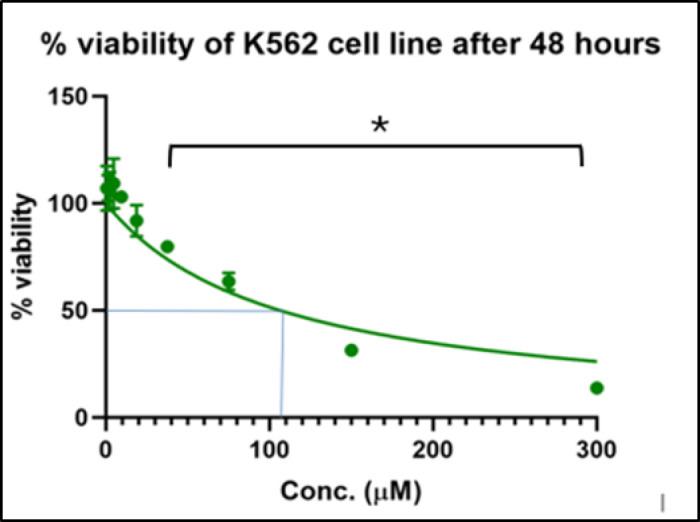
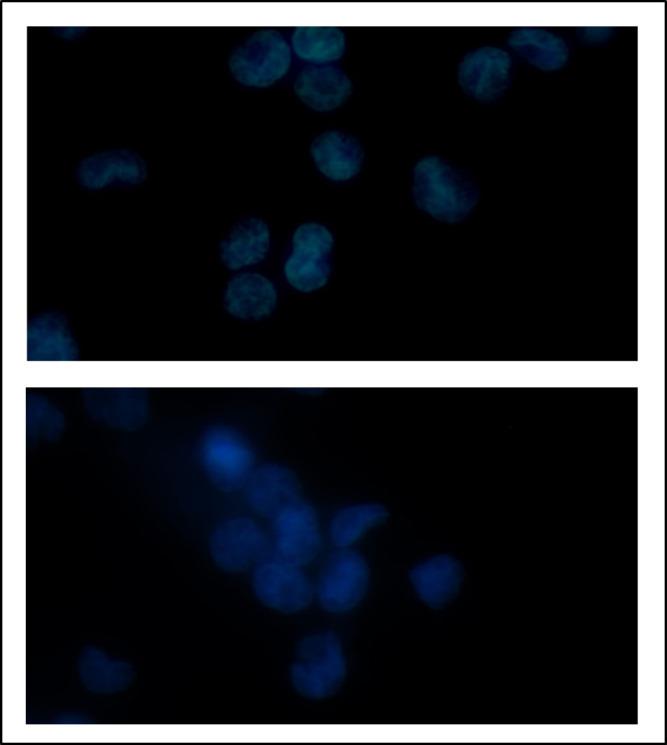
Resveratrol exhibited a time-dependent reduction in K562 cell viability, with IC₅₀ values decreasing from 282.2 µM at 24 hours to 107.1 µM and 102.4 µM at 48 and 72 hours, respectively. Apoptotic activity, assessed via the TUNEL assay, revealed significant DNA fragmentation in 55 ± 5% of treated cells, while control cells showed no fragmentation. Gene expression analysis demonstrated upregulation of pro-apoptotic genes, including BCL-2, AIF (p < 0.05), BAX (p < 0.01), and VDAC1 (4.5-fold, p < 0.001). Conversely, genes linked to cell survival and metabolism, such as CASP3, PGC1α, NDUFA9, Cyclin-D1, and p53, were slightly downregulated (p < 0.05), highlighting resveratrol's dual role in promoting apoptosis and inhibiting cell survival.
CONCLUSION
These findings suggest that resveratrol exerts anti-proliferative and pro-apoptotic effects in CML cells by modulating key genes and induction of DNA fragmentation, highlighting its potential as a therapeutic agent for CML treatment.
目的
慢性髓性白血病(CML)是一种血液系统恶性肿瘤,其特征在于BCR-ABL1融合基因,该基因驱动髓样细胞的不受控制的增殖。尽管治疗取得了进展,但对传统疗法的耐药性仍然是一个重大挑战。白藜芦醇是一种天然多酚,因其潜在的治疗特性而受到关注,包括其调节关键基因和诱导癌细胞凋亡的能力。本研究调查了白藜芦醇对CML细胞凋亡、细胞周期调控和DNA片段化的影响。
方法
用白藜芦醇处理K562 CML细胞,并通过CCK-8法检测细胞活力、TUNEL法检测DNA片段化以及实时PCR检测基因表达来分析其作用效果。评估关键凋亡基因(BCL-2、AIF、BAX)以及与生存相关的基因(CASP3、PGC1α、细胞周期蛋白D1、p53),以评估白藜芦醇的抗增殖和促凋亡潜力。
结果
白藜芦醇对K562细胞活力呈现出时间依赖性降低,IC₅₀值从24小时时的282.2μM分别降至48小时时的107.1μM和72小时时的102.4μM。通过TUNEL法评估的凋亡活性显示,55±5%的处理细胞中存在显著的DNA片段化,而对照细胞未显示片段化。基因表达分析表明促凋亡基因上调,包括BCL-2、AIF(p<0.05)、BAX(p<0.01)和VDAC1(4.5倍,p<0.001)。相反,与细胞存活和代谢相关的基因,如CASP3、PGC1α、NDUFA9、细胞周期蛋白D1和p53,略有下调(p<0.05),突出了白藜芦醇在促进凋亡和抑制细胞存活方面的双重作用。
结论
这些发现表明,白藜芦醇通过调节关键基因和诱导DNA片段化在CML细胞中发挥抗增殖和促凋亡作用,突出了其作为CML治疗药物的潜力。


 Zotero 插件