
具有多因素控释功能的ROS激活纳米水凝胶支架用于骨软骨缺损的靶向双谱系修复
ROS-Activated Nanohydrogel Scaffolds with Multi-Factors Controlled Release for Targeted Dual-Lineage Repair of Osteochondral Defects.
作者信息
Wang Xiuhui, Wu Shunli, Li Ruiyang, Yang Huijian, Sun Yue, Cao Zijie, Chen Xiao, Hu Yan, Zhang Hao, Geng Zhen, Bai Long, Shi Zhongmin, Xu Ke, Tan Hongbo, Su Jiacan
机构信息
Institute of Translational Medicine, Shanghai University, Shanghai, 200444, China.
Organoid Research Center, Shanghai University, Shanghai, 200444, China.
出版信息
Adv Sci (Weinh). 2025 May;12(20):e2412410. doi: 10.1002/advs.202412410. Epub 2025 Mar 29.
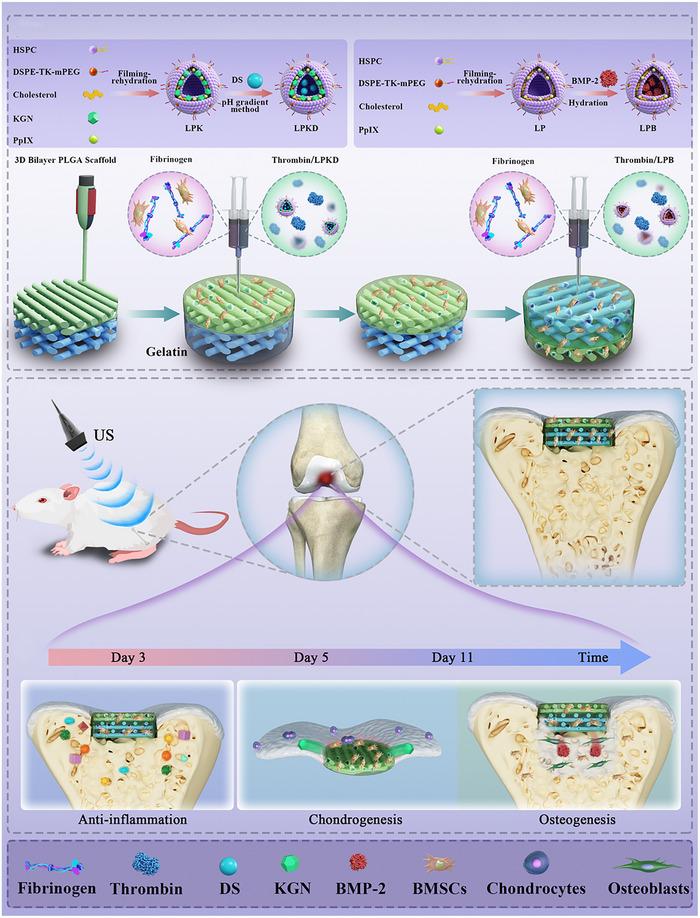
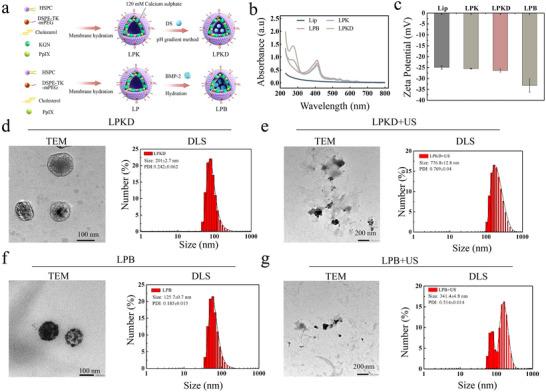
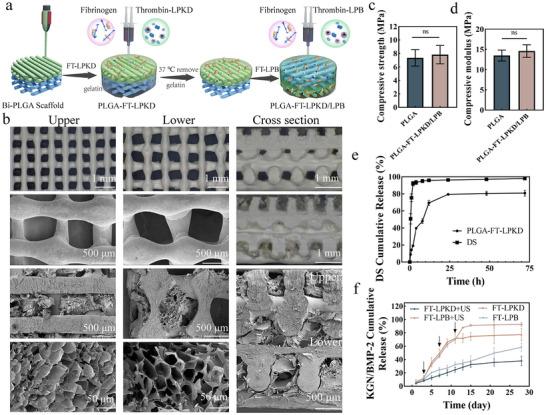
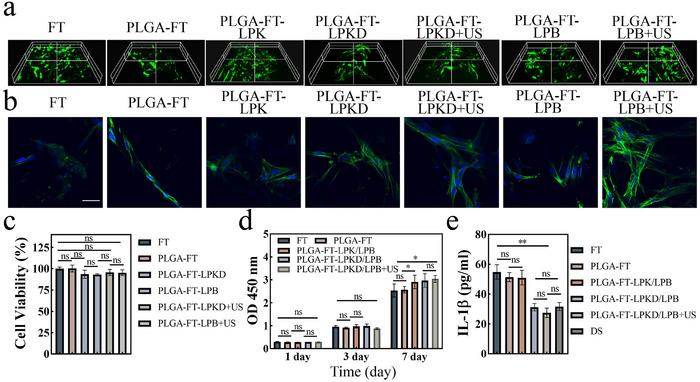
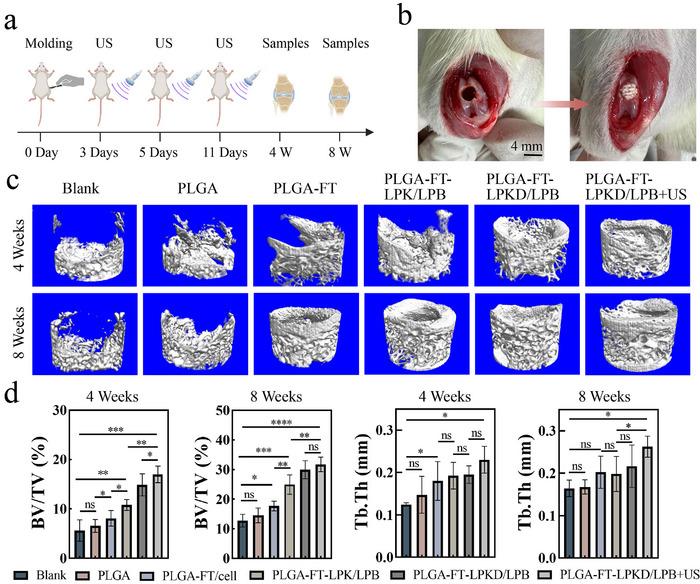
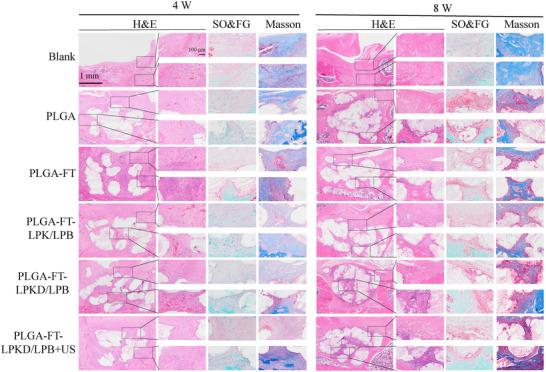
Achieving self-healing for osteochondral defects caused by trauma, aging, or disease remains a significant challenge in clinical practice. It is an effective therapeutic strategy to construct gradient-biomimetic biomaterials that replicate the hierarchical structure and complex microenvironment of osteochondral tissues for dual-lineage regeneration of both cartilage and subchondral bone. Herein, ROS-activated nanohydrogels composite bilayer scaffolds with multi-factors controlled release are rationally designed using the combination of 3D printing and gelatin placeholder methods. The resulting nanohydrogel scaffolds exhibit micro-nano interconnected porous bilayer structure and soft-hard complex mechanical strength for facilitating 3D culture of BMSCs in vitro. More importantly, multi-stage continuous responses of anti-inflammation, chondrogenesis and osteogenesis, are effectively induced via the sequential release of multi-factors, including diclofenac sodium (DS), kartogenin (KGN) and bone morphogenetic protein 2 (BMP-2), from ROS-activated nanohydrogel scaffolds, thereby improved dual-lineage regeneration of cartilage and subchondral bone tissue in the osteochondral defect model of SD rats. These findings suggest that ROS-activated nanohydrogel scaffolds with such specific soft-hard bilayer structure and sequential delivery of functional factors, provides a promising strategy in dual-lineage regeneration of osteochondral defects.
在临床实践中,实现因创伤、衰老或疾病导致的骨软骨缺损的自我修复仍然是一项重大挑战。构建梯度仿生生物材料以复制骨软骨组织的层次结构和复杂微环境,用于软骨和软骨下骨的双谱系再生,是一种有效的治疗策略。在此,利用3D打印和明胶占位法相结合,合理设计了具有多因素控释功能的活性氧(ROS)激活纳米水凝胶复合双层支架。所得纳米水凝胶支架呈现出微纳互连的多孔双层结构和软硬复合的机械强度,便于体外骨髓间充质干细胞(BMSCs)的三维培养。更重要的是,通过ROS激活纳米水凝胶支架依次释放双氯芬酸钠(DS)、软骨生成素(KGN)和骨形态发生蛋白2(BMP-2)等多种因子,有效诱导了抗炎、软骨生成和成骨的多阶段连续反应,从而促进了SD大鼠骨软骨缺损模型中软骨和软骨下骨组织的双谱系再生。这些研究结果表明,具有这种特定软硬双层结构和功能因子顺序递送的ROS激活纳米水凝胶支架,为骨软骨缺损的双谱系再生提供了一种有前景的策略。



 Zotero 插件