
mTOR信号通路在乳腺癌干细胞(BCSCs)中的作用:机制与治疗潜力
The role of the mTOR pathway in breast cancer stem cells (BCSCs): mechanisms and therapeutic potentials.
作者信息
Zhang Chen, Xu Shu, Yin Chuanzheng, Hu Shaobo, Liu Pian
机构信息
Department of Hepatobiliary Surgery, Union Hospital, Tongji Medical College, Huazhong University of Science and Technology, Wuhan, 430022, China.
Cancer Center, Union Hospital, Tongji Medical College, Huazhong University of Science and Technology, Wuhan, 430022, China.
出版信息
Stem Cell Res Ther. 2025 Mar 29;16(1):156. doi: 10.1186/s13287-025-04218-4.
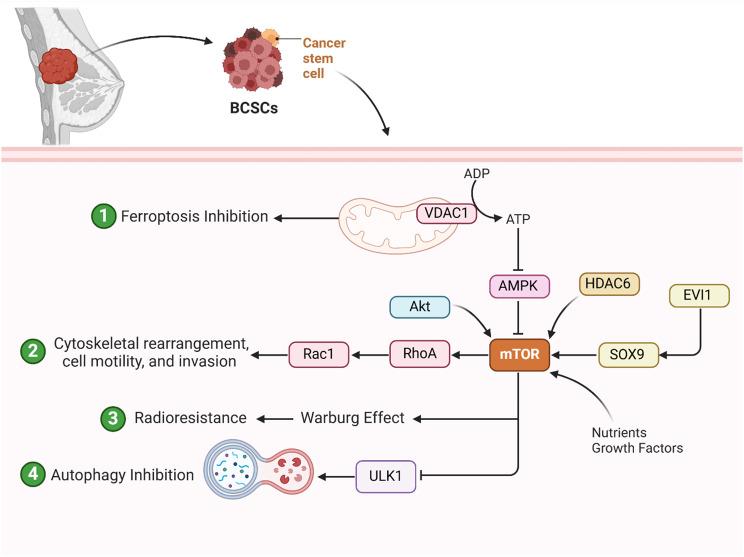
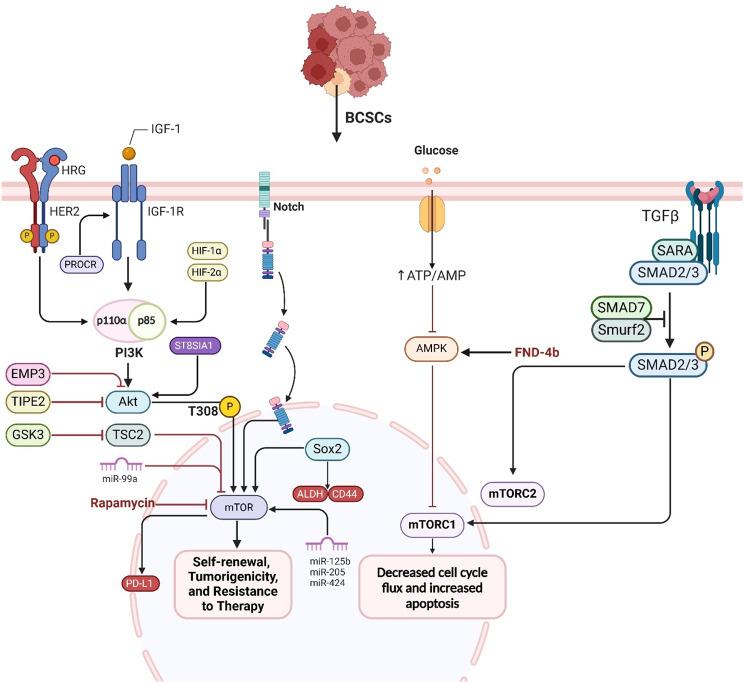
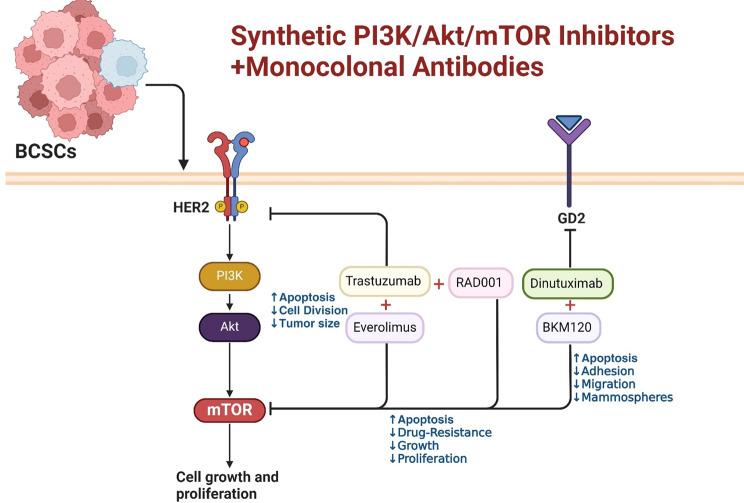
Breast cancer remains the most frequently diagnosed cancer globally, exerting a profound impact on women's health and healthcare systems. Central to its pathogenesis and therapeutic resistance are breast cancer stem cells (BCSCs), which possess unique properties such as self-renewal, differentiation, and resistance to conventional therapies, contributing to tumor initiation, metastasis, and recurrence. This comprehensive review elucidates the pivotal role of the mechanistic target of rapamycin (mTOR) pathway in regulating BCSCs and its implications for breast cancer progression and treatment resistance. We explore the cellular mechanisms by which mTOR influences metastasis, metabolism, autophagy, and ferroptosis in BCSCs, highlighting its contribution to epithelial-to-mesenchymal transition (EMT), metabolic reprogramming, and survival under therapeutic stress. On a molecular level, mTOR interacts with key signaling pathways including PI3K/Akt, Notch, IGF-1R, AMPK, and TGF-β, as well as regulatory proteins and non-coding RNAs, orchestrating a complex network that sustains BCSC properties and mediates chemoresistance and radioresistance. The review further examines various therapeutic strategies targeting the mTOR pathway in BCSCs, encompassing selective PI3K/Akt/mTOR inhibitors, monoclonal antibodies, natural products, and innovative approaches such as nanoparticle-mediated drug delivery. Clinical trials investigating mTOR inhibitors like sirolimus and combination therapies with agents such as everolimus and trastuzumab are discussed, underscoring their potential in eradicating BCSCs and improving patient outcomes. Additionally, natural compounds and repurposed drugs offer promising adjunctive therapies by modulating mTOR activity and targeting BCSC-specific vulnerabilities. In conclusion, targeting the mTOR pathway presents a viable and promising avenue for enhancing breast cancer treatment efficacy by effectively eliminating BCSCs, reducing tumor recurrence, and improving overall patient survival. Continued research and clinical validation of mTOR-targeted therapies are essential to translate these insights into effective clinical interventions, ultimately advancing personalized cancer management and therapeutic outcomes for breast cancer patients.
乳腺癌仍然是全球最常被诊断出的癌症,对女性健康和医疗保健系统产生深远影响。乳腺癌干细胞(BCSCs)是其发病机制和治疗耐药性的核心,具有自我更新、分化以及对传统疗法耐药等独特特性,导致肿瘤起始、转移和复发。这篇综述阐明了雷帕霉素机制性靶点(mTOR)通路在调节BCSCs中的关键作用及其对乳腺癌进展和治疗耐药性的影响。我们探讨了mTOR影响BCSCs转移、代谢、自噬和铁死亡的细胞机制,强调了其在上皮-间质转化(EMT)、代谢重编程以及治疗应激下生存中的作用。在分子水平上,mTOR与包括PI3K/Akt、Notch、IGF-1R、AMPK和TGF-β在内的关键信号通路以及调节蛋白和非编码RNA相互作用,协调维持BCSC特性并介导化学耐药性和放射耐药性的复杂网络。综述进一步研究了针对BCSCs中mTOR通路的各种治疗策略,包括选择性PI3K/Akt/mTOR抑制剂、单克隆抗体、天然产物以及纳米颗粒介导的药物递送等创新方法。讨论了研究西罗莫司等mTOR抑制剂以及与依维莫司和曲妥珠单抗等药物联合治疗的临床试验,强调了它们在根除BCSCs和改善患者预后方面的潜力。此外,天然化合物和重新利用的药物通过调节mTOR活性和靶向BCSC特异性弱点提供了有前景的辅助治疗方法。总之,靶向mTOR通路为通过有效消除BCSCs、减少肿瘤复发和提高患者总体生存率来提高乳腺癌治疗疗效提供了一条可行且有前景的途径。对mTOR靶向治疗的持续研究和临床验证对于将这些见解转化为有效的临床干预措施至关重要,最终推动乳腺癌患者的个性化癌症管理和治疗结果。


 Zotero 插件