
群体感应:不仅仅是细菌之间的桥梁。
Quorum Sensing: Not Just a Bridge Between Bacteria.
作者信息
Liu Derun, Lu Yonglin, Li Ziyun, Pang Xin, Gao Xueyan
机构信息
Medical Science and Technology Innovation Center, Shandong First Medical University & Shandong Academy of Medical Sciences, jinan, China.
State Key Laboratory of Microbial Technology, Shandong University, Qingdao, China.
出版信息
Microbiologyopen. 2025 Mar;14(1):e70016. doi: 10.1002/mbo3.70016.
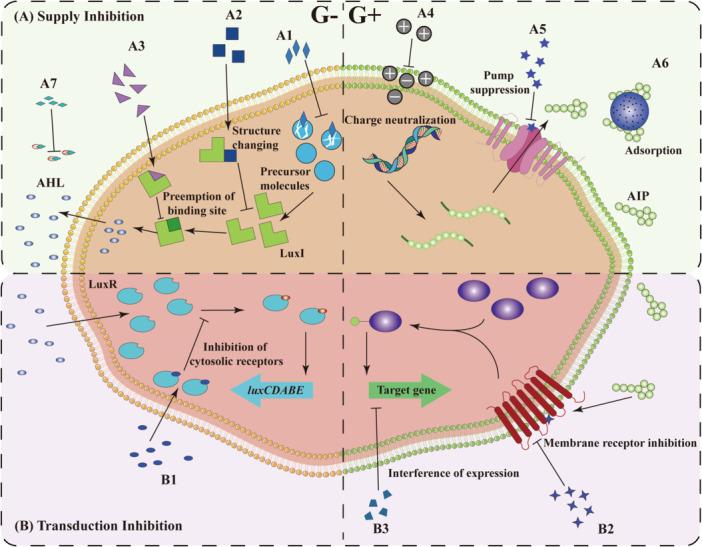
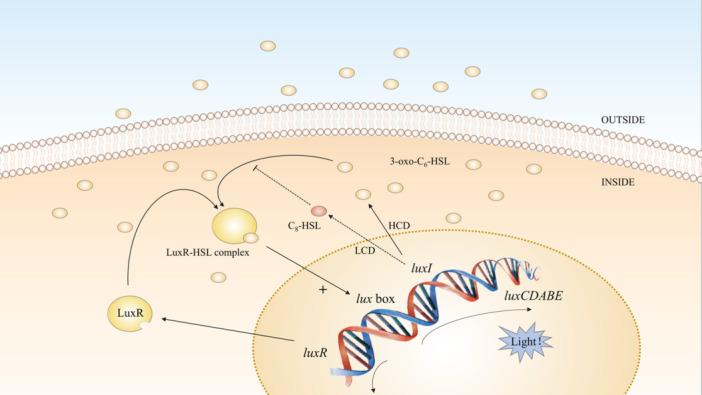
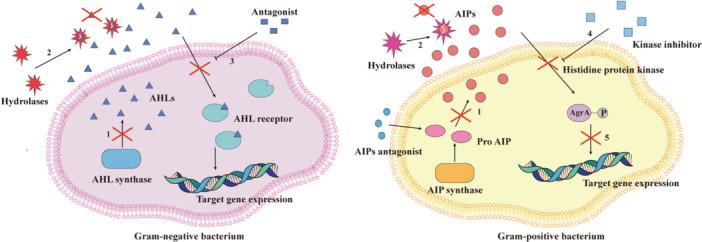
The study of quorum sensing (QS) has gained critical importance, offering insights into bacterial and microorganism communication. QS, regulated by autoinducers, synchronizes collective bacterial behaviors across diverse chemical signals and target genes. This review highlights innovative approaches to regulating QS, emphasizing the potential of quorum quenching and QS inhibitors to mitigate bacterial pathogenicity. These strategies have shown promise in aquaculture and plant resistance, disrupting QS pathways to combat infections. QS also provides opportunities for developing biosensors for early disease detection and preventing biofilm formation, which is critical to overcoming antimicrobial resistance. The applications of QS extend to cancer therapy, with targeted drug delivery systems utilizing QS mechanisms. Advancements in QS regulation, such as the use of nanomaterials, hydrogels, and microplastics, provide novel methods to modulate QS systems. This review explores the latest developments in QS, recognizing its significance in controlling bacterial behavior and its broad impacts on human health and disease management. Integrating these insights into therapeutic strategies and diagnostics represents a pivotal opportunity for medical progress.
群体感应(QS)的研究已变得至关重要,为细菌和微生物的交流提供了深刻见解。QS 由自诱导物调控,能使细菌在不同化学信号和靶基因间同步集体行为。本综述着重介绍了调控 QS 的创新方法,强调了群体猝灭和 QS 抑制剂在减轻细菌致病性方面的潜力。这些策略在水产养殖和植物抗性方面已显示出前景,通过破坏 QS 途径来对抗感染。QS 还为开发用于早期疾病检测的生物传感器以及预防生物膜形成提供了机会,这对于克服抗菌药物耐药性至关重要。QS 的应用扩展到癌症治疗领域,靶向药物递送系统利用了 QS 机制。QS 调控方面的进展,如使用纳米材料、水凝胶和微塑料,提供了调节 QS 系统的新方法。本综述探讨了 QS 的最新进展,认识到其在控制细菌行为方面的重要性及其对人类健康和疾病管理的广泛影响。将这些见解整合到治疗策略和诊断方法中是医学进步的关键机遇。


 Zotero 插件