
单克隆抗体的益处与安全性:对癌症免疫治疗的启示
The Benefits and Safety of Monoclonal Antibodies: Implications for Cancer Immunotherapy.
作者信息
Zhang Shuguang, Chen Wenying, Zhou Jihong, Liang Qi, Zhang Yu, Su Ming, Zhang Zilong, Qu Jian
机构信息
Department of Pharmacy, Shenzhen Bao'an Chinese Medicine Hospital, The Seventh Clinical College of Guangzhou University of Chinese Medicine, Shenzhen, People's Republic of China.
Department of Pharmacy, Guangdong Provincial People's Hospital, Guangdong Academy of Medical Sciences, Guangzhou, People's Republic of China.
出版信息
J Inflamm Res. 2025 Mar 24;18:4335-4357. doi: 10.2147/JIR.S499403. eCollection 2025.
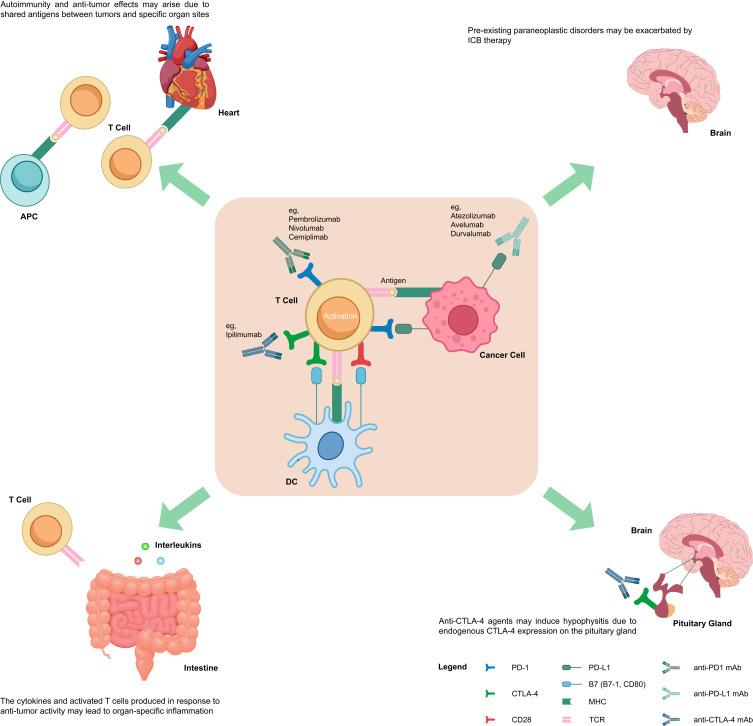
Monoclonal antibodies (mAbs) have transformed cancer treatment by providing highly targeted and effective therapies that specifically attack cancer cells, thus reducing the likelihood of adverse events (AEs) in patients. mAbs exert their action through various mechanisms, such as receptor blockade, antibody-dependent cellular cytotoxicity (ADCC), complement-dependent cytotoxicity (CDC), and inhibition of immune checkpoints (eg, PD-1, PD-L1, and CTLA-4). These therapies have led to significant improvements in the treatment of several cancers, including HER2-positive breast cancer, non-small cell lung cancer (NSCLC), and melanoma. The efficacy of mAb therapy in cancer treatment is influenced by various intrinsic and extrinsic factors, such as environmental exposures, psychosocial factors, infection status, ways of life, and tumor microenvironment (TME), all of which can impact immune responses and treatment outcomes. Notably, the therapeutic benefits of mAbs are often accompanied by immune-related AEs (irAEs), which can vary from mild to severe and affect multiple organ systems. The dual nature of mAbs-stimulating antitumor immune responses while also inducing immune-related side effects-presents a notable challenge in clinical practice. This review highlights the importance of proactive strategies for managing irAEs, such as early detection, corticosteroid use, targeted immunosuppressive treatments, and the urgent need for reliable predictive biomarkers to improve treatment outcomes. Advancements in the prevention, prediction, and management of irAEs are essential to enhance the safety and effectiveness of mAb-based therapies, ultimately aiming to improve cancer patient outcomes.
单克隆抗体(mAb)通过提供高度靶向且有效的疗法,特异性地攻击癌细胞,从而改变了癌症治疗方式,降低了患者发生不良事件(AE)的可能性。单克隆抗体通过多种机制发挥作用,如受体阻断、抗体依赖性细胞毒性(ADCC)、补体依赖性细胞毒性(CDC)以及免疫检查点抑制(如PD-1、PD-L1和CTLA-4)。这些疗法已使包括HER2阳性乳腺癌、非小细胞肺癌(NSCLC)和黑色素瘤在内的多种癌症的治疗取得了显著进展。单克隆抗体疗法在癌症治疗中的疗效受多种内在和外在因素影响,如环境暴露、心理社会因素、感染状况、生活方式和肿瘤微环境(TME),所有这些因素都可能影响免疫反应和治疗结果。值得注意的是,单克隆抗体的治疗益处往往伴随着免疫相关不良事件(irAE),其严重程度不一,可影响多个器官系统。单克隆抗体在刺激抗肿瘤免疫反应的同时也诱导免疫相关副作用的双重性质,在临床实践中带来了显著挑战。本综述强调了积极管理免疫相关不良事件策略的重要性,如早期检测、使用皮质类固醇、靶向免疫抑制治疗,以及迫切需要可靠的预测生物标志物以改善治疗结果。免疫相关不良事件的预防、预测和管理进展对于提高基于单克隆抗体疗法的安全性和有效性至关重要,最终目标是改善癌症患者的治疗结果。


 Zotero 插件