
基于学校的驱虫计划:印度泰米尔纳德邦学校教师对土壤传播的蠕虫感染的认知与看法
School-based deworming programmes: Knowledge and perceptions regarding soil-transmitted helminth infections among schoolteachers in Tamil Nadu, India.
作者信息
Aruldas Kumudha, Ramesh Rohan Michael, Prasad Selvakumar, Israel Gideon John, Legge Hugo, Walson Judd L, Means Arianna Rubin, Ajjampur Sitara Swarna Rao
机构信息
The Welcome Trust Research Laboratory, Division of Gastrointestinal Sciences, Christian Medical College, Vellore, Tamil Nadu, India.
Department of Disease Control, London School of Hygiene and Tropical Medicine, London, United Kingdom.
出版信息
PLOS Glob Public Health. 2025 Mar 31;5(3):e0004319. doi: 10.1371/journal.pgph.0004319. eCollection 2025.
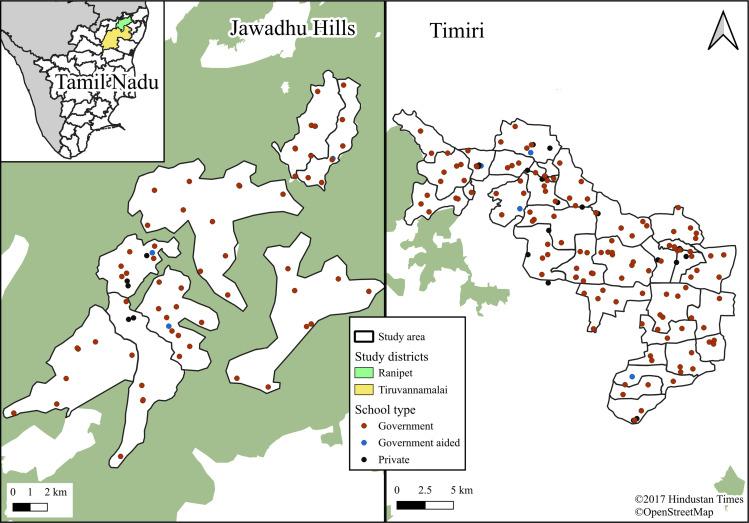
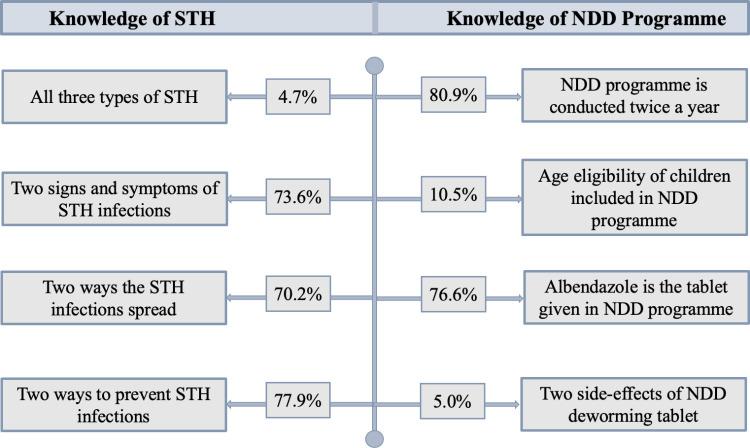
In accordance with World Health Organization guidelines, the school-based deworming for soil-transmitted helminths (STH) is being implemented in India since 2015 through teachers on National Deworming Day (NDD). This study aimed to assess teachers' knowledge levels and perception of STH and NDD programmes in southern India using a cross-sectional study design with purposive sampling of teachers involved in the NDD programme. Data from 402 teachers across 221 schools were analysed using STATA 16.0 software. Overall, 37% of the teachers from 52% of schools had attended an NDD training programme. Of a maximum possible score of 32, the knowledge levels were categorised as low (<50%), average (at least 50%), and adequate (70% and above). While 84% of the teachers had an average level of knowledge, only 33% had an adequate level of knowledge. The results showed significant knowledge gaps regarding important aspects of the STH programme including, helminths species being treated, age eligibility of children for treatment, and the name of and side-effects of the deworming tablet distributed. Adequate level of knowledge was more likely among teachers from government schools than those from government-aided/private schools (OR: 3.74; CI: 1.80 - 7.74; p<0.001); those who attended an NDD training programme than those who never attended (OR: 2.69; CI: 1.73 - 4.19; p<0.005); and female teachers compared to male teachers (OR: 1.94; CI: 1.22 - 3.08; p<0.005). A weak but significant positive correlation was observed between knowledge levels and perception (Spearman's rho=0.2075; p=0.002). Teachers from all schools must be encouraged to participate in formal STH training programmes coordinated by the government, and these programmes should be evaluated periodically for effectiveness.
根据世界卫生组织的指导方针,自2015年起,印度通过教师在全国驱虫日(NDD)开展针对土壤传播蠕虫(STH)的校内驱虫工作。本研究旨在采用横断面研究设计,对参与NDD项目的教师进行目的抽样,以评估印度南部教师对STH和NDD项目的知识水平及认知情况。使用STATA 16.0软件对来自221所学校的402名教师的数据进行了分析。总体而言,来自52%学校的37%的教师参加过NDD培训项目。在满分32分的情况下,知识水平被分为低(<50%)、中等(至少50%)和充足(70%及以上)。虽然84%的教师知识水平中等,但只有33%的教师知识水平充足。结果显示,在STH项目的重要方面存在显著的知识差距,包括所治疗的蠕虫种类、儿童治疗的年龄资格以及所分发驱虫药片的名称和副作用。公立学校的教师比政府资助/私立学校的教师更有可能具备充足的知识水平(比值比:3.74;置信区间:1.80 - 7.74;p<0.001);参加过NDD培训项目的教师比从未参加过的教师更有可能具备充足的知识水平(比值比:2.69;置信区间:1.73 - 4.19;p<0.005);女教师比男教师更有可能具备充足的知识水平(比值比:1.94;置信区间:1.22 - 3.08;p<0.005)。知识水平与认知之间存在微弱但显著的正相关(斯皮尔曼等级相关系数=0.2075;p=0.002)。必须鼓励所有学校的教师参加由政府协调的正规STH培训项目,并且应定期对这些项目的有效性进行评估。


 Zotero 插件