
盘尾丝虫多形性肿瘤的空间蛋白质组学显示蛋白质表达存在局部和全身失调。
Spatial proteomics of Onchocerca volvulus with pleomorphic neoplasms shows local and systemic dysregulation of protein expression.
作者信息
Di Maggio Lucia S, Fischer Kerstin, Rosa Bruce A, Yates Devyn, Cho Byoung-Kyu, Lukowski Jessica, Zamacona Calderon Antonia, Son Minsoo, Goo Young Ah, Opoku Nicholas O, Weil Gary J, Mitreva Makedonka, Fischer Peter U
机构信息
Infectious Diseases Division, Department of Medicine, Washington University School of Medicine, St. Louis, Missouri, United States of America.
Mass Spectrometry Technology Access Center at McDonnell Genome Institute, Washington University School of Medicine, St. Louis, Missouri, United States of America.
出版信息
PLoS Negl Trop Dis. 2025 Mar 31;19(3):e0012929. doi: 10.1371/journal.pntd.0012929. eCollection 2025 Mar.
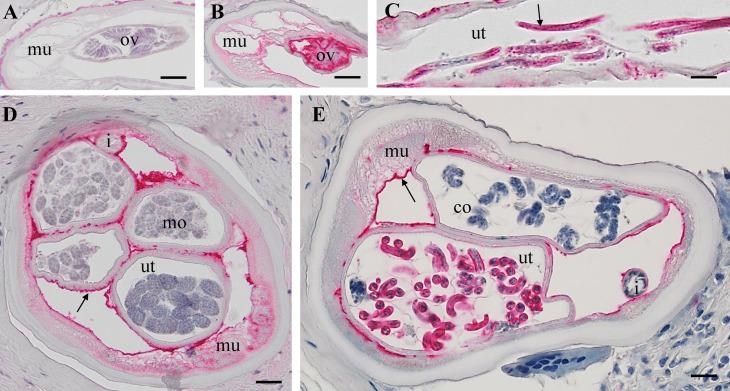
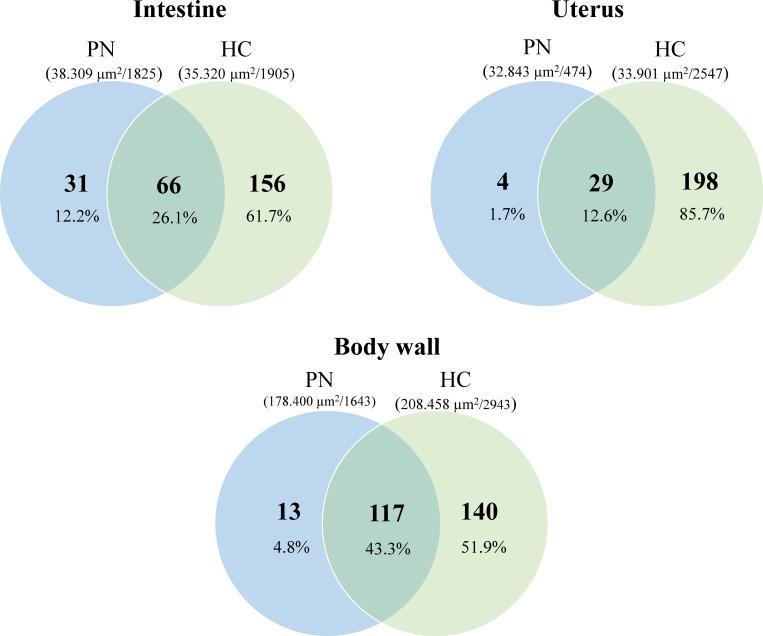
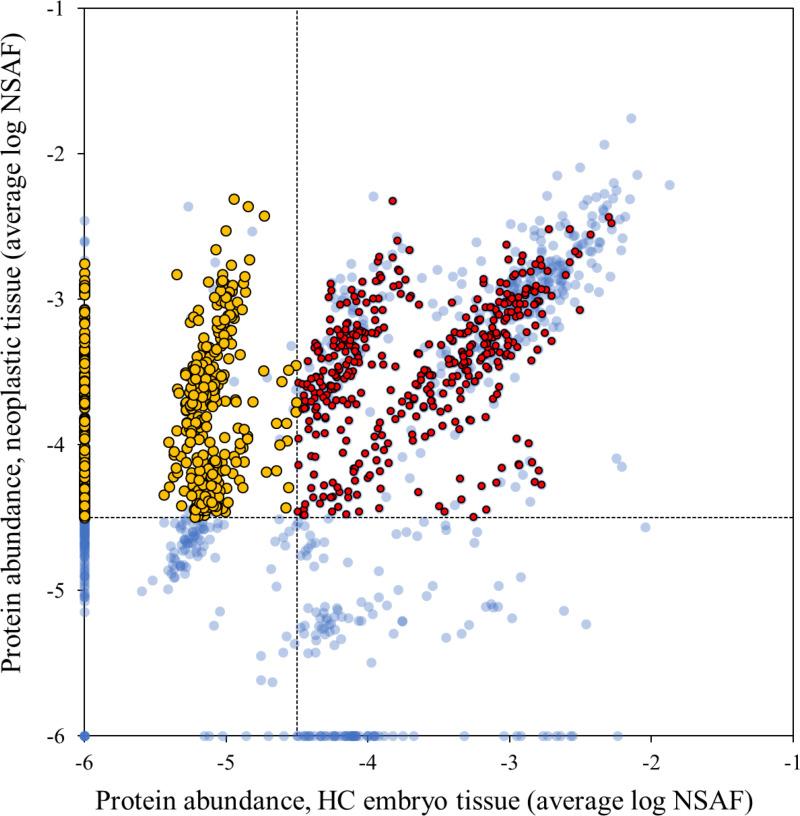
Onchocerca volvulus is the agent of onchocerciasis (river blindness) and targeted by WHO for elimination though mass drug administration with ivermectin. A small percentage of adult female worms develop pleomorphic neoplasms (PN) which occur more frequently after ivermectin treatment. Worms with PN have a lower life expectancy and improved understanding of proteins expressed in PN and their impact on different tissues could help elucidate the mechanisms of macrofilaricidal activity of ivermectin. Within paraffin embedded nodules removed after ivermectin treatment, we detected 24 (5.6%) O. volvulus females with PN. To assess the protein inventory of the PN and identify proteins potentially linked with tumor development, we used laser capture microdissection and highly sensitive mass spectrometry analysis. Three female worms were used to compare the protein profiles of three tissue types (body wall, uterus, and intestine) to the PN, and then to healthy female worms without PN. The healthy females showed all normal embryogenesis. In PN worms, 151 proteins were detected in the body wall, 215 proteins in the intestine, 47 proteins in the uterus and 1,577 proteins in the PN. Only the uterus of one PN female with some stretched intrauterine microfilariae had an elevated number of proteins (601) detectable, while in the uteri of the healthy females 1,710 proteins were detected. Even in tissues that were not directly affected by PN (intestine, body wall), fewer proteins were detected compared to the corresponding tissue of the healthy controls. Immunolocalization of calcium binding protein OvDig-1 (OVOC8391), which was identified through mass spectrometry as one of the proteins with the highest spectral counts in the PN tissue triplicates, allowed us to confirm the results using an independent method. In conclusion we identified proteins that are potentially linked to the development of PN, and systemic dysregulation of protein expression may contribute to worm mortality.
盘尾丝虫是盘尾丝虫病(河盲症)的病原体,世界卫生组织通过用伊维菌素进行大规模药物治疗来靶向消灭它。一小部分成年雌性蠕虫会发生多形性肿瘤(PN),在伊维菌素治疗后更频繁出现。患有PN的蠕虫预期寿命较低,更好地了解PN中表达的蛋白质及其对不同组织的影响有助于阐明伊维菌素的杀成虫活性机制。在伊维菌素治疗后切除的石蜡包埋结节中,我们检测到24条(5.6%)患有PN的盘尾丝虫雌性。为了评估PN的蛋白质清单并鉴定可能与肿瘤发生相关的蛋白质,我们使用了激光捕获显微切割和高灵敏度质谱分析。使用三条雌性蠕虫比较三种组织类型(体壁、子宫和肠道)与PN的蛋白质谱,然后与没有PN的健康雌性蠕虫进行比较。健康雌性显示出所有正常的胚胎发育。在患有PN的蠕虫中,在体壁中检测到151种蛋白质,在肠道中检测到215种蛋白质,在子宫中检测到47种蛋白质,在PN中检测到1577种蛋白质。只有一条子宫内有一些伸展的子宫内微丝蚴的患有PN的雌性蠕虫的子宫中可检测到的蛋白质数量增加(601种),而在健康雌性蠕虫的子宫中检测到1710种蛋白质。即使在未直接受PN影响的组织(肠道、体壁)中,与健康对照的相应组织相比,检测到的蛋白质也较少。通过质谱鉴定为PN组织一式三份中光谱计数最高的蛋白质之一的钙结合蛋白OvDig-1(OVOC8391)的免疫定位,使我们能够使用独立方法确认结果。总之,我们鉴定出了可能与PN发生相关的蛋白质,蛋白质表达的系统性失调可能导致蠕虫死亡。



 Zotero 插件