
针刺疗法对乳腺癌患者潮热症状的治疗效果如何?一项系统评价与荟萃分析。
How effective is acupuncture in treating hot flashes in breast cancer patients? A systematic review and meta-analysis.
作者信息
Zhang Genlan, Gao Cui, Guo Zining, Zhao Wenrui, Xu Xufang, Wen Huaneng, Li Yaoxuan, Lin Run, Xu Nenggui, Cui Shaoyang
机构信息
Department of Rehabilitation Medicine, Shenzhen Hospital (Fu Tian) of Guangzhou University of Chinese Medicine, Shenzhen, China.
The Sixth Clinical Medical School, Guangzhou University of Chinese Medicine, Guangzhou, China.
出版信息
Front Oncol. 2025 Mar 17;15:1543938. doi: 10.3389/fonc.2025.1543938. eCollection 2025.
BACKGROUND
Although acupuncture is recommended for managing breast cancer-related hot flashes, the level of evidence is limited. With the updating of randomized controlled trials, it is necessary to reassess its efficacy.
OBJECTIVE
To assess the effectiveness of acupuncture in the treatment of hot flashes in patients with breast cancer.
METHODS
Up to March 2024, we retrieved data from nine databases and used Stata software (version 14.0, version 17.0) and RevMan software (version 5.3) to conduct a meta-analysis. The Cochrane Collaboration's risk of bias assessment tool was used for methodological assessment of the risk of bias, and the GRADEpro GDT online assessment tool was used for evidence evaluation.
RESULTS
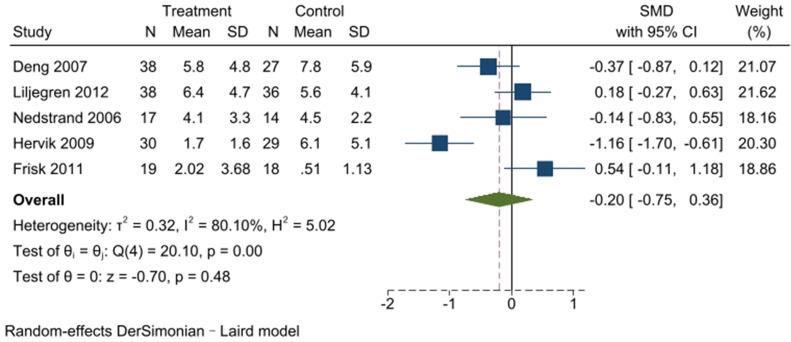
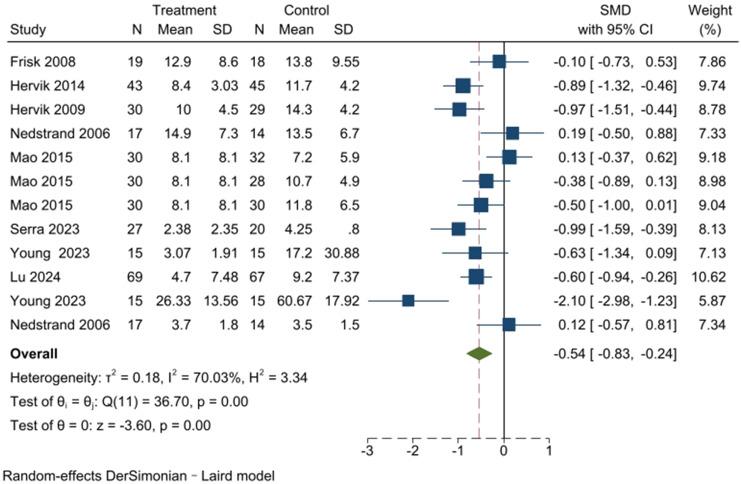
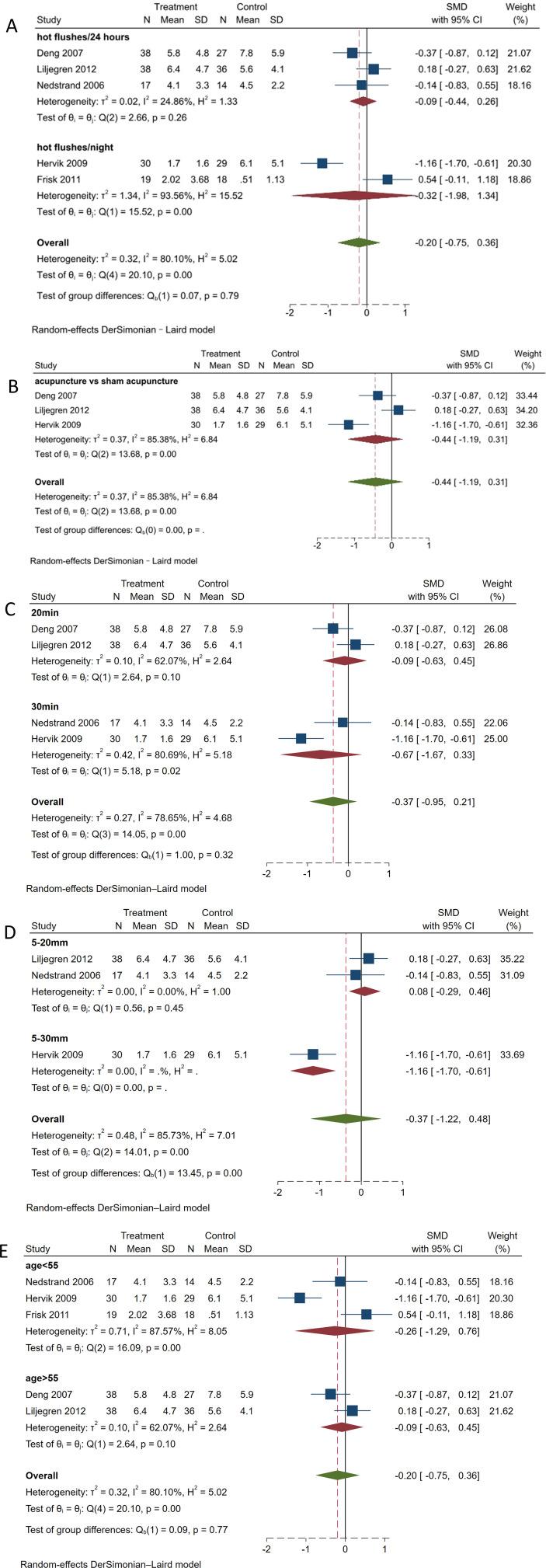
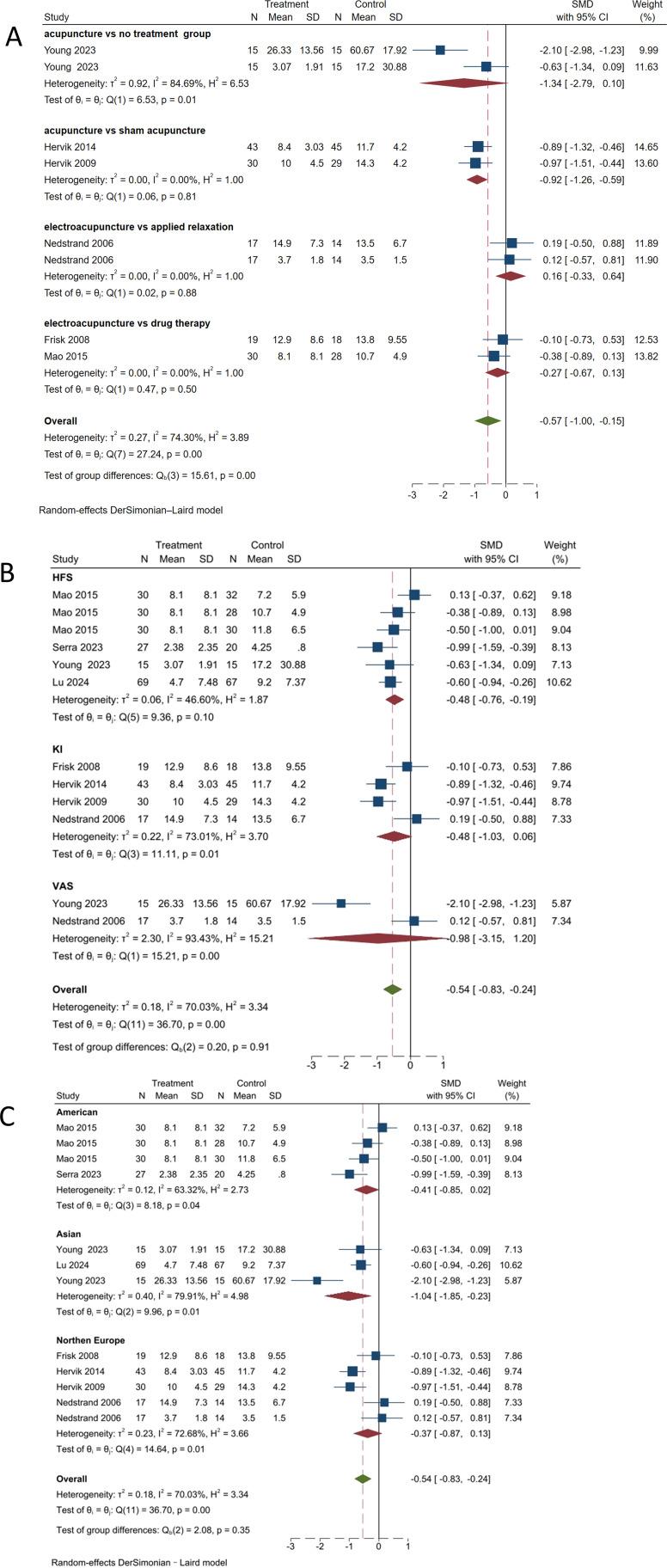
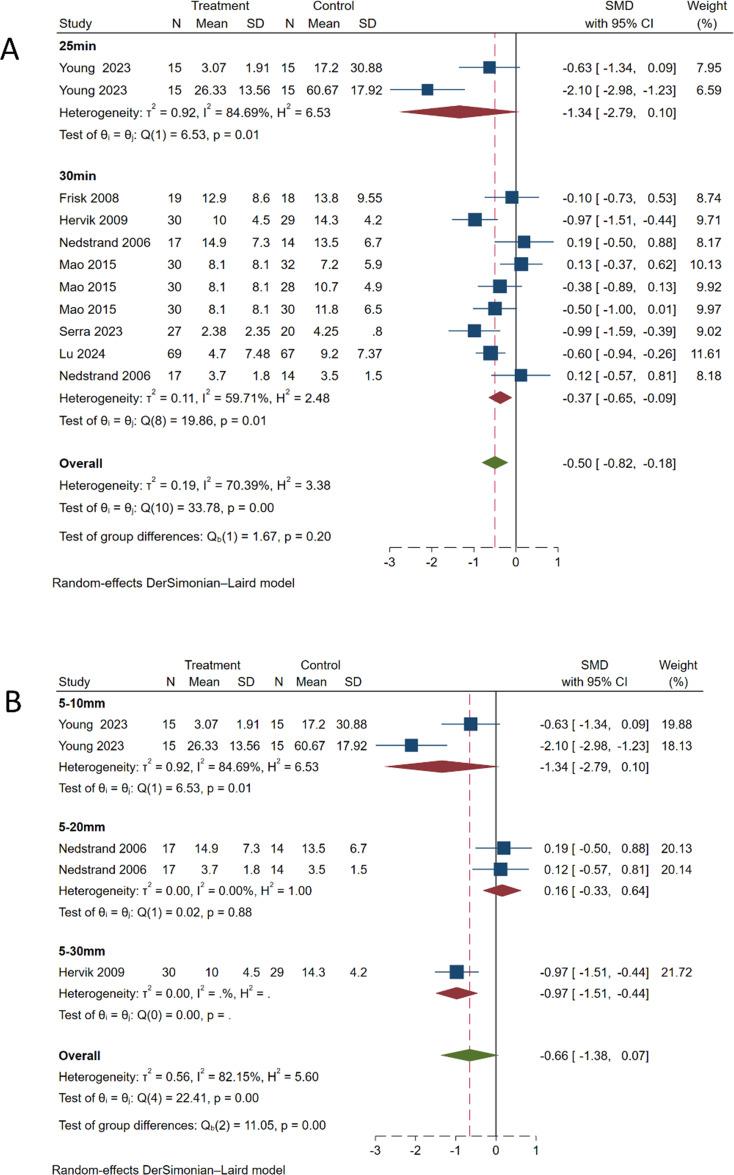
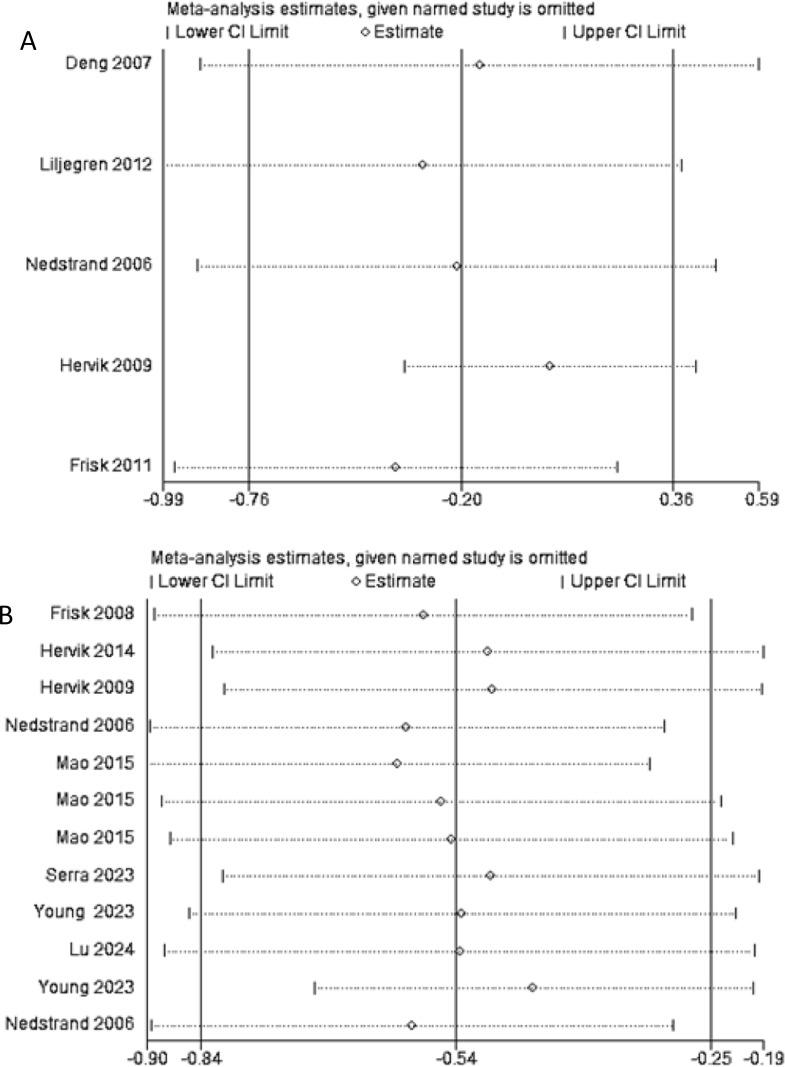
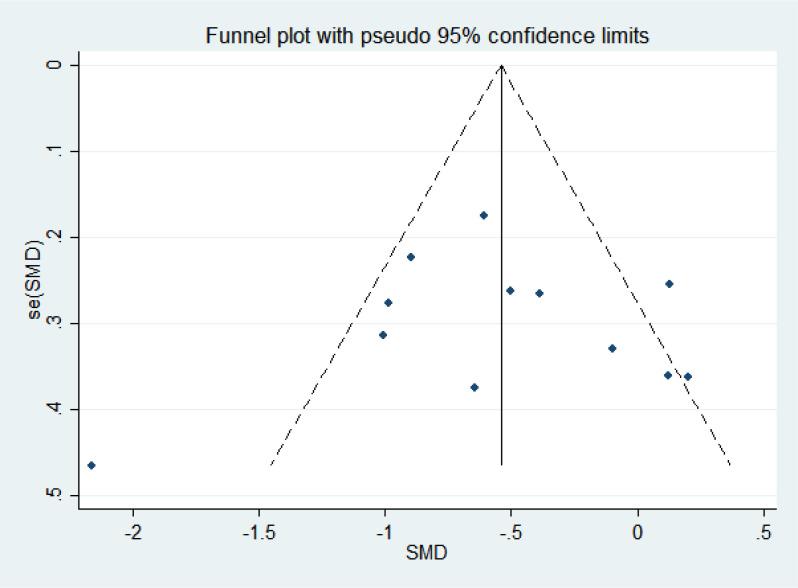
In total, 11 randomized controlled trials (RCTs) involved 963 participants were included in the meta-analysis. The result of risk of bias revealed that the included RCTs exhibited a high risk of bias, primarily attributable to deficiencies in randomization and blinding methods. The results of primary meta-analysis indicated that acupuncture can improved the hot flash symptom scale score (SMD, -0.54; 95% CI, -0.83 to -0.24; 0.05). However, acupuncture does not reduce the frequency of hot flashes(SMD, -0.20; 95% CI, -0.75 to 0.36; ). Further subgroup analyses, including the type of control group and the duration of needle retention, etc. showed different results, highlighting the necessity for further research. Sensitivity analysis confirmed the reliability of these finding. In addition, due to various issues, the level of evidence is low.
CONCLUSIONS
Although acupuncture treatment for hot flashes in breast cancer shows potential, the evidence for the efficacy of acupuncture is still lacking due to various factors such as bias risk and significant differences between studies, and more high-quality RCTs are needed to confirm the efficacy of acupuncture.
SYSTEMATIC REVIEW REGISTRATION
https://www.crd.york.ac.uk/prospero/, identifier CRD42024531542.
背景
尽管推荐使用针灸来管理与乳腺癌相关的潮热,但证据水平有限。随着随机对照试验的更新,有必要重新评估其疗效。
目的
评估针灸治疗乳腺癌患者潮热的有效性。
方法
截至2024年3月,我们从九个数据库检索数据,并使用Stata软件(版本14.0、版本17.0)和RevMan软件(版本5.3)进行荟萃分析。采用Cochrane协作网偏倚风险评估工具对偏倚风险进行方法学评估,使用GRADEpro GDT在线评估工具进行证据评价。
结果
荟萃分析共纳入11项随机对照试验,涉及963名参与者。偏倚风险结果显示,纳入的随机对照试验存在较高的偏倚风险,主要归因于随机化和盲法的缺陷。主要荟萃分析结果表明,针灸可改善潮热症状量表评分(标准化均数差,-0.54;95%可信区间,-0.83至-0.24;P<0.05)。然而,针灸并不能降低潮热频率(标准化均数差,-0.20;95%可信区间,-0.75至0.36;P>0.05)。进一步的亚组分析,包括对照组类型和留针时间等,显示出不同的结果,突出了进一步研究的必要性。敏感性分析证实了这些发现的可靠性。此外,由于各种问题,证据水平较低。
结论
尽管针灸治疗乳腺癌潮热显示出潜力,但由于偏倚风险和研究间显著差异等多种因素,针灸疗效的证据仍然不足,需要更多高质量的随机对照试验来证实针灸的疗效。
系统评价注册

 Zotero 插件