
N6-甲基腺苷介导的H19上调通过调节多发性骨髓瘤中的miR-184/CARM1轴促进对硼替佐米的耐药性。
N6-methyladenosine-mediated upregulation of H19 promotes resistance to bortezomib by modulating the miR-184/CARM1 axis in multiple myeloma.
作者信息
Wang Gang, Wu Wenping, He Donghua, Wang Jiaheng, Kong Hongwei, Wu Wenjun
机构信息
Department of Hematology, The Quzhou Affiliated Hospital of Wenzhou Medical UniversityThe Quzhou Affiliated Hospital of Wenzhou Medical University, Quzhou People's Hospital, Quzhou, Zhejiang Province, China.
Bone Marrow Transplantation Center is Part of the First Affiliated Hospital at the School of Medicine, Zhejiang University, Hangzhou, Zhejiang Province, China.
出版信息
Clin Exp Med. 2025 Apr 1;25(1):102. doi: 10.1007/s10238-025-01624-z.
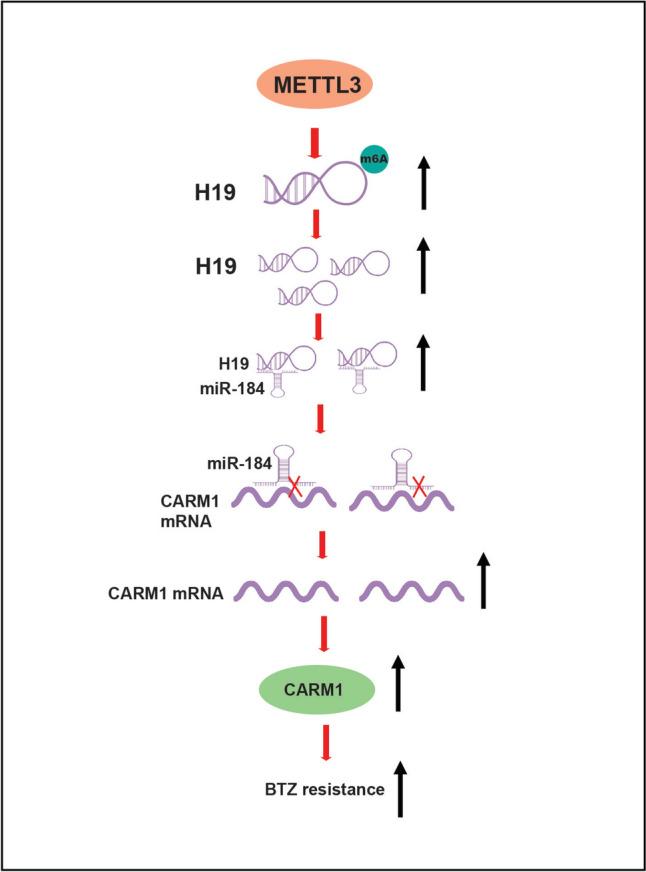
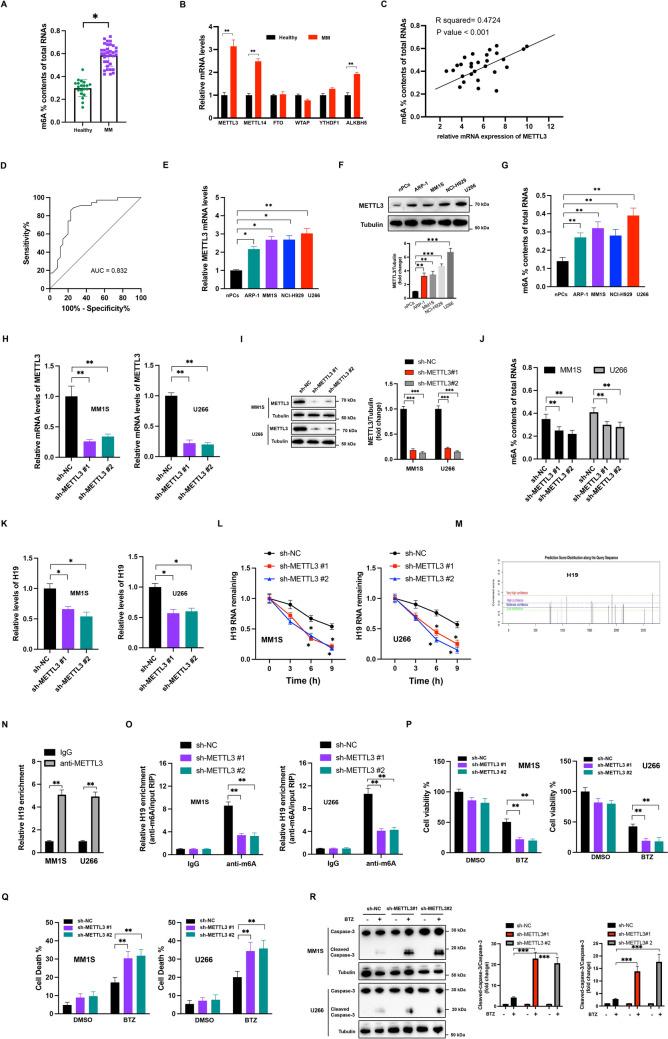
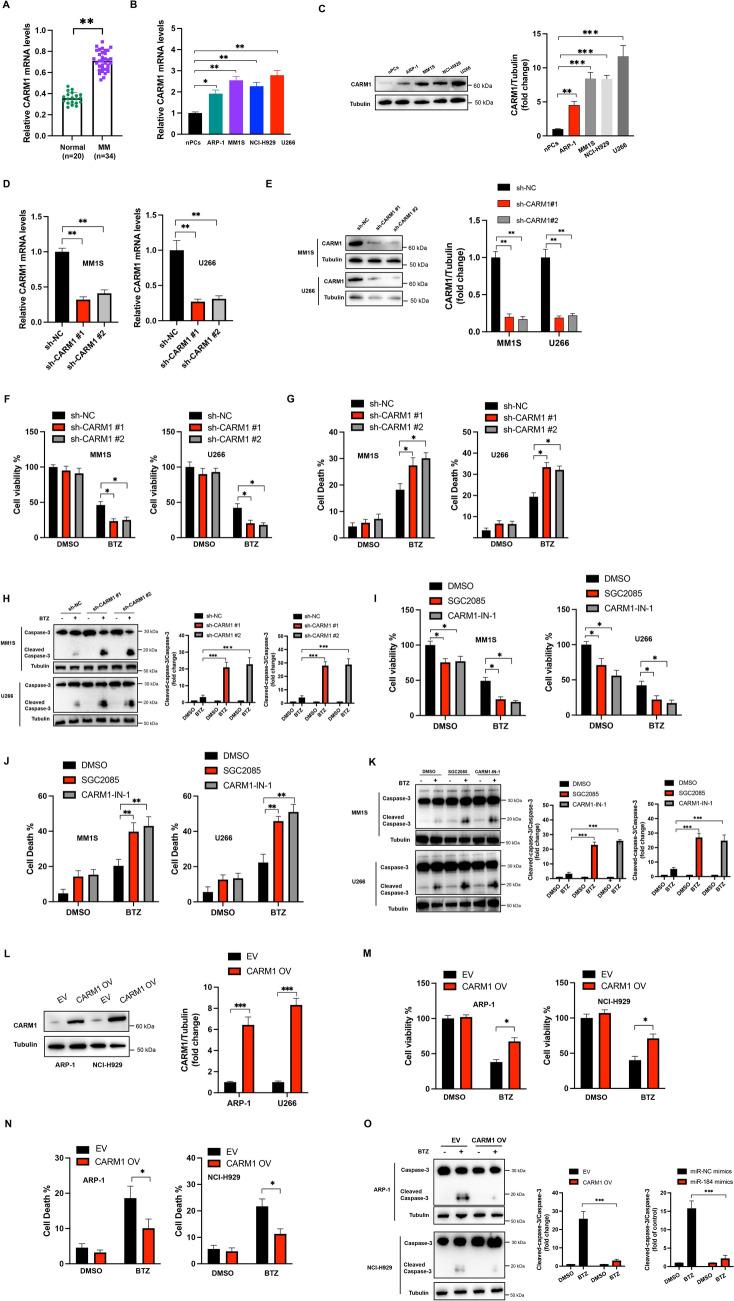
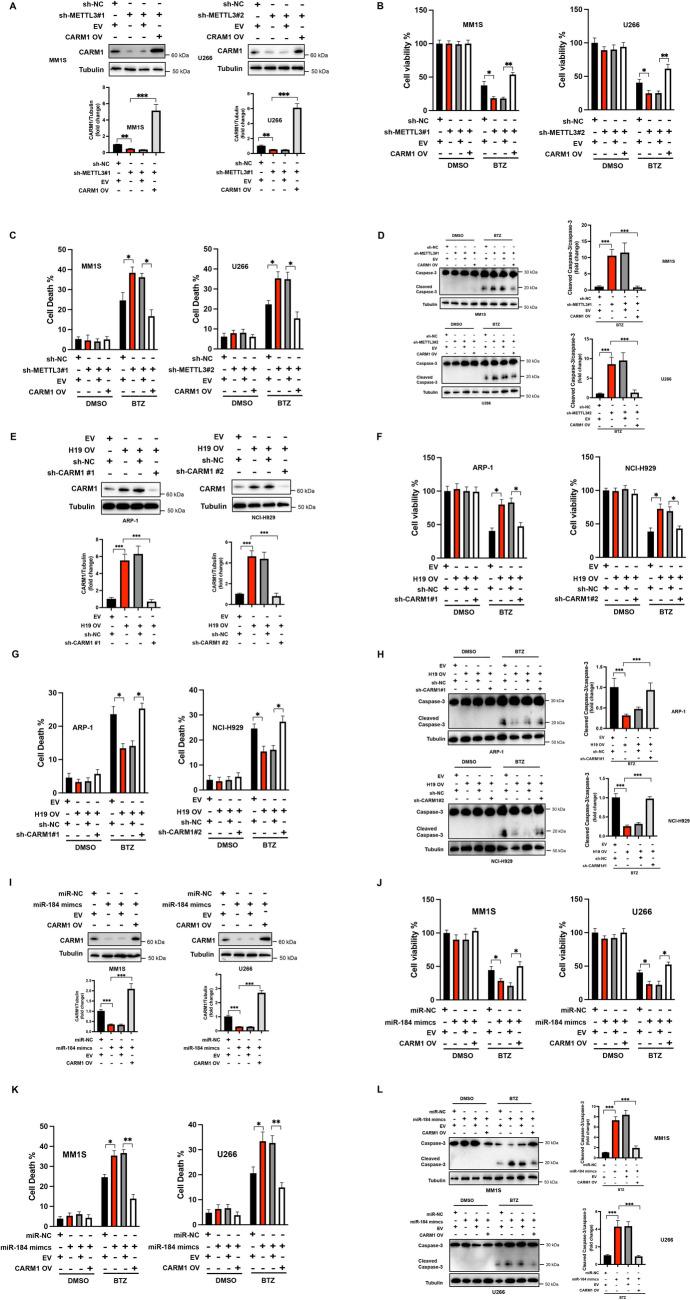
Malignant plasma cell proliferation characterizes multiple myeloma (MM), a hematologic disease. Bortezomib (BTZ) is a protease inhibitor that has been approved for the treatment of MM. Nevertheless, the effectiveness of BTZ is frequently impeded by drug resistance, and the mechanisms responsible for this phenomenon remain incompletely understood. A growing body of evidence indicates that N6-methyladenosine (m6A) plays crucial roles in a wide range of biological functions. However, the impact of m6A on the response of MM cells to BTZ is poorly understood. In our recent research, we discovered that METTL3 facilitated the m6A alteration of lncRNA H19, providing MM cells with resistance to BTZ. Additional examination revealed that H19 functioned as a sponge to negatively regulate the expression of miR-184 in MM cells. Furthermore, we discovered that H19 binds to miR-184, a tumor suppressor, in MM cells. In MM cells, miR184 can suppress the expression of CARM1 by targeting its 3'-UTR. In conclusion, rescue trials have validated the significance of the METTL3/H19/miR-184/CARM1 pathway in determining the susceptibility of cells to BTZ. Consequently, directing efforts toward this pathway could prove to be a powerful approach for enhancing the effectiveness of BTZ for MM therapy.
恶性浆细胞增殖是血液系统疾病多发性骨髓瘤(MM)的特征。硼替佐米(BTZ)是一种已被批准用于治疗MM的蛋白酶抑制剂。然而,BTZ的有效性常常受到耐药性的阻碍,导致这种现象的机制仍未完全明确。越来越多的证据表明,N6-甲基腺苷(m6A)在广泛的生物学功能中起着关键作用。然而,m6A对MM细胞对BTZ反应的影响却知之甚少。在我们最近的研究中,我们发现METTL3促进了lncRNA H19的m6A改变,赋予MM细胞对BTZ的抗性。进一步研究发现,H19在MM细胞中作为一种海绵分子负向调节miR-184的表达。此外,我们发现H19在MM细胞中与肿瘤抑制因子miR-184结合。在MM细胞中,miR184可通过靶向CARM1的3'-UTR抑制其表达。总之,挽救试验证实了METTL3/H19/miR-184/CARM1通路在决定细胞对BTZ敏感性方面的重要性。因此,针对该通路开展研究可能是提高BTZ治疗MM疗效的有效方法。




 Zotero 插件