
越南抗真菌治疗的可及性与成本:一项5年回顾性研究。
Availability and cost of antifungal therapy in Vietnam: A 5-year retrospective study.
作者信息
Kwang Yee Chin, Nguyen Ha Thuy, Alffenaar Jan-Willem, Beardsley Justin, Dat Vu Quoc
机构信息
Department of Pharmacy, Wagga Wagga Base Hospital, Wagga Wagga, Australia.
Hanoi Medical University Hospital, Hanoi Medical University, Hanoi, Vietnam.
出版信息
Med Mycol. 2025 Apr 2;63(4). doi: 10.1093/mmy/myaf028.
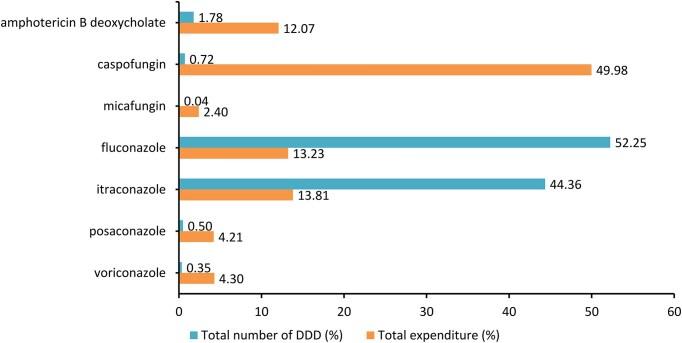
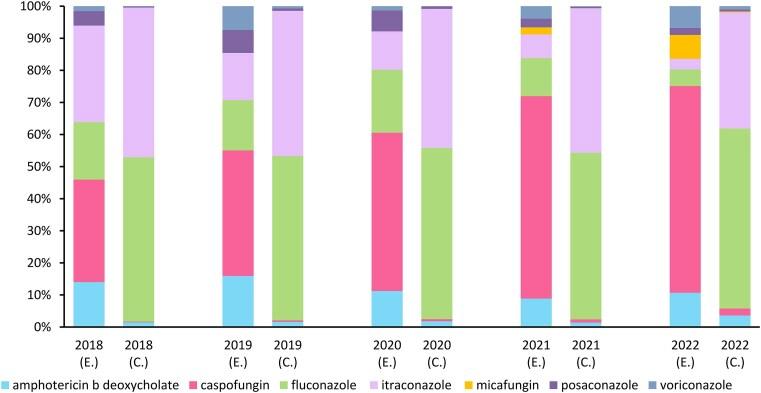
Access to antifungal agents for the treatment of invasive fungal infections (IFIs) varies significantly between countries. Limited access or high cost may contribute to the burden of IFIs. We aimed to investigate the availability and cost of antifungal treatment for IFIs in Vietnam. Procurement data from 2018 to 2022 was collected from the Drug Administration of Vietnam website. We calculated the cost per defined daily dose (DDD) and identified the manufacturing countries. We explored the pharmacotherapy cost of the four major IFIs if first-line agents were used in accordance with the Vietnam 2021 antifungal prescribing guideline. We also estimated the treatment expenditure in 2020 based on the estimated disease burden previously published and suggested cost-saving measures. At least 57.6 million USD was spent on 15.5 million DDD of antifungals in 5 years. Seven systemic antifungal agents were available in Vietnam. Caspofungin and micafungin were the least used but most expensive, whereas fluconazole and itraconazole were the most consumed but cheapest antifungals. Vietnam manufactured 70% of azole antifungals and relied on imports for the remaining antifungals consumed. We estimated the first-line pharmacological treatment for the estimated cases of four IFIs in 2020 to cost at least 209.1 million USD, which exceeded the actual spend in 2020. We discovered that antifungal agents for IFIs impose a substantial economic burden on Vietnam's healthcare system. We highlight the need for cost-effectiveness studies of expensive first-line medications. Efforts to mitigate this economic burden should include antifungal stewardship, prevention of IFIs, and sourcing from cost-effective manufacturers.
各国在获取用于治疗侵袭性真菌感染(IFI)的抗真菌药物方面存在显著差异。获取受限或成本高昂可能会加重IFI的负担。我们旨在调查越南治疗IFI的抗真菌药物的可及性和成本。从越南药品管理局网站收集了2018年至2022年的采购数据。我们计算了每限定日剂量(DDD)的成本,并确定了生产国。我们探讨了如果按照越南2021年抗真菌药物处方指南使用一线药物,四种主要IFI的药物治疗成本。我们还根据先前公布的估计疾病负担估算了2020年的治疗支出,并提出了成本节约措施。5年里,在1550万DDD的抗真菌药物上至少花费了5760万美元。越南有七种全身性抗真菌药物可供使用。卡泊芬净和米卡芬净使用最少但价格最贵,而氟康唑和伊曲康唑消耗最多但价格最便宜。越南生产了70%的唑类抗真菌药物,其余消耗的抗真菌药物依赖进口。我们估计2020年四种IFI估计病例的一线药物治疗成本至少为2.091亿美元,超过了2020年的实际支出。我们发现,用于IFI的抗真菌药物给越南的医疗系统带来了巨大的经济负担。我们强调需要对昂贵的一线药物进行成本效益研究。减轻这一经济负担的努力应包括抗真菌药物管理、预防IFI以及从具有成本效益的制造商采购。
 Zotero 插件