
母亲童年期受虐经历与儿童情绪行为问题的关系:父母反思功能及社会支持的作用
Relationship of maternal childhood maltreatment and children's emotional-behavioral problems: parental reflection functioning and social support's role.
作者信息
Dehghan Manshadi Zobeydeh, Sarafraz Mehdi Reza
机构信息
University of Isfahan, Isfahan, Iran.
Department of Clinical Psychology, Faculty of Psychology and Educational Sciences, Shiraz University, Shiraz, Iran.
出版信息
BMC Psychol. 2025 Apr 1;13(1):318. doi: 10.1186/s40359-025-02627-x.
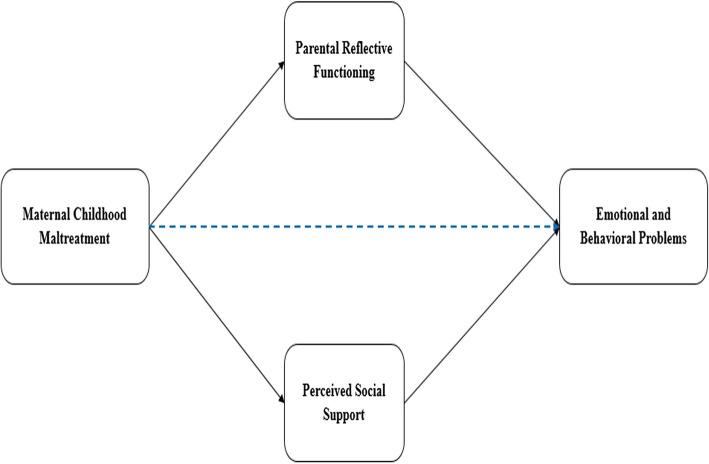
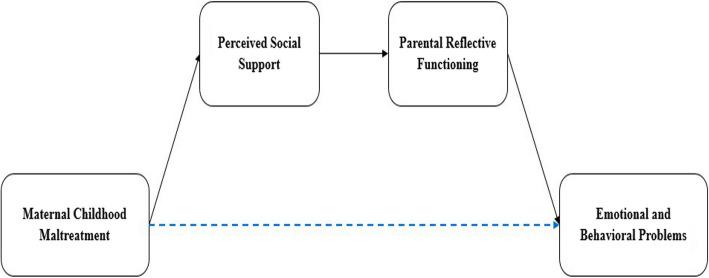
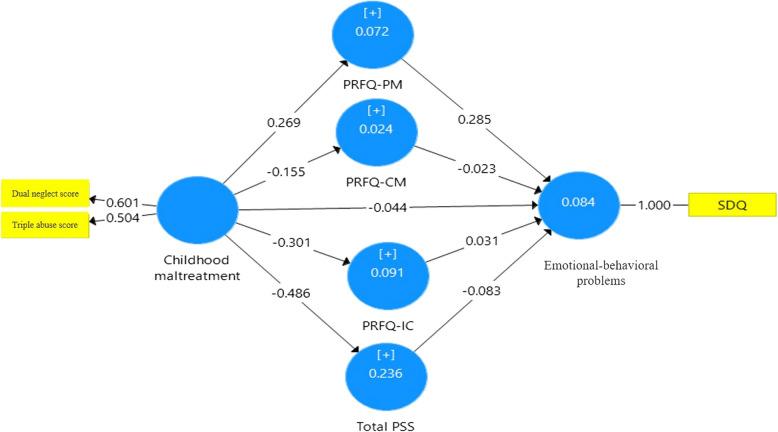
Childhood maltreatment has profound and long-lasting effects, not only on the victims but also on their offspring when they become parents later in life. This study aimed to investigate the role of two key mediating factors-parental reflective functioning and perceived social support-in the relationship between maternal childhood maltreatment and children's emotional and behavioral problems. We conducted a cross-sectional study in Iran from March to June 2024. Mothers of preschool children (4-6 years old) with emotional or behavioral problems (N = 222; Mean age = 34.06 ± 4.2 years) completed measures of Childhood maltreatment Questionnaire (CTQ), Parental Reflective Functioning Questionnaire (PRFQ), Perceived Social Support (PSS), and children's emotional and behavioral outcomes, as assessed using the Strengths and Difficulties Questionnaire (SDQ). The SDQ includes subscales for emotional symptoms, conduct problems, hyperactivity/inattention, peer relationship problems, and prosocial behavior. Structural equation modeling (SEM) was used to assess the conceptual model. The results revealed that childhood maltreatment had no direct association with children's emotional and behavioral problems. However, childhood maltreatment was positively and indirectly related to children's emotional and behavioral problems (including emotional symptoms, conduct problems, hyperactivity/inattention, and peer relationship problems) and negatively and indirectly related to children's prosocial behavior. These associations were mediated through pre-mentalizing modes of parental reflective functioning. Additionally, the analysis revealed no significant mediating role of perceived social support in this relationship. The findings highlight the significant indirect association between childhood maltreatment and various aspects of children's emotional and behavioral problems through pre-mentalizing modes of parental reflective functioning. This underscores the critical role of enhancing parental reflective abilities to mitigate the adverse outcomes of childhood maltreatment on children's emotional regulation and behavioral adjustment.
童年期受虐具有深远且持久的影响,不仅对受害者如此,对那些日后为人父母的受害者后代亦是如此。本研究旨在探讨两个关键中介因素——父母反思功能和感知到的社会支持——在母亲童年期受虐与儿童情绪和行为问题之间的关系中所起的作用。我们于2024年3月至6月在伊朗开展了一项横断面研究。患有情绪或行为问题的学龄前儿童(4至6岁)的母亲(N = 222;平均年龄 = 34.06 ± 4.2岁)完成了童年期受虐问卷(CTQ)、父母反思功能问卷(PRFQ)、感知到的社会支持(PSS)以及儿童情绪和行为结果的测量,儿童情绪和行为结果通过优势与困难问卷(SDQ)进行评估。SDQ包括情绪症状、行为问题、多动/注意力不集中、同伴关系问题和亲社会行为等分量表。采用结构方程模型(SEM)来评估概念模型。结果显示,童年期受虐与儿童情绪和行为问题没有直接关联。然而,童年期受虐与儿童情绪和行为问题(包括情绪症状、行为问题、多动/注意力不集中和同伴关系问题)呈正相关且间接相关,与儿童亲社会行为呈负相关且间接相关。这些关联是通过父母反思功能的前心理化模式介导的。此外,分析表明感知到的社会支持在这种关系中没有显著的中介作用。研究结果凸显了童年期受虐与儿童情绪和行为问题的各个方面之间通过父母反思功能的前心理化模式存在显著的间接关联。这强调了提高父母反思能力对于减轻童年期受虐对儿童情绪调节和行为调整的不良后果的关键作用。


 Zotero 插件