
抗坏血酸引发通过增强老化燕麦种子中的线粒体抗坏血酸-谷胱甘肽循环及相关基因表达来恢复种子活力。
Ascorbic acid priming restores the seed vigor by enhancing the mitochondrial AsA-GSH cycle and related gene expression in the aged oat seeds.
作者信息
Mi Chunjiao, Hong Liu, Sun Shoujiang, Zhao Shiqiang, Dou Liru, Mao Peisheng
机构信息
Forage Seed Laboratory, College of Grassland Science and Technology, China Agricultural University, Beijing, China.
出版信息
Physiol Plant. 2025 Mar-Apr;177(2):e70190. doi: 10.1111/ppl.70190.
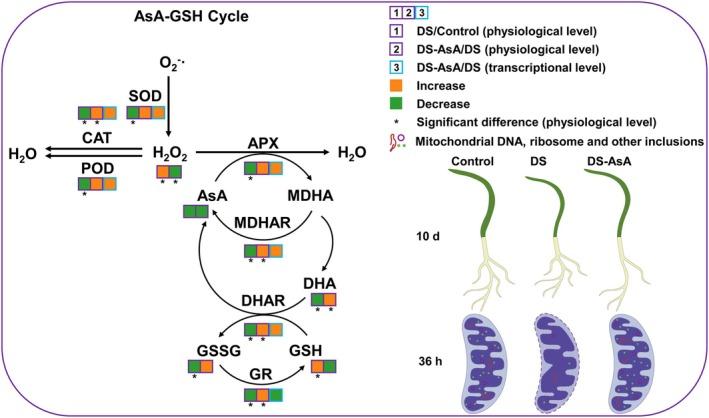
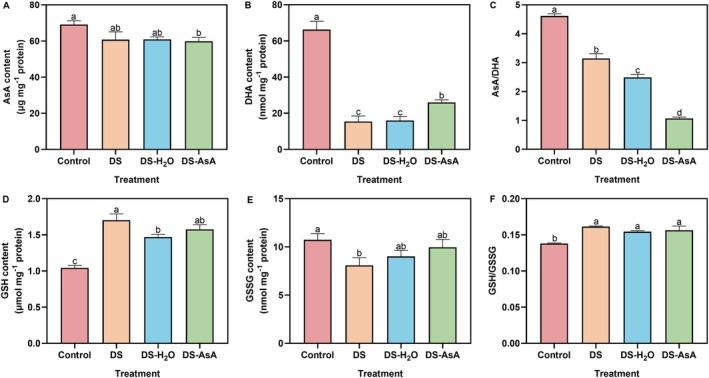
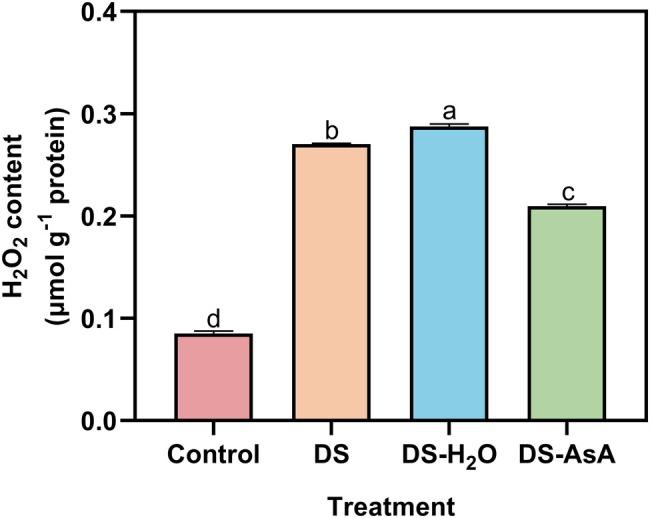
Seed priming is an effective way to activate defense mechanisms before germination, enhancing seed vigor and stress resistance. Ascorbic acid (AsA) is an important signaling molecule that plays a crucial role in balancing cellular reactive oxygen species. However, whether AsA priming can enhance seed vigor in oat (Avena sativa) and the underlying mechanisms remain unclear. This study primed aged seeds (controlled deterioration at 45°C for 5 days) with 1.5 mM AsA for 24 h. Primed seeds were then sampled after 36 h of imbibition for seed assays. Significant increases in germination percentage, vigor index, shoot and root length, coupled with a significant reduction in mean germination time, demonstrated that AsA priming effectively restored seed vigor. Ultrastructural observations of mitochondria isolated from embryos presented that AsA priming repaired structural damage in aged seeds, with intact double membranes and clear internal cristae observed. Excessive HO accumulation was discovered in mitochondria of aged seeds, while AsA priming reduced HO levels by increasing the activities of CAT, GR, MDHAR and DHAR. AsA priming also increased antioxidant content, particularly DHA, contributing to reduced oxidative stress. Furthermore, transcriptomic analysis highlighted the upregulation of genes associated with antioxidant defense, including APX, CAT, DHAR and MDHAR, indicating enhanced repair and protection pathways in the mitochondrial AsA-GSH cycle. This suggests that AsA priming would increase the activity of antioxidant enzymes, the content of antioxidants, and expression of genes related to AsA-GSH cycle in aged oat seeds, which was conducive to repairing mitochondrial damage and enhancing seed vigor.
种子引发是在种子萌发前激活防御机制、提高种子活力和抗逆性的有效方法。抗坏血酸(AsA)是一种重要的信号分子,在平衡细胞活性氧方面起着关键作用。然而,AsA引发是否能提高燕麦种子活力及其潜在机制尚不清楚。本研究用1.5 mM AsA对老化种子(45℃控制劣变5天)进行24小时引发处理。引发后的种子在吸胀36小时后取样进行种子测定。发芽率、活力指数、地上部和根长显著增加,同时平均发芽时间显著缩短,表明AsA引发有效地恢复了种子活力。对从胚中分离的线粒体进行超微结构观察发现,AsA引发修复了老化种子的结构损伤,观察到双层膜完整且内部嵴清晰。在老化种子的线粒体中发现了过量的HO积累,而AsA引发通过提高CAT、GR、MDHAR和DHAR的活性降低了HO水平。AsA引发还增加了抗氧化剂含量,特别是DHA,有助于减轻氧化应激。此外,转录组分析突出了与抗氧化防御相关基因的上调,包括APX、CAT、DHAR和MDHAR,表明线粒体AsA-GSH循环中的修复和保护途径增强。这表明AsA引发会增加老化燕麦种子中抗氧化酶的活性、抗氧化剂的含量以及与AsA-GSH循环相关基因的表达,有利于修复线粒体损伤并提高种子活力。




 Zotero 插件