
美国家庭自来水中与室内灰尘中的全氟和多氟烷基物质(PFAS)
Per- and polyfluoroalkyl substances (PFAS) in paired tap water and house dust from United States homes.
作者信息
DeLuca Nicole M, Boettger Jason, Miller Kelsey E, Fuller Christopher, Minucci Jeffrey M, Ashley Peter J, Cox David, DeWalt Gary, Friedman Warren, Pinzer Eugene A, Bradham Karen D, McCord James, Hubal Elaine A Cohen
机构信息
Center for Public Health and Environmental Assessment, Office of Research and Development, US Environmental Protection Agency, Research Triangle Park, NC, USA.
Oak Ridge Institute for Science and Education, Center for Public Health and Environmental Assessment, Office of Research and Development, US Environmental Protection Agency, Research Triangle Park, NC, USA.
出版信息
Indoor Environ. 2024 Jul 18;1(3):100033. doi: 10.1016/j.indenv.2024.100033.
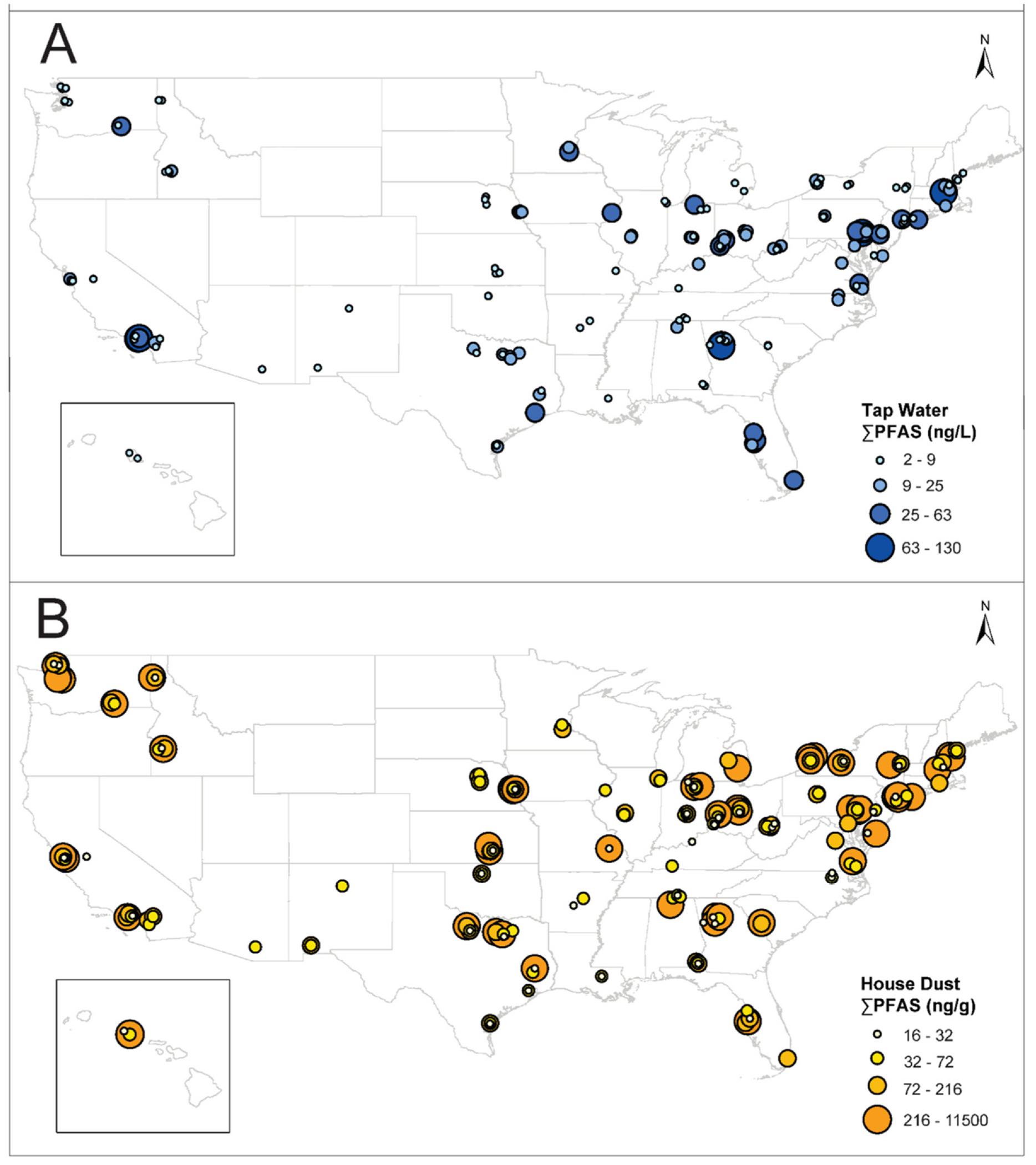
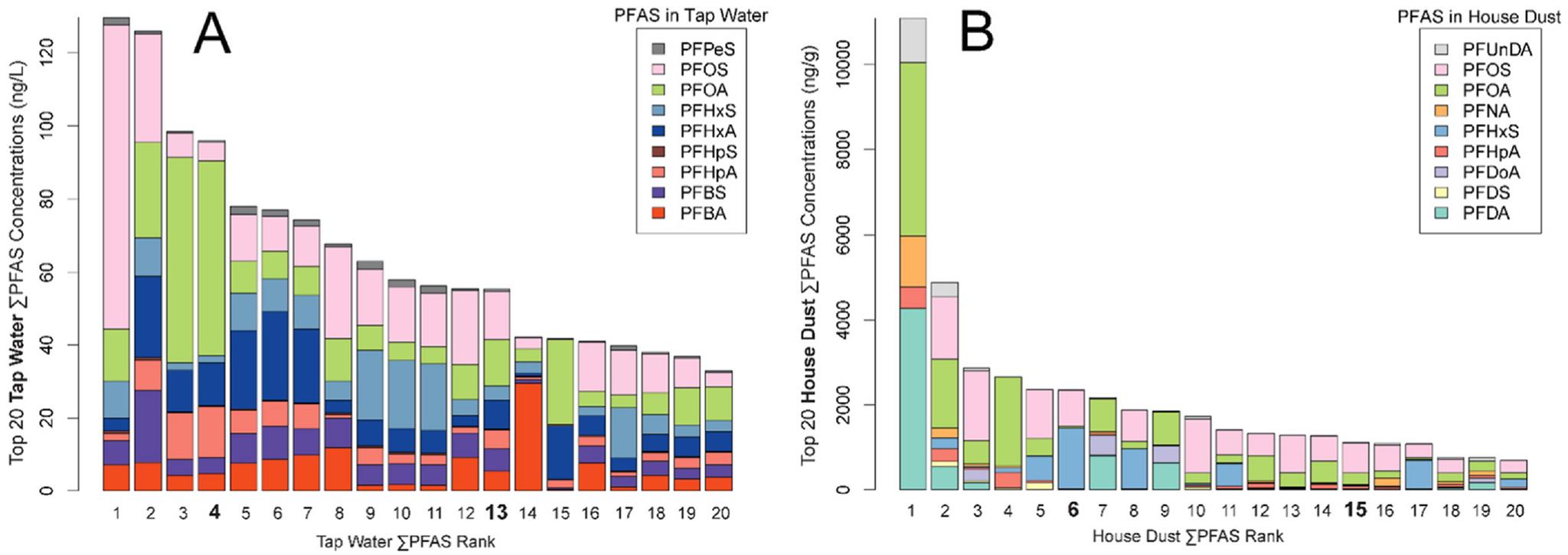
Most people in the United States have been exposed to per- and polyfluoroalkyl substances (PFAS) which have been linked to a wide array of adverse health conditions in adults and children. The consumption of contaminated drinking water is an important human exposure pathway to PFAS. Residential sources also contribute to PFAS exposure through dermal contact and ingestion of house dust, which acts as an aggregate of chemicals from sources like furnishing materials and consumer products. The U.S. Department of Housing and Urban Development (HUD) conducted the first nationwide survey of residential hazards called the American Healthy Homes Survey (AHHS) in 2005, followed by a second survey (AHHS II) in 2017. The U.S. Environmental Protection Agency (EPA) collaborated with HUD on both efforts and subsequently analyzed PFAS in household tap water and house dust collected from the same homes during the AHHS II study. This study leverages these paired samples to investigate potentially important exposure sources and pathways in the residential environment. Here we report results for paired household tap water and house dust samples from 241 homes for 13 and 16 PFAS chemicals, respectively. All 13 targeted chemicals were detected in the household tap water samples with detections ranging from 100 % for PFBS to 1 % for PFNS, and all 16 targeted chemicals were detected in the house dust samples with detections ranging from 97 % for PFOA to 9 % for PFNS. Four chemicals (PFOA, PFOS, PFHxS, and PFHpA) were measured above the limit of detection in at least 50 % of the samples in both media. All households had at least one of the targeted PFAS detected in both their tap water and house dust. Results provided evidence that geographical factors, such as proximity to ambient contamination sources, were main drivers of PFAS contamination in tap water, while PFAS contamination in house dust was driven mainly by within-home sources. Exposure estimates calculated from the measured PFAS concentrations highlight the importance of addressing potential sources of exposure to PFAS within homes in addition to ambient sources affecting communities' drinking water, particularly to reduce children's exposure to these chemicals.
美国大多数人都接触过全氟和多氟烷基物质(PFAS),这些物质与成人和儿童的一系列不良健康状况有关。饮用受污染的水是人类接触PFAS的重要途径。居住源也会通过皮肤接触和摄入室内灰尘导致PFAS暴露,室内灰尘是家具材料和消费品等来源的化学物质聚集体。美国住房和城市发展部(HUD)于2005年进行了首次全国性的住宅危害调查,即美国健康住宅调查(AHHS),随后在2017年进行了第二次调查(AHHS II)。美国环境保护局(EPA)在这两项工作中与HUD合作,随后在AHHS II研究期间分析了从同一家庭采集的家庭自来水和室内灰尘中的PFAS。本研究利用这些配对样本调查住宅环境中潜在的重要暴露源和途径。在此,我们分别报告了来自241个家庭的配对家庭自来水和室内灰尘样本中13种和16种PFAS化学物质的检测结果。在家庭自来水样本中检测到了所有13种目标化学物质,检测率从全氟丁烷磺酸(PFBS)的100%到全氟萘磺酸(PFNS)的1%不等,在室内灰尘样本中检测到了所有16种目标化学物质,检测率从全氟辛酸(PFOA)的97%到全氟萘磺酸(PFNS)的9%不等。四种化学物质(全氟辛酸、全氟辛烷磺酸、全氟己烷磺酸和全氟庚酸)在两种介质中至少50%的样本中检测值高于检测限。所有家庭的自来水和室内灰尘中至少检测到一种目标PFAS。结果表明,地理因素,如靠近周围污染源,是自来水中PFAS污染的主要驱动因素,而室内灰尘中的PFAS污染主要由家庭内部来源驱动。根据测得的PFAS浓度计算的暴露估计值突出了除影响社区饮用水的周围来源外,解决家庭内部PFAS潜在暴露源的重要性,特别是为了减少儿童接触这些化学物质。


 Zotero 插件