
通过光调节激酶对一种内源性标记蛋白进行体内调控。
In vivo regulation of an endogenously tagged protein by a light-regulated kinase.
作者信息
Bao Mengjing, Lepeta Katarzyna, Aguilar Gustavo, Schnider Sophie, Affolter Markus, Vigano M Alessandra
机构信息
Biozentrum, University of Basel, Spitalstrasse 41, CH-4056 Basel, Switzerland.
出版信息
G3 (Bethesda). 2025 Jun 4;15(6). doi: 10.1093/g3journal/jkaf073.
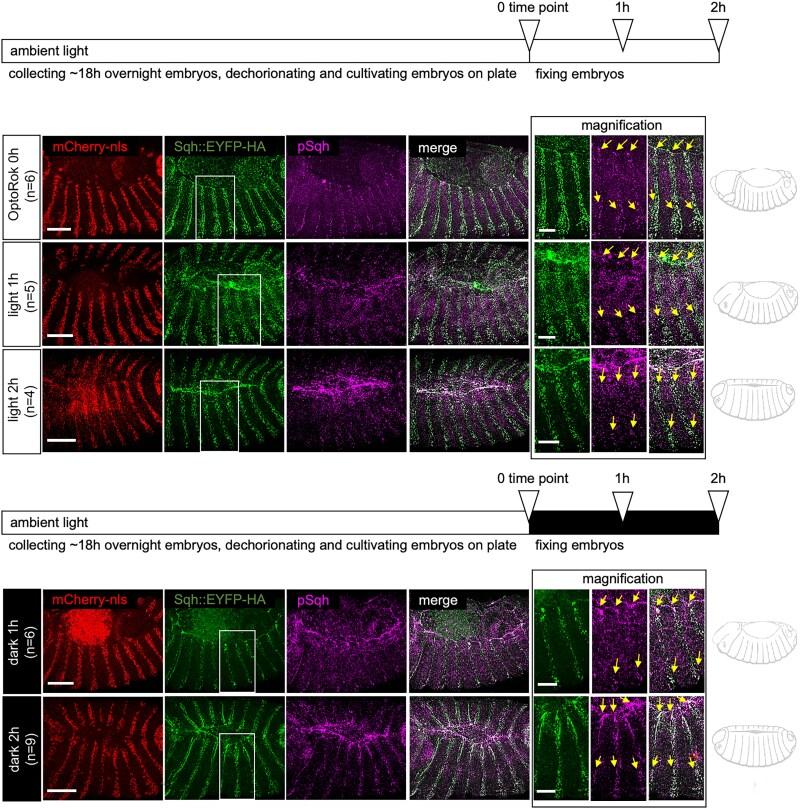
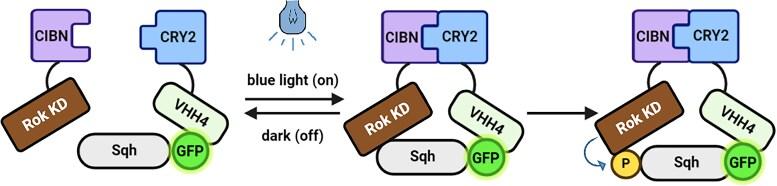
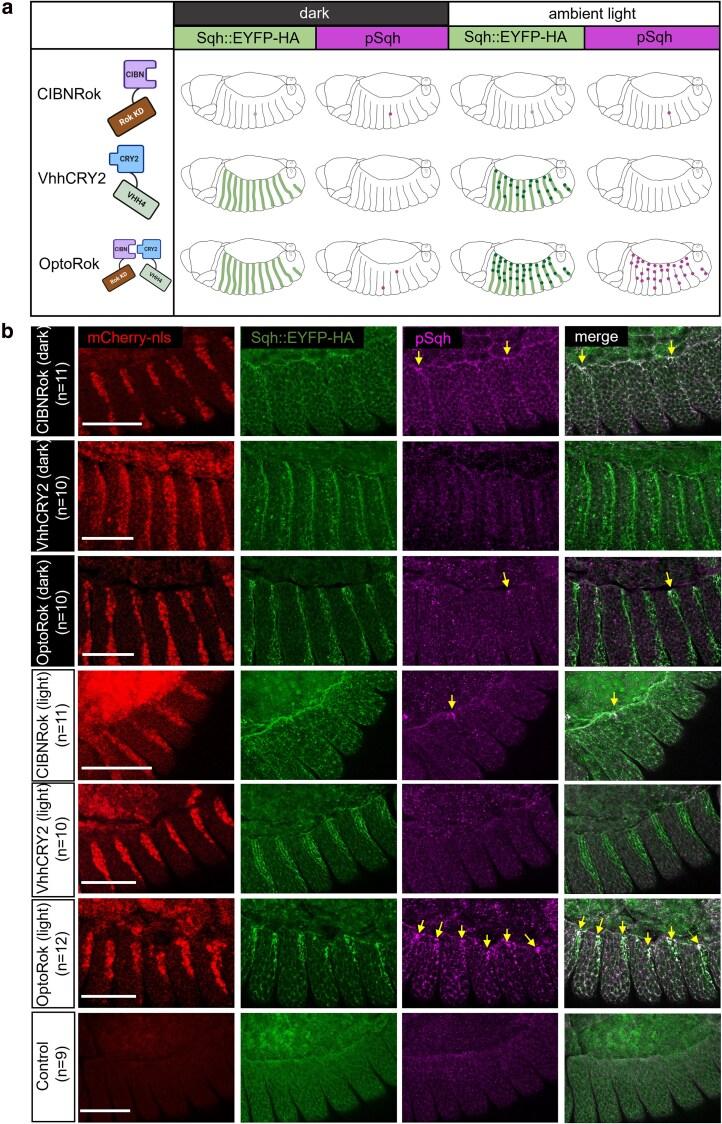
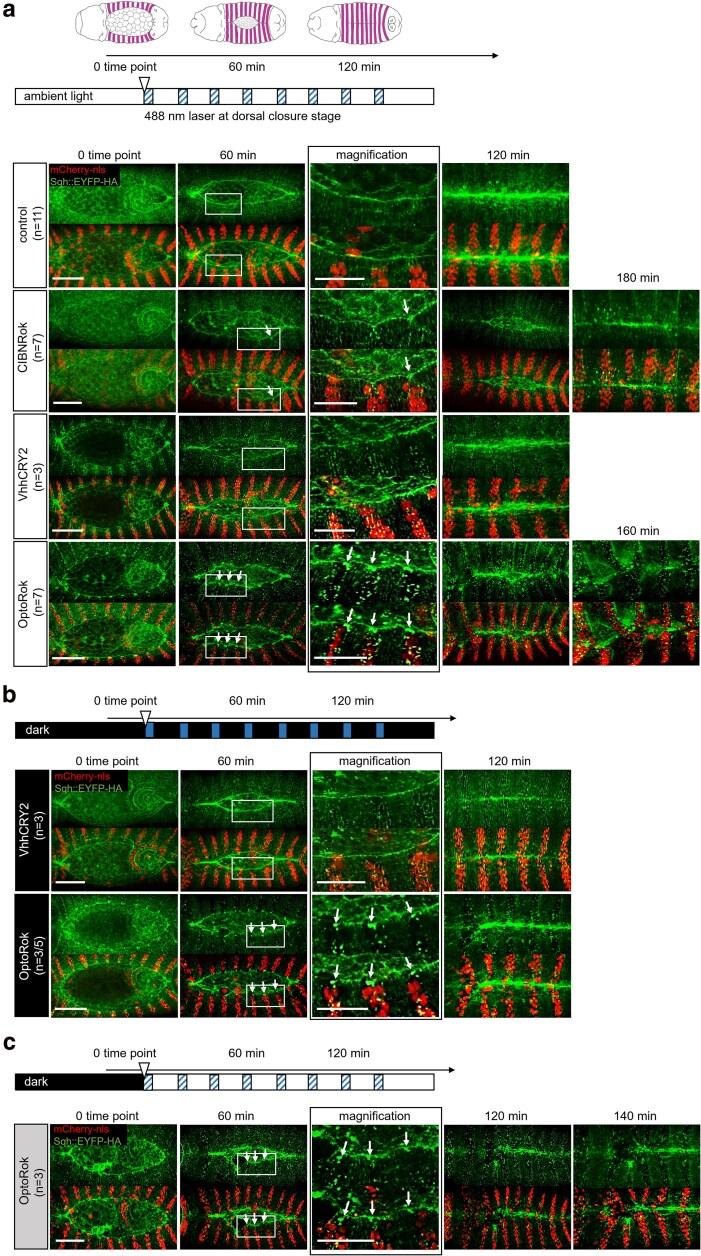
Post-translational modifications (PTMs) are indispensable modulators of protein activity. Most cellular behaviors, from cell division to cytoskeletal organization, are controlled by PTMs, their misregulation being associated with a plethora of human diseases. Traditionally, the role of PTMs has been studied employing biochemical techniques. However, these approaches fall short when studying PTM dynamics in vivo. In recent years, functionalized protein binders have allowed the PTM of endogenous proteins by bringing an enzymatic domain in close proximity to the protein they recognize. To date, most of these methods lack the temporal control necessary to understand the complex effects triggered by PTMs. In this study, we have developed a method to phosphorylate endogenous Myosin in a light-inducible manner. The method relies both on nanobody-targeting and light-inducible activation in order to achieve both tight specificity and temporal control. We demonstrate that this technology is able to disrupt cytoskeletal dynamics during Drosophila embryonic development. Together, our results highlight the potential of combining optogenetics and protein binders for the study of the proteome in multicellular systems.
翻译后修饰(PTMs)是蛋白质活性不可或缺的调节剂。从细胞分裂到细胞骨架组织,大多数细胞行为都受PTMs控制,其失调与多种人类疾病相关。传统上,PTMs的作用是通过生化技术进行研究的。然而,在研究体内PTM动态时,这些方法存在不足。近年来,功能化蛋白质结合剂通过将酶结构域靠近它们识别的蛋白质,实现了对内源蛋白质的PTM。迄今为止,这些方法大多缺乏理解PTMs触发的复杂效应所需的时间控制。在本研究中,我们开发了一种以光诱导方式磷酸化内源性肌球蛋白的方法。该方法依赖于纳米抗体靶向和光诱导激活,以实现严格的特异性和时间控制。我们证明,该技术能够在果蝇胚胎发育过程中破坏细胞骨架动态。总之,我们的结果突出了将光遗传学和蛋白质结合剂相结合用于多细胞系统蛋白质组研究的潜力。
 Zotero 插件