
使用漫射霍夫曼图案探测器进行高分辨率X射线扫描以减少辐射损伤。
High-resolution X-ray scanning with a diffuse Huffman-patterned probe to reduce radiation damage.
作者信息
Aminzadeh Alaleh, Kingston Andrew M, Roberts Lindon, Paganin David M, Petersen Timothy C, Svalbe Imants D
机构信息
Department of Materials Physics, Research School of Physics, Australian National University, Australia.
School of Mathematics and Statistics, University of Sydney, Australia.
出版信息
J Synchrotron Radiat. 2025 May 1;32(Pt 3):700-717. doi: 10.1107/S1600577525002127. Epub 2025 Apr 9.
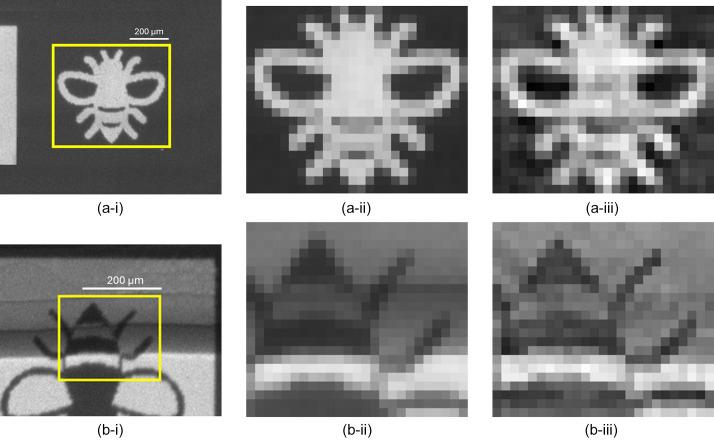
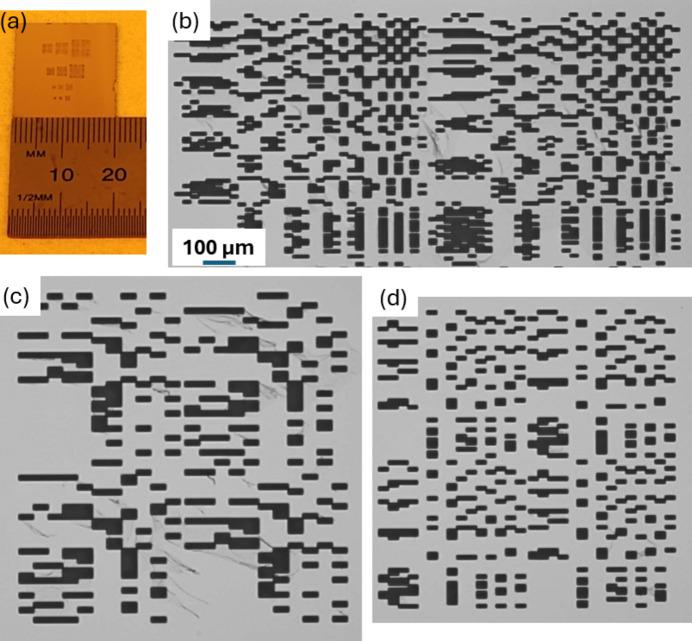
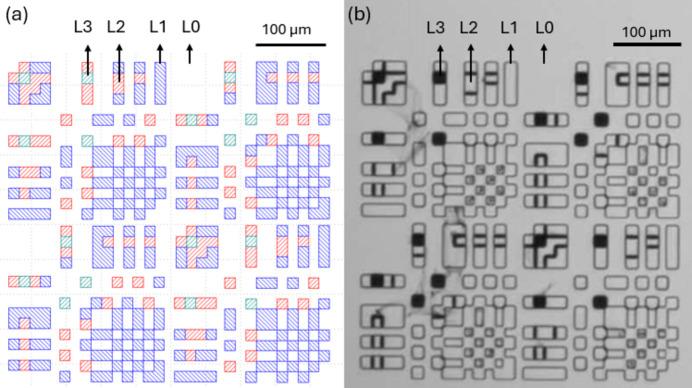
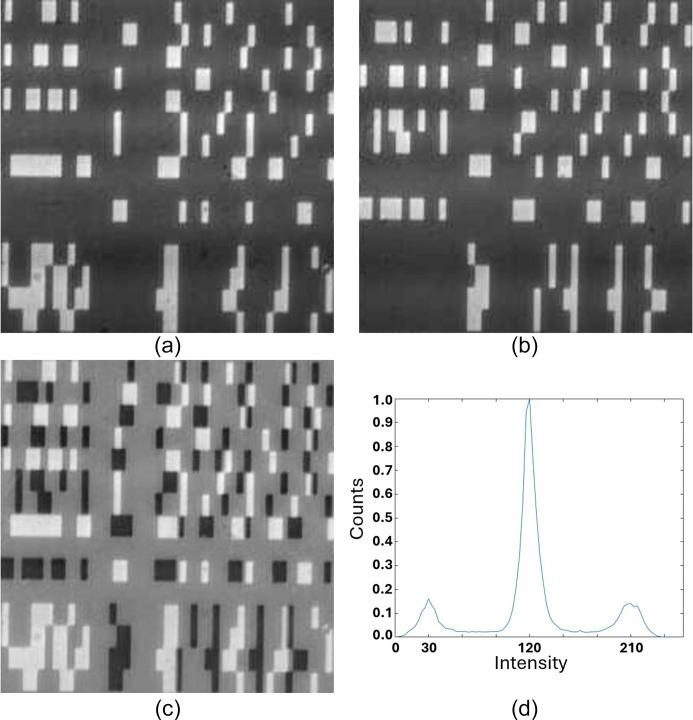
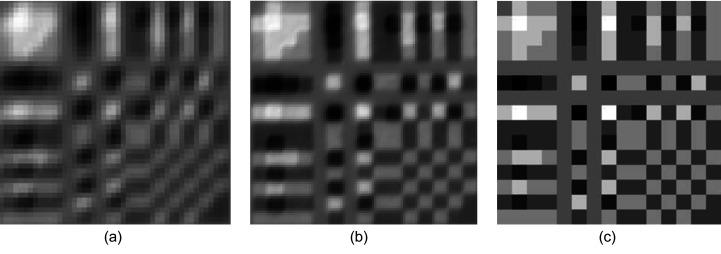
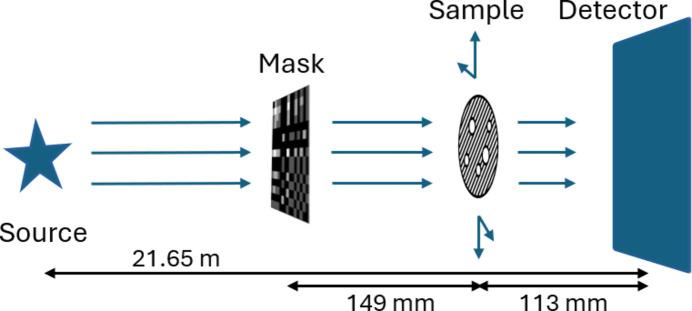
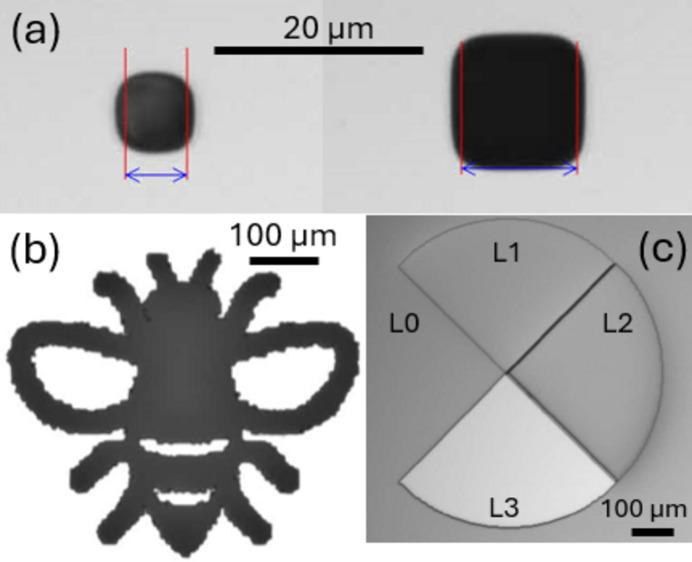
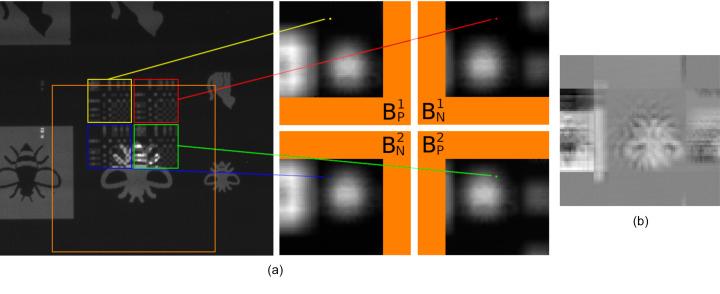
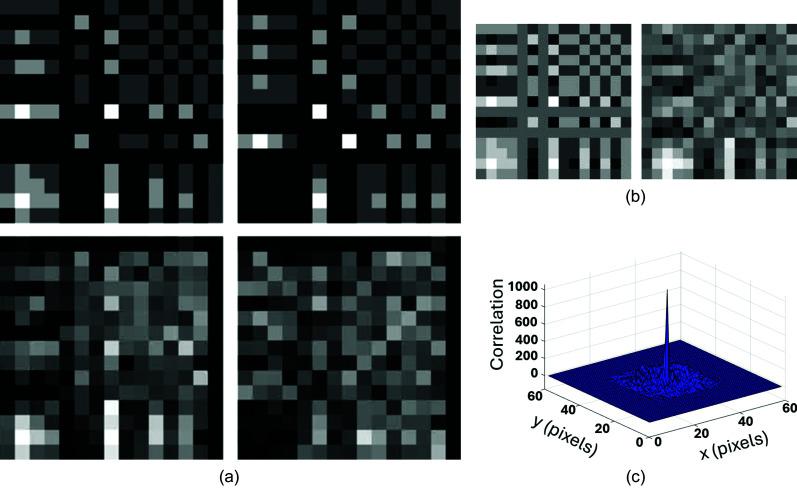
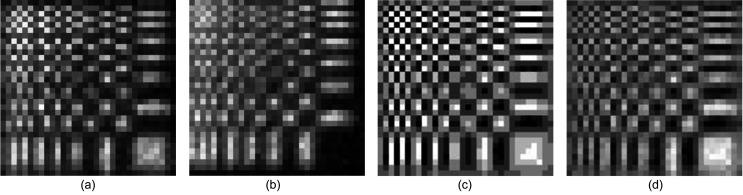
Scanning objects with a tightly focused beam (of photons or electrons for example) can provide high-resolution images. However, rapid deposition of energy into a small area can damage tissues in organic samples or may rearrange the chemical structure or physical properties of inorganic materials. Scanning an object with a broad, or diffuse, beam can deliver an equivalent probe energy but spread it over a much wider footprint. However, typically the imaging resolution is proportional to the probe diameter and a diffuse probe sacrifices resolution. Here we propose a method to achieve high resolution' imaging (in the sense that resolution is smaller than the probe diameter) using a diffuse probe. We achieve this by encoding a pattern onto the probe and employing a decoding step to recover a tight delta-like impulse response. Huffman sequences, by design, have the optimal delta-like autocorrelation for aperiodic (non-cyclic) convolution and are well conditioned. Here we adapt 1D Huffman sequences to design 2D Huffman-like discrete arrays as diffuse imaging probes that have spatially broad, relatively thin, uniform intensity profiles and have excellent aperiodic autocorrelation metrics. Examples of broad shaped diffuse beams were developed for the case of X-ray imaging. A variety of masks were fabricated by the deposition of finely structured layers of tantalum on a silicon oxide wafer. The layers form a pattern of discrete pixels that modify the shape of an incident uniform beam of low-energy X-rays as it passes through the mask. The intensity profiles of the X-ray beams after transmission through these masks were validated, first by acquiring direct-detector X-ray images of the masks, and second by raster scanning a pinhole over each mask pattern, pixel-by-pixel, collecting bucket' signals as applied in traditional ghost imaging. The masks were then used to raster scan the shaped X-ray beam over several simple binary and `gray' test objects, again producing bucket signals, from which sharp reconstructed object images were obtained by deconvolving their bucket images.
用紧密聚焦的光束(例如光子或电子束)扫描物体可以提供高分辨率图像。然而,将能量快速沉积到小区域会损坏有机样品中的组织,或者可能改变无机材料的化学结构或物理性质。用宽光束或漫射光束扫描物体可以传递等量的探测能量,但会将其分散在更宽的区域上。然而,通常成像分辨率与探测直径成正比,漫射探测会牺牲分辨率。在此,我们提出一种使用漫射探测器实现“高分辨率”成像的方法(即分辨率小于探测器直径)。我们通过在探测器上编码图案并采用解码步骤来恢复紧密的类似δ的脉冲响应来实现这一点。通过设计,哈夫曼序列对于非周期性(非循环)卷积具有最佳的类似δ的自相关,并且条件良好。在此,我们将一维哈夫曼序列改编为设计二维类哈夫曼离散阵列作为漫射成像探测器,这些探测器具有空间上宽、相对薄、强度均匀的分布,并且具有出色的非周期性自相关指标。针对X射线成像的情况开发了各种宽形状漫射光束的示例。通过在氧化硅晶片上沉积精细结构的钽层制造了各种掩模。这些层形成离散像素的图案,当低能X射线的入射均匀光束穿过掩模时,会改变其形状。首先通过获取掩模的直接探测器X射线图像,其次通过在每个掩模图案上逐像素地光栅扫描针孔,收集传统鬼成像中应用的“桶”信号,来验证穿过这些掩模后的X射线束的强度分布。然后使用这些掩模在几个简单的二进制和“灰度”测试物体上光栅扫描成形的X射线束,再次产生桶信号,通过对其桶图像进行去卷积,从中获得清晰的重建物体图像。



 Zotero 插件