
测序技术对泛基因组水平分析及ESKAPE病原体中抗菌药物耐药基因检测的影响
Influence of Sequencing Technology on Pangenome-Level Analysis and Detection of Antimicrobial Resistance Genes in ESKAPE Pathogens.
作者信息
Frias-De-Diego Alba, Jara Manuel, Lanzas Cristina
机构信息
Department of Population Health and Pathobiology, College of Veterinary Medicine, North Carolina State University, Raleigh, North Carolina, USA.
出版信息
Open Forum Infect Dis. 2025 Mar 26;12(4):ofaf183. doi: 10.1093/ofid/ofaf183. eCollection 2025 Apr.
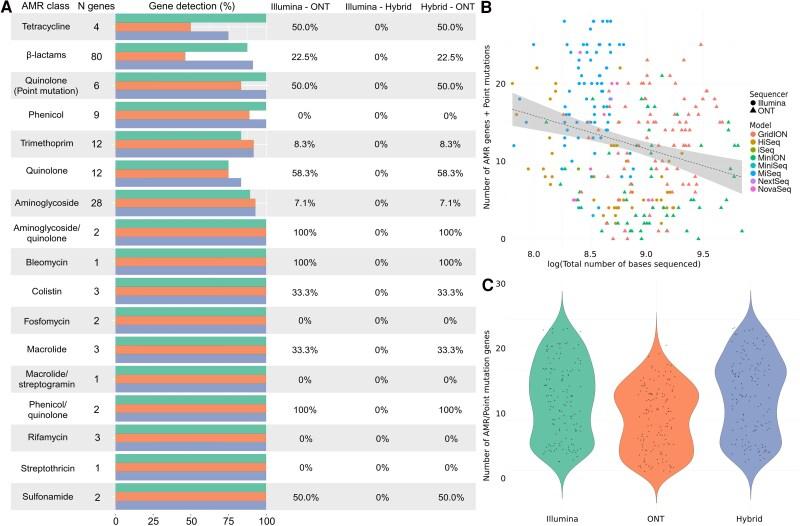
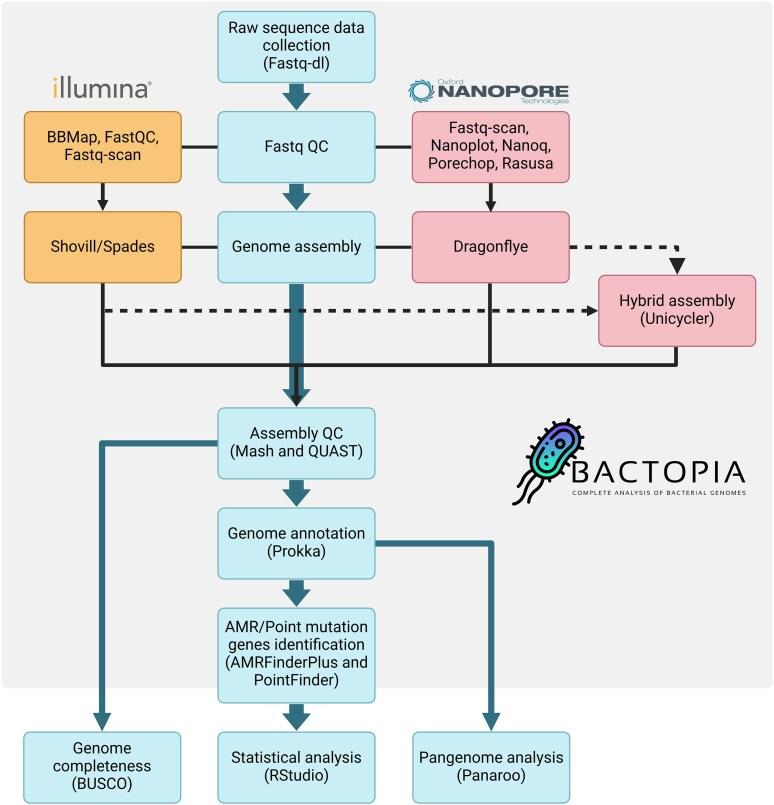
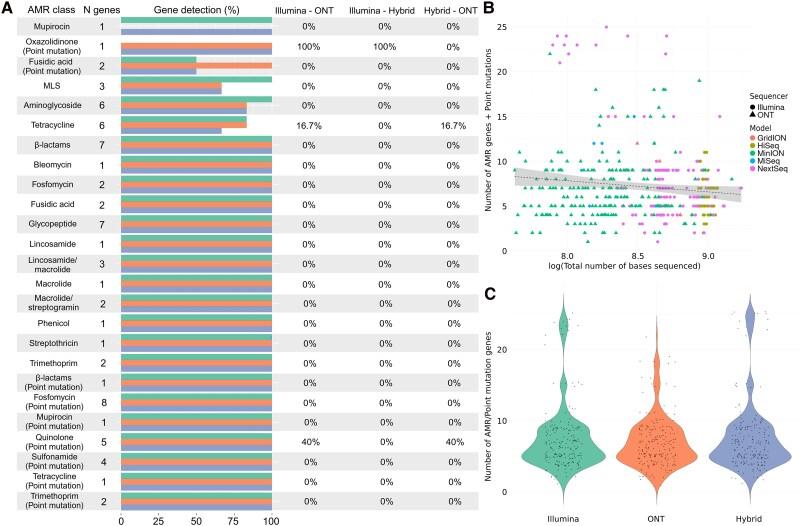
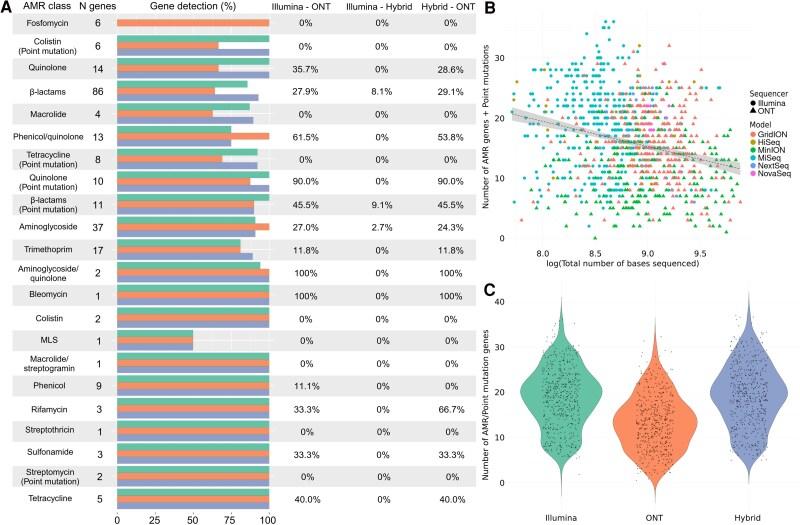
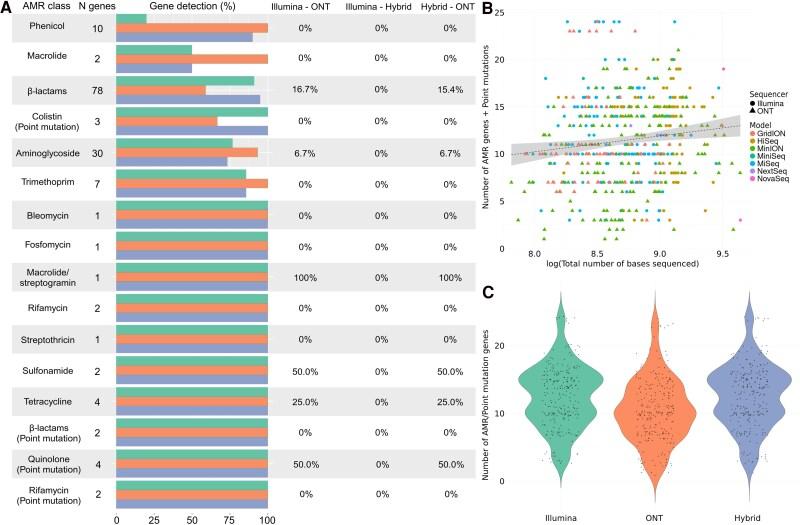
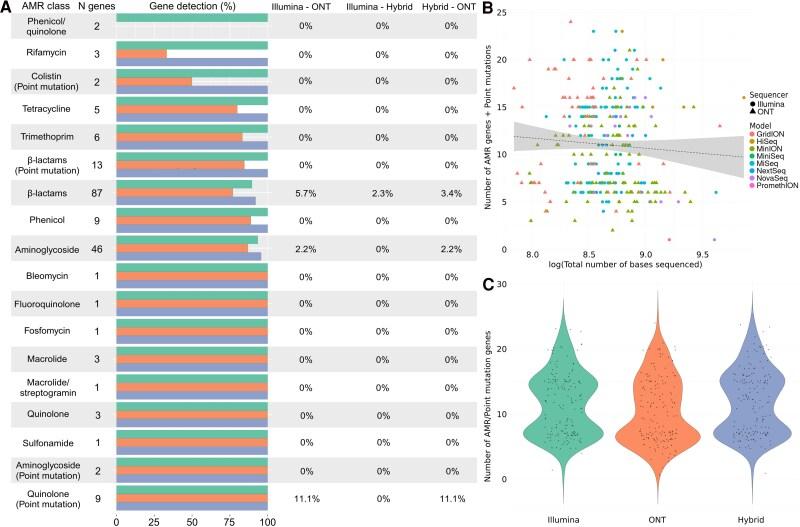
As sequencing costs decrease, short-read and long-read technologies are indispensable tools for uncovering the genetic drivers behind bacterial pathogen resistance. This study explores the differences between the use of short-read (Illumina) and long-read (Oxford Nanopore Technologies [ONT]) sequencing in detecting antimicrobial resistance (AMR) genes in ESKAPE pathogens (ie, , , , , , and ). Utilizing a dataset of 1385 whole genome sequences and applying commonly used bioinformatic methods in bacterial genomics, we assessed the differences in genomic completeness, pangenome structure, and AMR gene and point mutation identification. Illumina presented higher genome completeness, while ONT identified a broader pangenome. Hybrid assembly outperformed both Illumina and ONT at identifying key AMR genetic determinants, presented results closer to Illumina's completeness, and revealed ONT-like pangenomic content. Notably, Illumina consistently detected more AMR-related point mutations than its counterparts. This highlights the importance of method selection based on research goals, particularly when using publicly available data ranging a wide timespan. Differences were also observed for specific gene classes and bacterial species, underscoring the need for a nuanced understanding of technology limitations. Overall, this study reveals the strengths and limitations of each approach, advocating for the use of Illumina for common AMR analysis, ONT for studying complex genomes and novel species, and hybrid assembly for a more comprehensive characterization, leveraging the benefits of both technologies.
随着测序成本的降低,短读长和长读长技术成为揭示细菌病原体耐药性背后遗传驱动因素不可或缺的工具。本研究探讨了在检测ESKAPE病原体(即粪肠球菌、屎肠球菌、金黄色葡萄球菌、肺炎克雷伯菌、鲍曼不动杆菌、铜绿假单胞菌和阴沟肠杆菌)中的抗菌药物耐药性(AMR)基因时,使用短读长(Illumina)和长读长(牛津纳米孔技术公司[ONT])测序的差异。利用1385个全基因组序列数据集,并应用细菌基因组学中常用的生物信息学方法,我们评估了基因组完整性、泛基因组结构以及AMR基因和点突变鉴定方面的差异。Illumina呈现出更高的基因组完整性,而ONT鉴定出了更广泛的泛基因组。在识别关键AMR遗传决定因素方面,混合组装优于Illumina和ONT,其结果更接近Illumina的完整性,并揭示了类似ONT的泛基因组内容。值得注意的是,Illumina始终比其他方法检测到更多与AMR相关的点突变。这凸显了根据研究目标选择方法的重要性,特别是在使用跨越广泛时间跨度的公开可用数据时。在特定基因类别和细菌物种方面也观察到了差异,强调了对技术局限性进行细致入微理解的必要性。总体而言,本研究揭示了每种方法的优势和局限性,主张在进行常见AMR分析时使用Illumina,在研究复杂基因组和新物种时使用ONT,以及使用混合组装进行更全面的表征,充分利用两种技术的优势。

 Zotero 插件