
超加工食品的摄入会影响与进食相关的脑区的结构完整性,这一影响独立于肥胖且通过肥胖产生。
Ultra-processed food consumption affects structural integrity of feeding-related brain regions independent of and via adiposity.
作者信息
Morys Filip, Kanyamibwa Arsene, Fängström Daniel, Tweedale Max, Pastor-Bernier Alexandre, Azizi Houman, Liu Lang, Horstmann Annette, Dagher Alain
机构信息
Montreal Neurological Institute, McGill University, Montréal, Canada.
Department of Psychology, Faculty of Medicine, University of Helsinki, Helsinki, Finland.
出版信息
NPJ Metab Health Dis. 2025;3(1):13. doi: 10.1038/s44324-025-00056-3. Epub 2025 Apr 8.
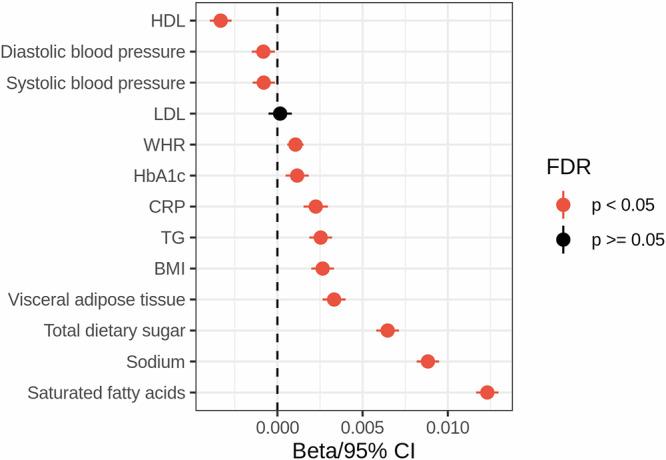
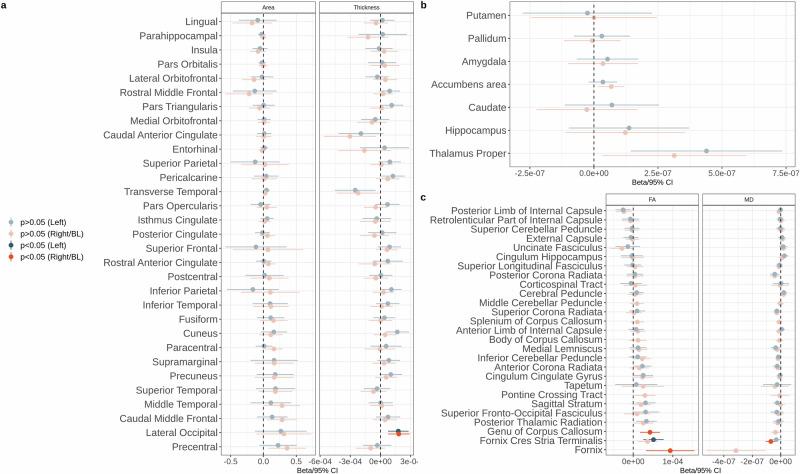
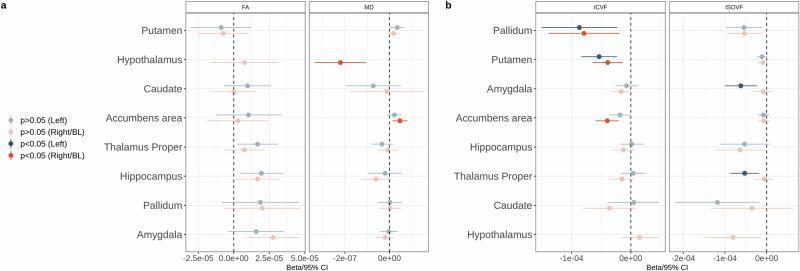
Consumption of ultra-processed foods (UPFs) increases overall caloric intake and is associated with obesity, cardiovascular disease, and brain pathology. There is scant evidence as to why UPF consumption leads to increased caloric intake and whether the negative health consequences are due to adiposity or characteristics of UPFs. Using the UK Biobank sample, we probed the associations between UPF consumption, adiposity, metabolism, and brain structure. Our analysis reveals that high UPF intake is linked to adverse adiposity and metabolic profiles, alongside cellularity changes in feeding-related subcortical brain areas. These are partially mediated by dyslipidemia, systemic inflammation and body mass index, suggesting that UPFs exert effects on the brain beyond just contributing to obesity. This dysregulation of the network of subcortical feeding-related brain structures may create a self-reinforcing cycle of increased UPF consumption.
超加工食品(UPF)的消费会增加总体热量摄入,并与肥胖、心血管疾病和脑部病变有关。关于食用UPF为何会导致热量摄入增加,以及负面健康后果是由于肥胖还是UPF的特性,几乎没有证据。我们利用英国生物银行样本,探究了UPF消费、肥胖、新陈代谢和脑结构之间的关联。我们的分析表明,高UPF摄入量与不良的肥胖和代谢特征有关,同时与进食相关的皮质下脑区的细胞组成变化有关。这些部分是由血脂异常、全身炎症和体重指数介导的,这表明UPF对大脑的影响不仅仅是导致肥胖。这种与进食相关的皮质下脑结构网络的失调可能会形成一个自我强化的循环,导致UPF消费量增加。

 Zotero 插件