
智齿拔除过程中深部压力输入对自主神经调节的影响:从候诊室到手术室
Effect of deep pressure input on autonomic regulation during wisdom tooth extraction: From waiting room to surgery.
作者信息
Chen Hsin-Yung, Yang Hsiang, Men Ching-En, Shen Chih-Hui, Chen Hsin-Ming
机构信息
Department of Occupational Therapy, College of Medicine, I-Shou University, Kaohsiung, Taiwan.
Department of Dentistry, National Taiwan University Hospital, College of Medicine, National Taiwan University, Taipei, Taiwan.
出版信息
J Dent Sci. 2025 Apr;20(2):1204-1212. doi: 10.1016/j.jds.2025.02.003. Epub 2025 Feb 11.
BACKGROUND AND PURPOSE
Tooth extraction is a common dental procedure associated with heightened anxiety, particularly during the waiting period before treatment. This stress response is regulated by the autonomic nervous system (ANS), comprising the sympathetic nervous system (SNS), which induces excitatory responses, and the parasympathetic nervous system (PsNS), which promotes relaxation. Deep pressure input, delivered through weighted vests and blankets, has been shown to shift ANS dominance from the SNS to the PsNS, facilitating stress reduction. This study investigated the effects of deep pressure input on ANS modulation using a weighted vest during the waiting phase and a weighted blanket during the tooth extraction phase.
MATERIALS AND METHODS
Healthy adults were randomly assigned to a control group or an experimental group. The control-group subjects underwent wisdom tooth extraction without deep pressure input, while the experimental-group subjects wore a weighted vest during the waiting phase and used a weighted blanket during the tooth extraction procedure. Heart rate (HR), low-frequency heart rate variability (LF-HRV), and high-frequency heart rate variability (HF-HRV) were measured to assess ANS activity.
RESULTS
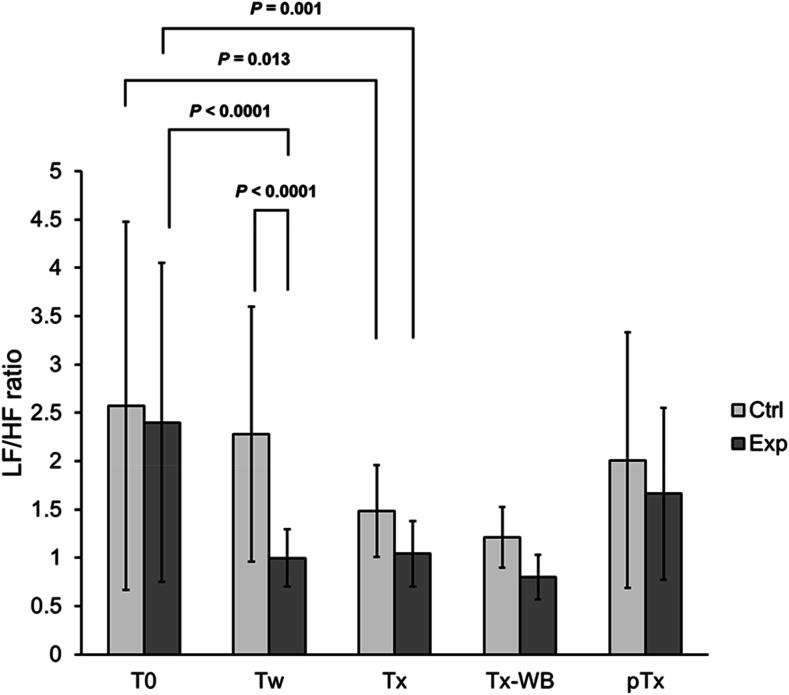
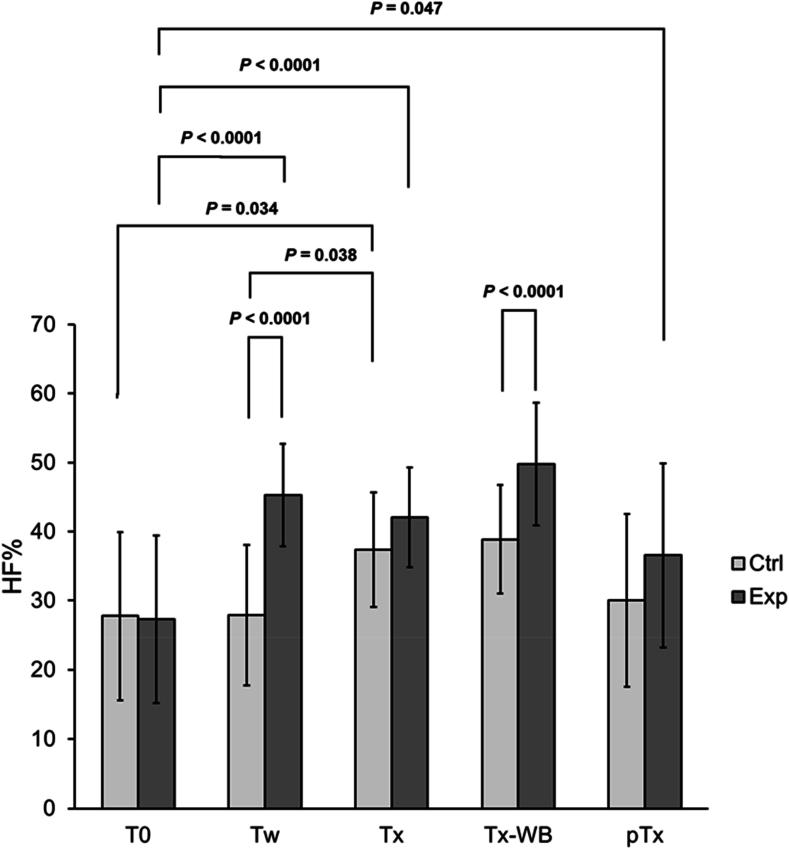
The control-group subjects exhibited increased HR, elevated LF-HRV, and reduced HF-HRV, indicating the stress-induced sympathetic activation. In contrast, the experimental-group subjects showed significantly lower HR and higher HF-HRV, demonstrating the enhanced parasympathetic activation that persists throughout the tooth extraction procedure.
CONCLUSION
Deep pressure input for high-anxiety patients can effectively reduce stress and enhances the parasympathetic activation during the wisdom tooth extraction procedure. After a large-scale clinical study, it may enter clinical application for high-anxiety patients.
背景与目的
拔牙是一种常见的牙科手术,常伴有高度焦虑,尤其是在治疗前的等待期。这种应激反应由自主神经系统(ANS)调节,自主神经系统包括诱发兴奋反应的交感神经系统(SNS)和促进放松的副交感神经系统(PsNS)。通过加重背心和毯子施加的深部压力输入已被证明能使自主神经系统的主导从交感神经系统转向副交感神经系统,从而促进压力减轻。本研究调查了在等待期使用加重背心以及在拔牙期使用加重毯子进行深部压力输入对自主神经系统调节的影响。
材料与方法
健康成年人被随机分为对照组或实验组。对照组受试者在没有深部压力输入的情况下进行智齿拔除,而实验组受试者在等待期穿着加重背心,并在拔牙过程中使用加重毯子。测量心率(HR)、低频心率变异性(LF-HRV)和高频心率变异性(HF-HRV)以评估自主神经活动。
结果
对照组受试者表现出心率增加、低频心率变异性升高和高频心率变异性降低,表明应激诱导的交感神经激活。相比之下,实验组受试者的心率显著较低,高频心率变异性较高,表明在整个拔牙过程中副交感神经激活增强。
结论
对高焦虑患者进行深部压力输入可有效减轻压力,并在智齿拔除过程中增强副交感神经激活。经过大规模临床研究后,它可能会应用于高焦虑患者的临床治疗。


 Zotero 插件