
利用系统建模揭示衰老细胞中的代谢异质性和共性。
Unraveling the metabolic heterogeneity and commonality in senescent cells using systems modeling.
作者信息
Li Gong-Hua, Li Yu-Hong, Yu Qin, Zhou Qing-Qing, Zhang Run-Feng, Weng Chong-Jun, Ge Ming-Xia, Kong Qing-Peng
机构信息
State Key Laboratory of Genetic Evolution & Animal Models, Key Laboratory of Healthy Aging Research of Yunnan Province, Kunming Key Laboratory of Healthy Aging Study, Kunming Institute of Zoology, Chinese Academy of Sciences, Kunming 650201, China.
College of Biological Resources and Food Engineering, Qujing Normal University, Qujing 655000, China.
出版信息
Life Med. 2025 Jan 20;4(2):lnaf003. doi: 10.1093/lifemedi/lnaf003. eCollection 2025 Apr.
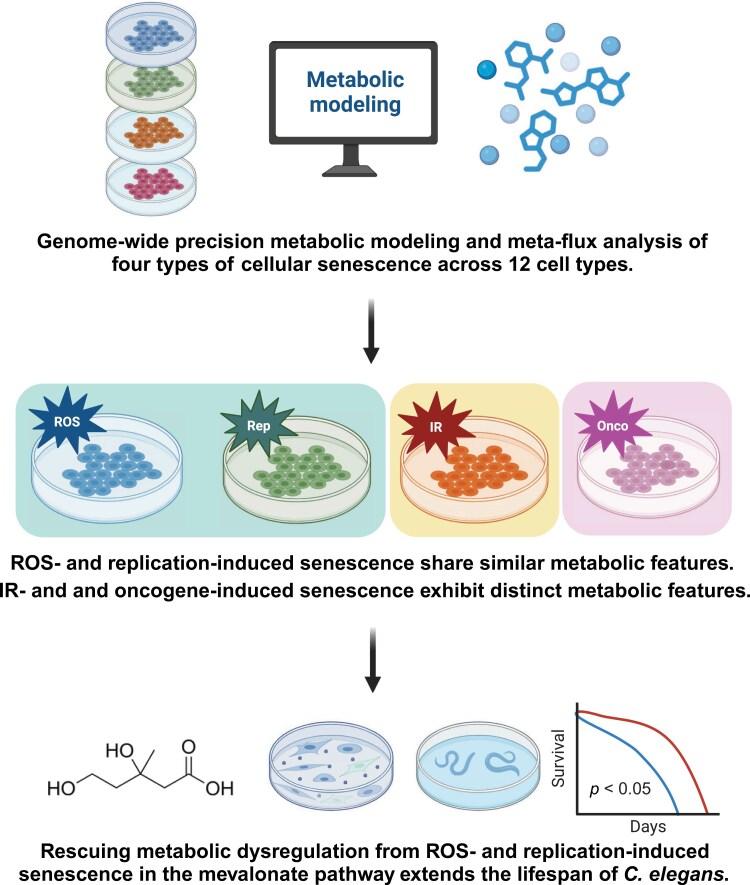
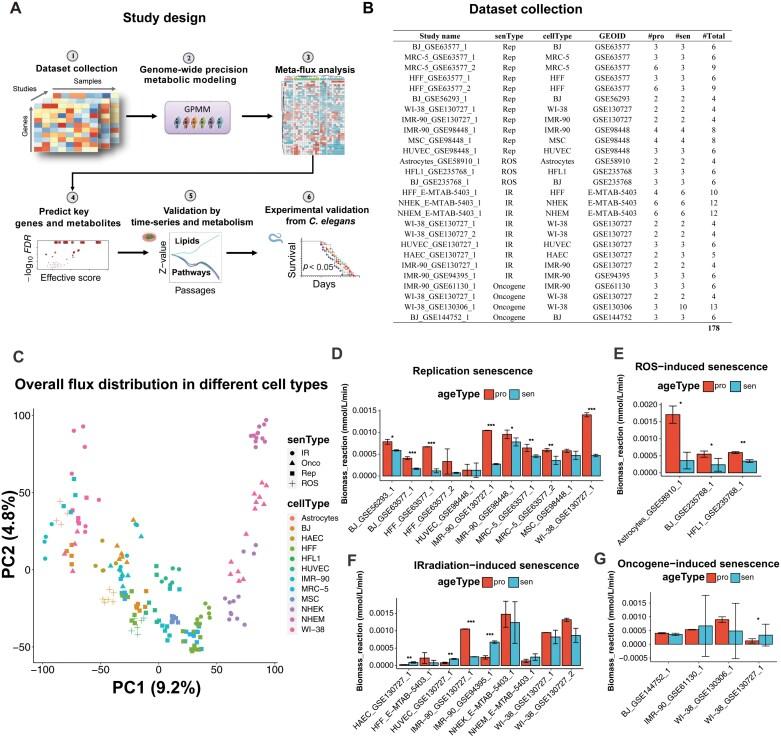
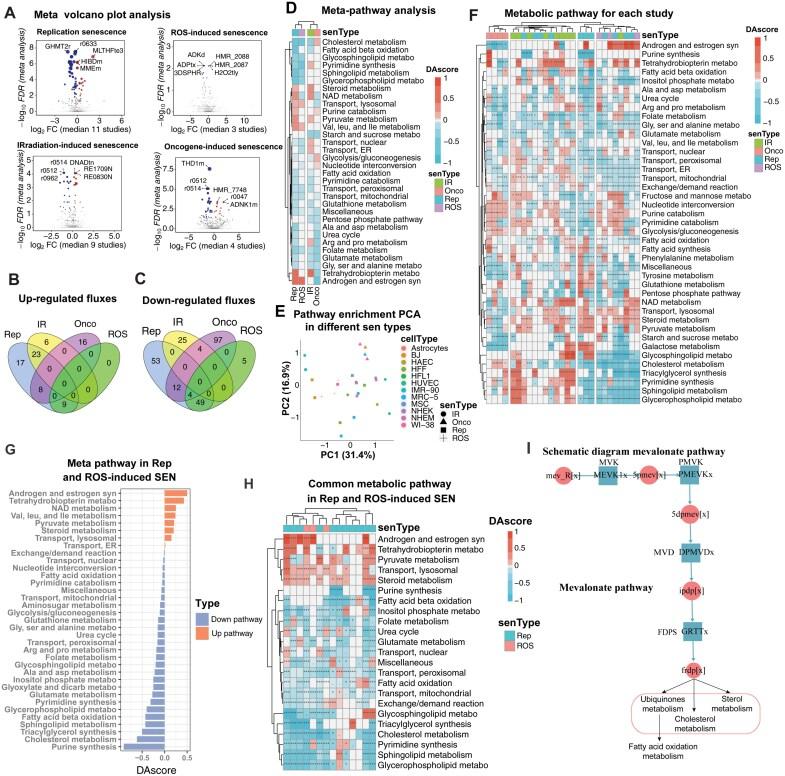
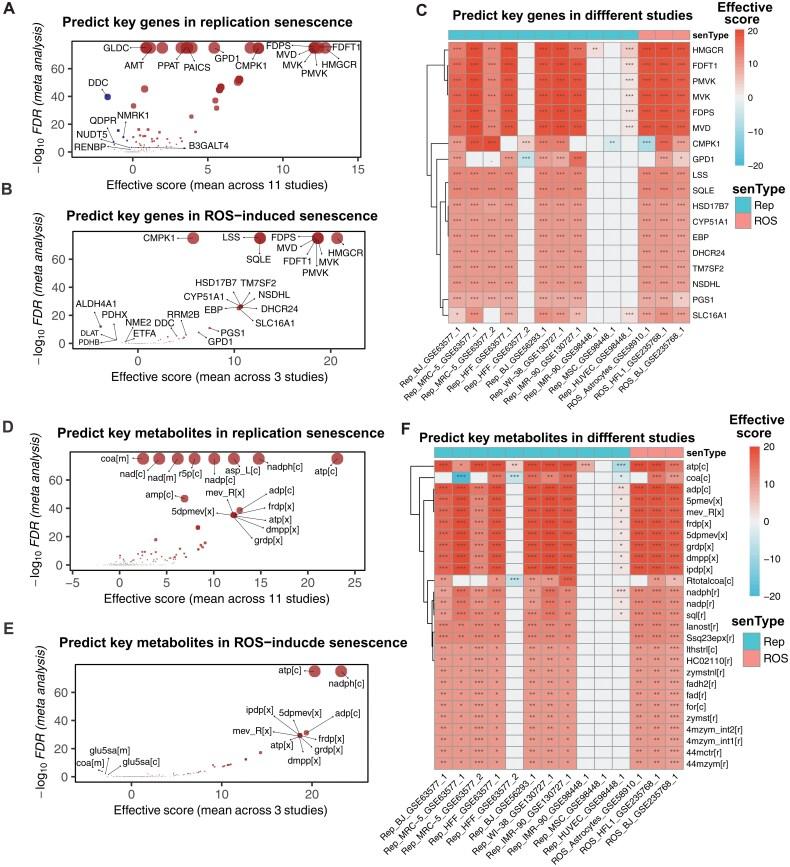
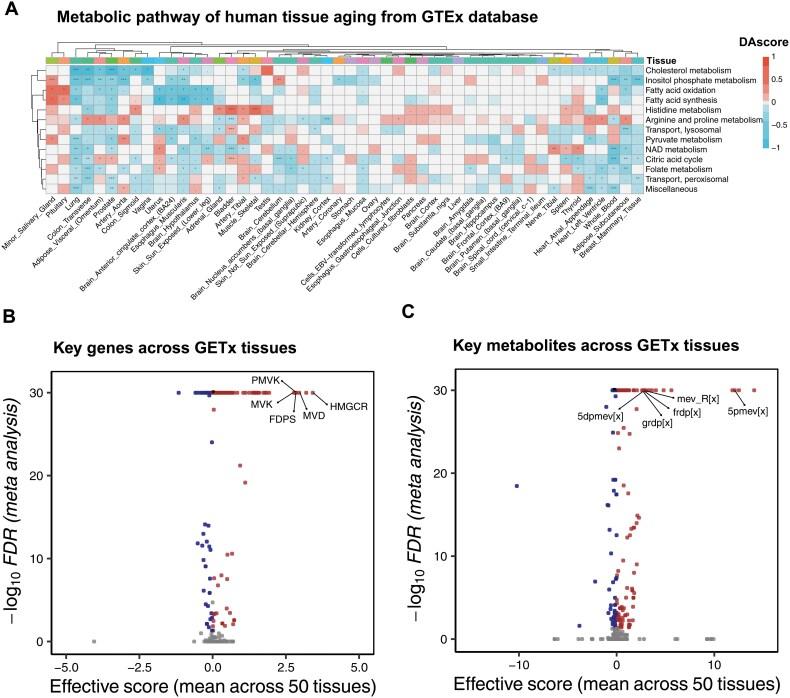
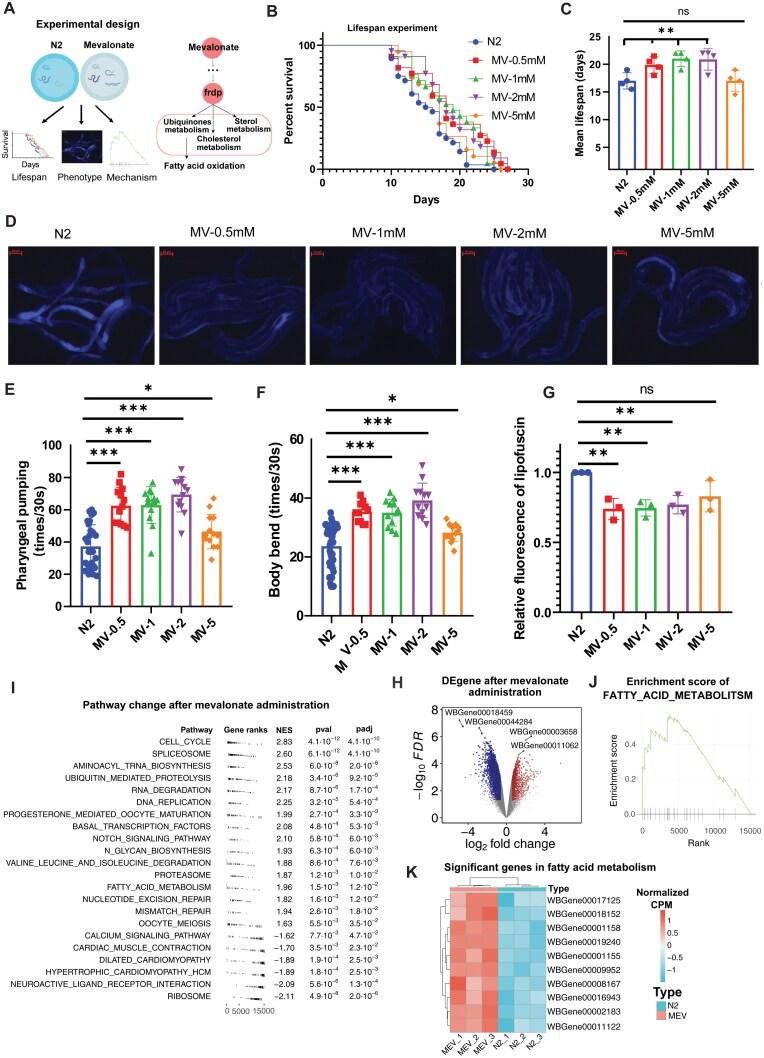
Cellular senescence is a key contributor to aging and aging-related diseases, but its metabolic profiles are not well understood. Here, we performed a systematic analysis of the metabolic features of four types of cellular senescence (replication, irradiation, reactive oxygen species [ROS], and oncogene) in 12 cell lines using genome-wide metabolic modeling and meta-analysis. We discovered that replicative and ROS-induced senescence share a common metabolic signature, marked by decreased lipid metabolism and downregulated mevalonate pathway, while irradiation and oncogene-induced senescence exhibit more heterogeneity and divergence. Our genome-wide knockout simulations showed that enhancing the mevalonate pathway, by administrating mevalonate for instance, could reverse the metabolic alterations associated with senescence and human tissue aging, suggesting a potential anti-aging or lifespan-extending effect. Indeed, the experiment in showed that administrating mevalonate significantly increased the lifespan. Our study provides a new insight into the metabolic landscape of cell senescence and identifies potential targets for anti-aging interventions.
细胞衰老在衰老及衰老相关疾病中起着关键作用,但其代谢特征尚未完全明晰。在此,我们运用全基因组代谢建模及荟萃分析,对12种细胞系中的四种细胞衰老类型(复制性、辐射性、活性氧[ROS]诱导性及癌基因诱导性)的代谢特征进行了系统分析。我们发现,复制性衰老和ROS诱导性衰老具有共同的代谢特征,表现为脂质代谢降低和甲羟戊酸途径下调,而辐射性衰老和癌基因诱导性衰老则呈现出更多的异质性和差异。我们的全基因组敲除模拟表明,例如通过给予甲羟戊酸增强甲羟戊酸途径,可逆转与衰老及人体组织老化相关的代谢改变,提示其具有潜在的抗衰老或延长寿命的作用。事实上,相关实验表明给予甲羟戊酸可显著延长寿命。我们的研究为细胞衰老的代谢格局提供了新的见解,并确定了抗衰老干预的潜在靶点。

 Zotero 插件