
基于模拟评估剂量分割研究设计对抗生素药代动力学-药效学分析的影响。
Simulation-based evaluation of the impact of dose fractionation study design on antibiotic PKPD analyses.
作者信息
Saporta Raphaël, Madan Muskan, Friberg Lena E
机构信息
Department of Pharmacy, Uppsala University, Uppsala, Sweden.
出版信息
JAC Antimicrob Resist. 2025 Apr 11;7(2):dlaf057. doi: 10.1093/jacamr/dlaf057. eCollection 2025 Apr.
OBJECTIVES
To evaluate the impact of antibiotic dose fractionation study design on pharmacokinetic/pharmacodynamic (PK/PD) indices and PKPD model estimation.
METHODS
PKPD models for meropenem and polymyxin B (PMB) were applied to (i) simulate various dose fractionation studies in mice to derive PK/PD indices and efficacy targets and (ii) perform stochastic simulations and estimations evaluating which efficacy assessment times, in addition to 24 h, would improve the estimation of drug effect parameters.
RESULTS
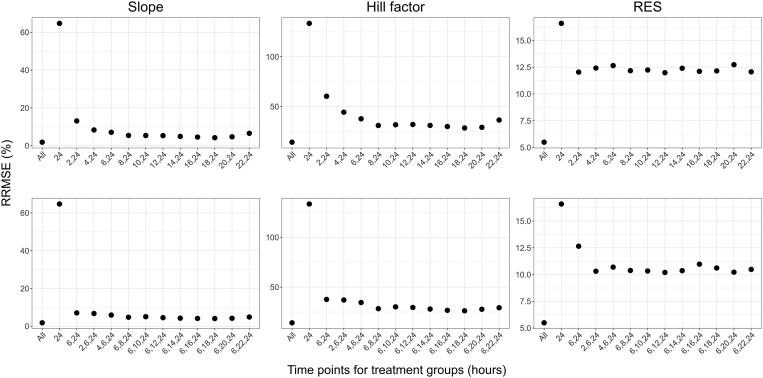
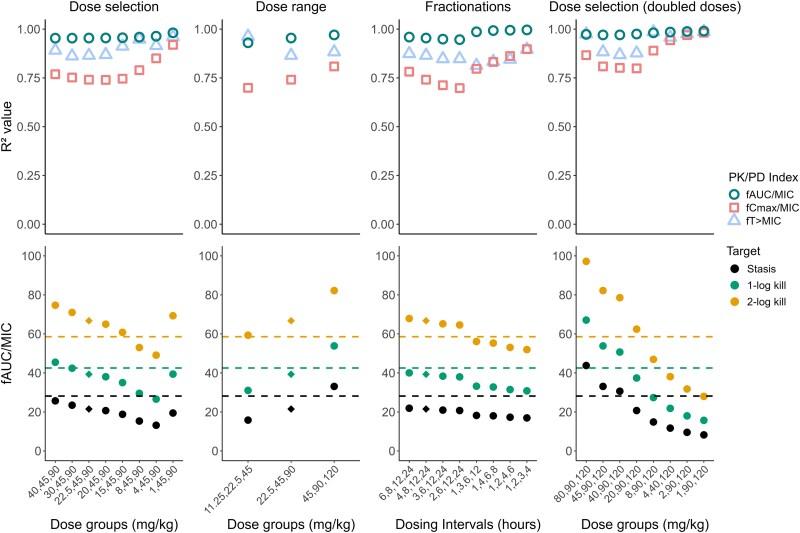
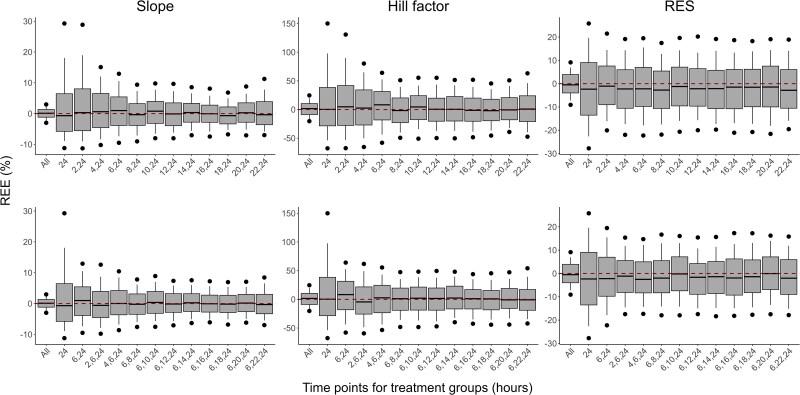
The values of PK/PD indices were primarily influenced by reductions of the dosing intervals for meropenem and by decreases of the lowest total daily dose for PMB. For certain study designs (e.g. frequent administration of higher meropenem doses), values for T > MIC and AUC/MIC were similar. Efficacy target magnitudes were also sensitive to the selected doses. Additional efficacy assessment times improved parameter accuracy (e.g. 40% reduction in relative root mean squared error of PMB effect slope). The model parameter accuracy was more affected by the selection of time points for meropenem, which included resistance, than for PMB. Efficacy measurements in the first hours after treatment start (e.g. 2 and 6 h), in addition to 24 h, were essential for resistance characterization.
CONCLUSIONS
The choice of doses and fractionations impacted PK/PD index selection and efficacy target magnitude. Depending on the antibiotic, the dose or fractionation selection appeared to be the most critical. Early treatment efficacy measurements were beneficial to PKPD model-based analyses, particularly to describe resistance processes.
目的
评估抗生素剂量分割研究设计对药代动力学/药效学(PK/PD)指标及PKPD模型估计的影响。
方法
将美罗培南和多粘菌素B(PMB)的PKPD模型应用于:(i)模拟小鼠中的各种剂量分割研究,以得出PK/PD指标和疗效目标;(ii)进行随机模拟和估计,评估除24小时外,哪些疗效评估时间会改善药物效应参数的估计。
结果
PK/PD指标的数值主要受美罗培南给药间隔缩短以及PMB最低每日总剂量降低的影响。对于某些研究设计(例如频繁给予较高剂量的美罗培南),T>MIC和AUC/MIC的数值相似。疗效目标大小对所选剂量也很敏感。额外的疗效评估时间提高了参数准确性(例如PMB效应斜率的相对均方根误差降低40%)。与PMB相比,美罗培南的时间点选择对模型参数准确性的影响更大,美罗培南的时间点选择包括耐药性。除24小时外,治疗开始后最初几小时(例如2小时和6小时)的疗效测量对于耐药性特征描述至关重要。
结论
剂量和分割方式的选择影响PK/PD指标的选择和疗效目标大小。取决于抗生素,剂量或分割方式的选择似乎最为关键。早期治疗疗效测量有利于基于PKPD模型的分析,特别是用于描述耐药过程。




 Zotero 插件