
研究丝胶蛋白纳米纤维和大米包裹的纳米丝胶蛋白对银屑病的治疗潜力:来自3D皮肤模型的机制洞察
Investigating the Therapeutic Potential of Sericin Nanofibers and Rice-Encapsulated Nanosericin for Psoriasis: Mechanistic Insights from a 3D Skin Model.
作者信息
Sukphopetch Passanesh, Aramwit Pornanong, Reamtong Onrapak, Thiangtrongjit Tipparat, Kanjanapruthipong Tapanee, Muangkaew Watcharamat, Kengkoom Kanchana, Fongsodsri Kamonpan, Ampawong Sumate
机构信息
Department of Microbiology and Immunology, Faculty of Tropical Medicine, Mahidol University, Ratchathewi, Bangkok, 10400, Thailand.
Department of Pharmacy Practice, Faculty of Pharmaceutical Sciences and Center of Excellence in Bioactive Resources for Innovative Clinical Applications, Chulalongkorn University, Pathum Wan, Bangkok, 10330, Thailand.
出版信息
Int J Nanomedicine. 2025 Apr 7;20:4257-4284. doi: 10.2147/IJN.S508995. eCollection 2025.
PURPOSE
Psoriasis, a chronic inflammatory skin disorder affecting 2-3% of the global population, presents significant treatment challenges, including high recurrence, adverse effects, and socioeconomic burdens. This study explores the therapeutic potential of sericin-based nanofibers and rice-encapsulated nanosericin (ReS) as innovative treatments, aiming to address current limitations by enhancing drug delivery, stability, and efficacy, and providing a targeted approach to managing this complex condition.
METHODS
This study investigates the efficacy of sericin nanofibers and derivatives, including ReS, for psoriasis treatment using a 3D artificial human skin model. Comprehensive evaluations were conducted through histopathological, immunohistochemical, molecular, and proteomic analyses.
RESULTS
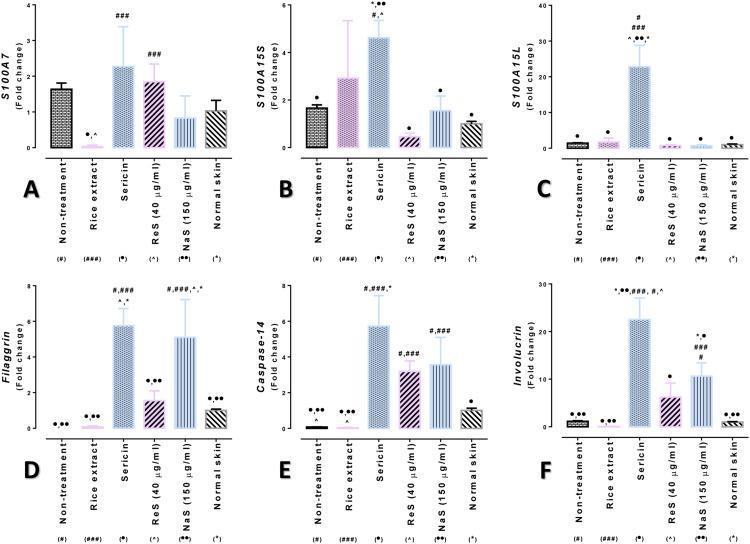
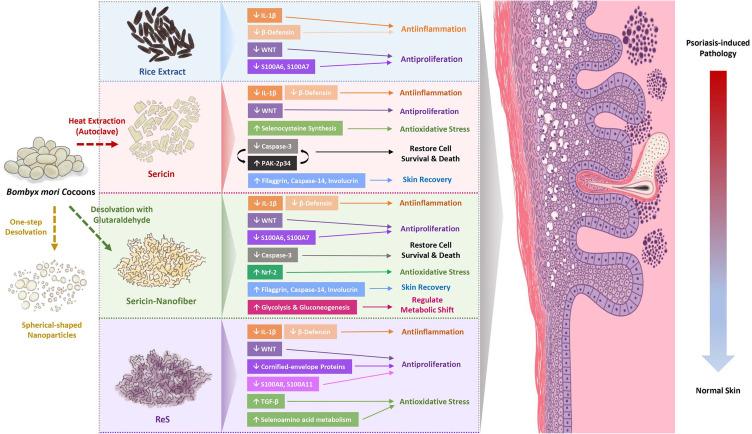
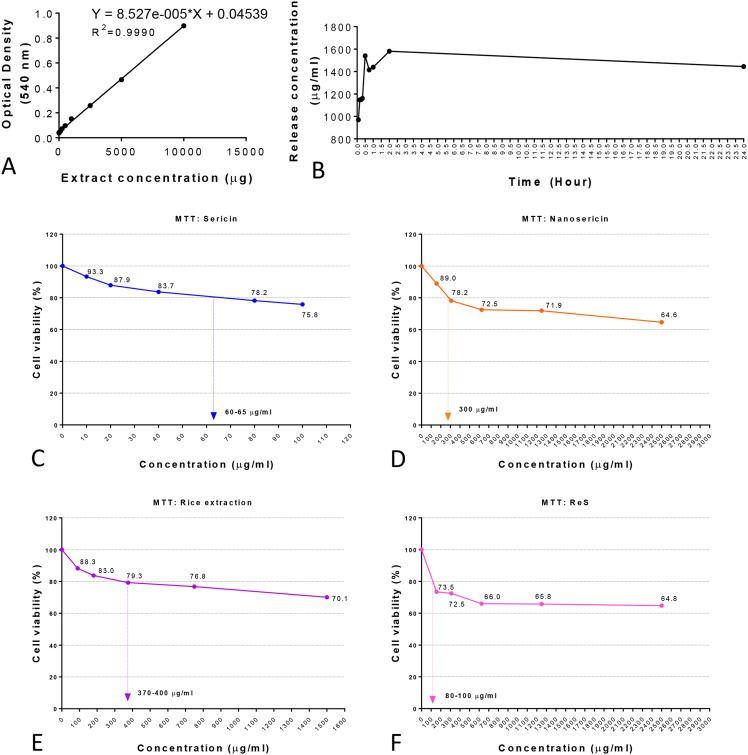
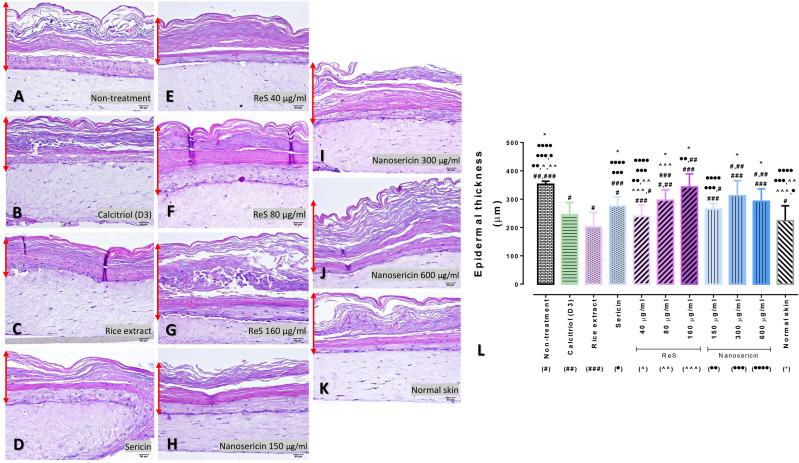
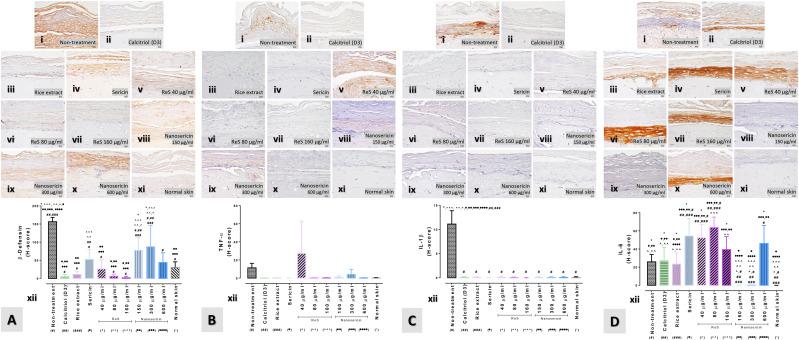
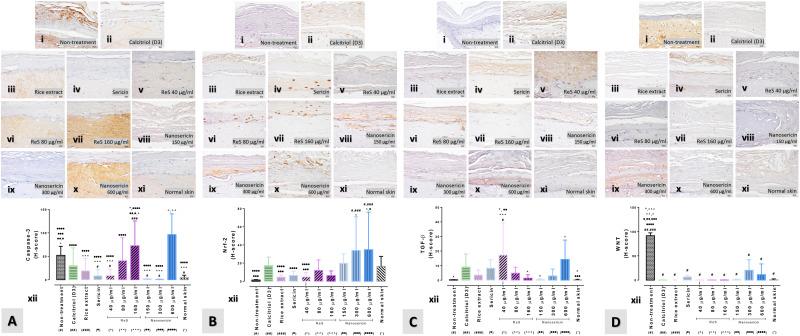
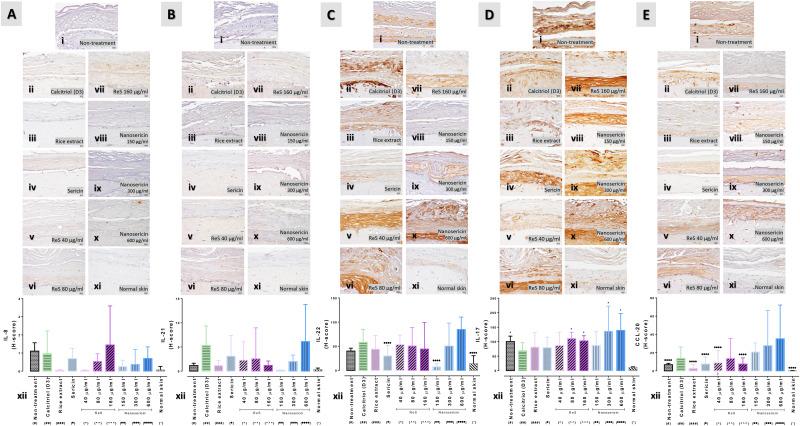
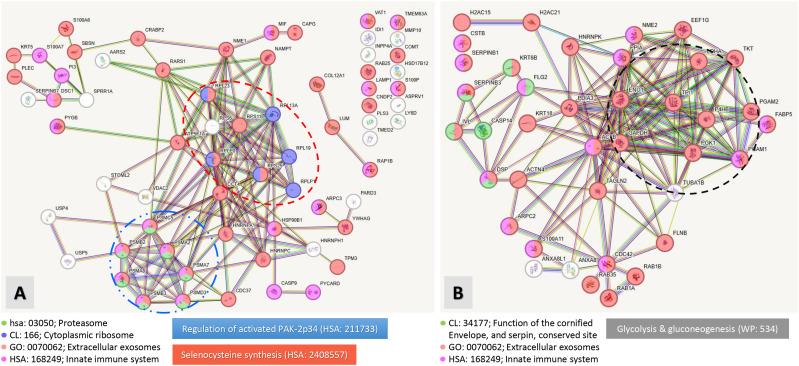
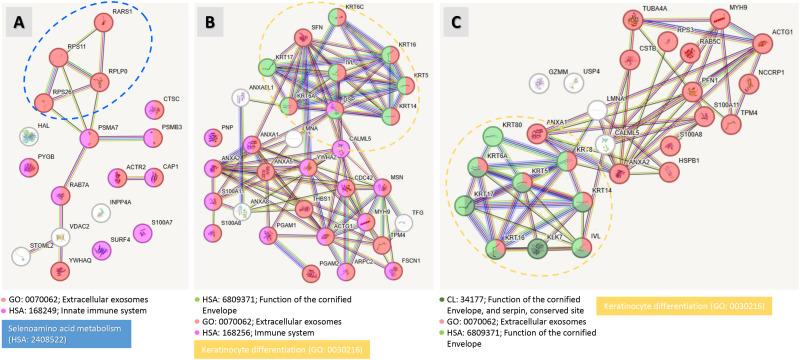
Results showed that desolvation with glutaraldehyde crosslinking produced stable nanofibrils, while desolvation without crosslinking yielded nanogranules; nanoforms demonstrated high biocompatibility and safety. Treatments with sericin, rice extract, nanosericin, and ReS alleviated psoriasis-induced histopathology, with downregulation of IL-1β, WNT, and β-defensin particularly in the ReS and rice extract groups, suggesting an immunomodulatory effect. Caspase-3 reduction was more pronounced in the sericin and nanosericin groups. Proteomic analysis revealed notable exosomal protein involvement, with sericin modulating cell death through the PAK-2p34 pathway and proteasome activity, while nanosericin enhanced glycolysis and gluconeogenesis via exosomal proteins. Both ReS and nanosericin activated antioxidant pathways, mediated by upregulation of TGF-β and Nrf-2, respectively, especially sericin-based treatment through the selenoamino acid metabolism pathway. ReS further reduced keratinocyte differentiation by targeting cornified envelope proteins, correlating with reduced WNT expression. Gene expression analysis confirmed anti-inflammatory effects and skin barrier restoration, as evidenced by decreased S100-family proteins and increased filaggrin, caspase-14, and involucrin.
CONCLUSION
ReS and nanosericin show significant therapeutic potential for psoriasis by targeting immunomodulatory pathways, modulating keratinocyte activity, reducing oxidative stress, and enhancing skin barrier restoration. Future research should optimize scalability, assess long-term safety, and explore synergistic effects with existing therapies, while further investigating molecular mechanisms for targeted treatment advancements.
目的
银屑病是一种影响全球2%-3%人口的慢性炎症性皮肤病,带来了重大的治疗挑战,包括高复发率、不良反应和社会经济负担。本研究探索基于丝胶蛋白的纳米纤维和大米包裹的纳米丝胶蛋白(ReS)作为创新疗法的治疗潜力,旨在通过提高药物递送、稳定性和疗效来克服当前的局限性,并提供一种针对性的方法来管理这种复杂疾病。
方法
本研究使用3D人工皮肤模型研究丝胶蛋白纳米纤维及其衍生物(包括ReS)治疗银屑病的疗效。通过组织病理学、免疫组织化学、分子和蛋白质组学分析进行全面评估。
结果
结果表明,戊二醛交联去溶剂化产生稳定的纳米纤维,而无交联去溶剂化产生纳米颗粒;纳米形式表现出高生物相容性和安全性。丝胶蛋白、大米提取物、纳米丝胶蛋白和ReS治疗减轻了银屑病诱导的组织病理学变化,特别是在ReS和大米提取物组中,IL-1β、WNT和β-防御素下调,提示具有免疫调节作用。丝胶蛋白和纳米丝胶蛋白组中半胱天冬酶-3的减少更为明显。蛋白质组学分析显示外泌体蛋白有显著参与,丝胶蛋白通过PAK-2p34途径和蛋白酶体活性调节细胞死亡,而纳米丝胶蛋白通过外泌体蛋白增强糖酵解和糖异生。ReS和纳米丝胶蛋白均激活抗氧化途径,分别由TGF-β和Nrf-2的上调介导,特别是基于丝胶蛋白的治疗通过硒氨基酸代谢途径。ReS通过靶向角质化包膜蛋白进一步减少角质形成细胞分化,这与WNT表达降低相关。基因表达分析证实了抗炎作用和皮肤屏障修复,S100家族蛋白减少以及丝聚合蛋白、半胱天冬酶-14和内披蛋白增加证明了这一点。
结论
ReS和纳米丝胶蛋白通过靶向免疫调节途径、调节角质形成细胞活性、减少氧化应激和增强皮肤屏障修复,对银屑病显示出显著的治疗潜力。未来的研究应优化可扩展性,评估长期安全性,并探索与现有疗法的协同作用,同时进一步研究靶向治疗进展的分子机制。

 Zotero 插件