
低收入和中等收入国家非专科医疗服务提供者提供的针对常见精神障碍症状的跨诊断心理干预:一项系统评价和荟萃分析
Transdiagnostic Psychological Interventions for Symptoms of Common Mental Disorders Delivered by Non-Specialist Providers in Low- and Middle-Income Countries: A Systematic Review and Meta-Analysis.
作者信息
Ó hAnrachtaigh Éanna, Brown Gary, Beck Andrew, Conway Rebecca, Jones Hattie, Angelakis Ioannis
机构信息
Royal Holloway, University of London, London, UK.
University of Hertfordshire, Hatfield, UK.
出版信息
Depress Anxiety. 2024 Jul 10;2024:5037662. doi: 10.1155/2024/5037662. eCollection 2024.
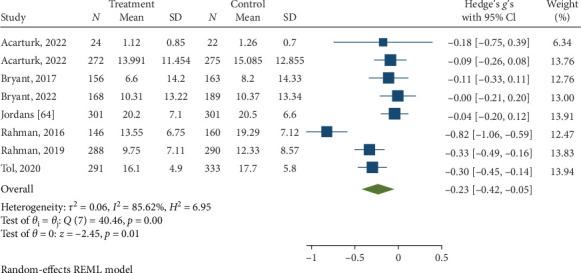
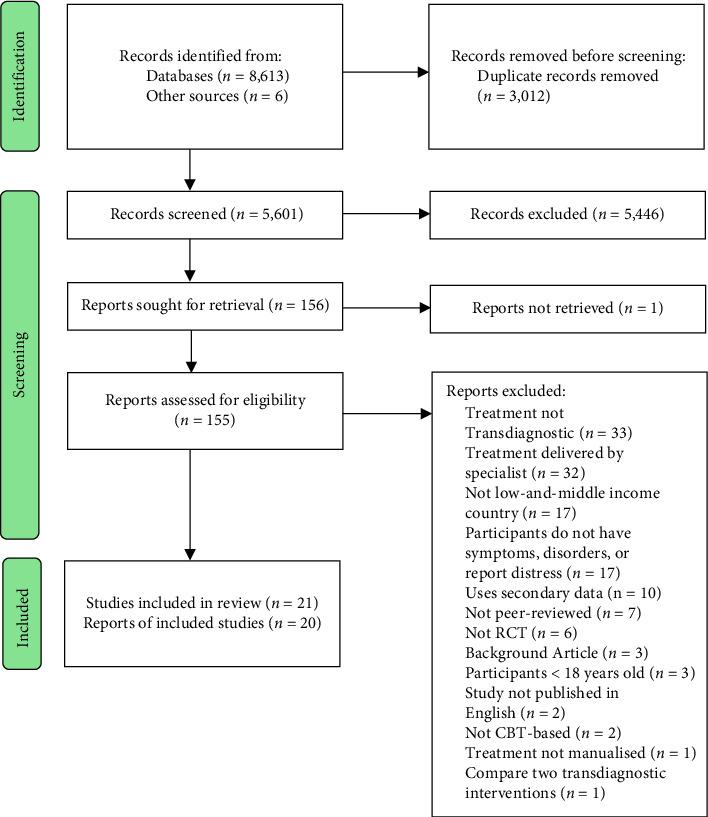
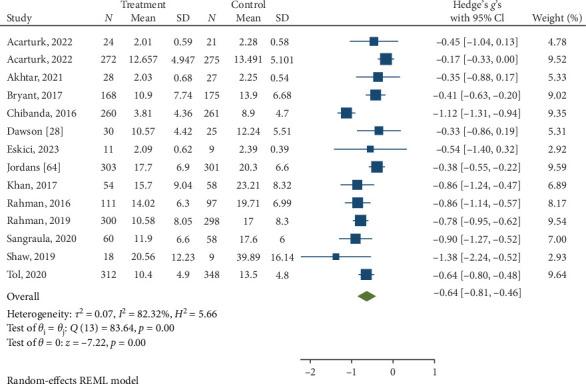
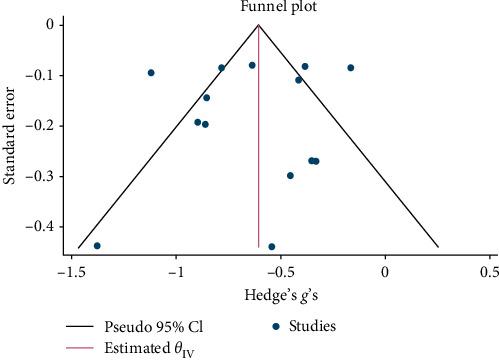
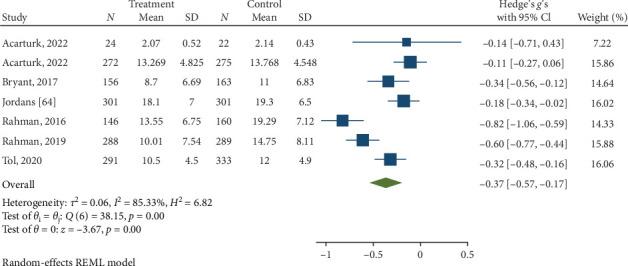
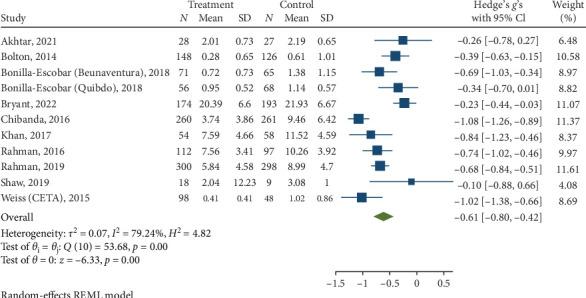
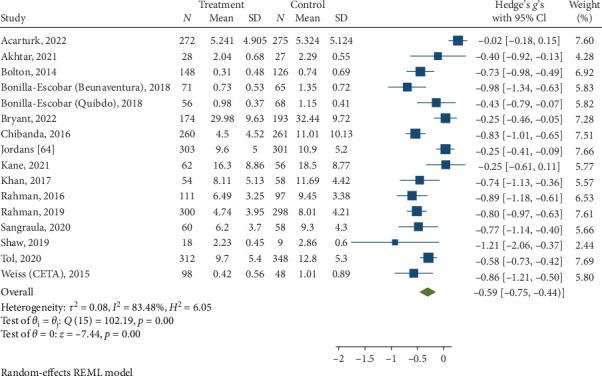
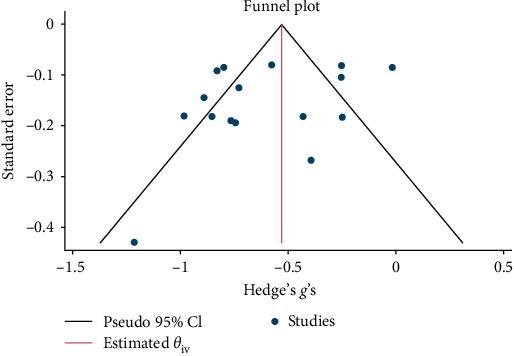
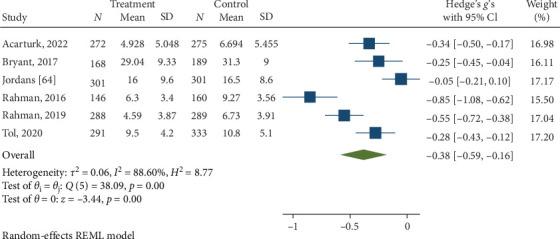
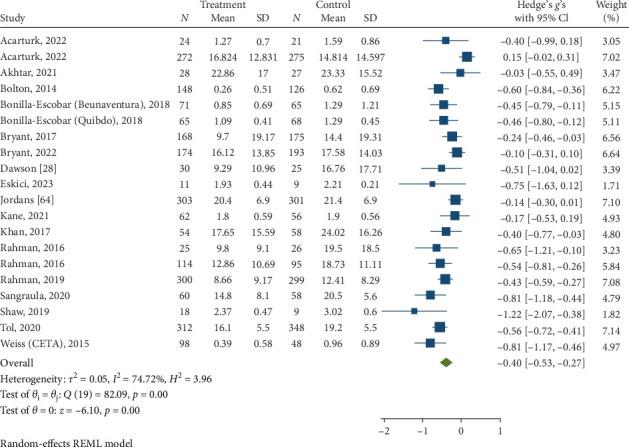
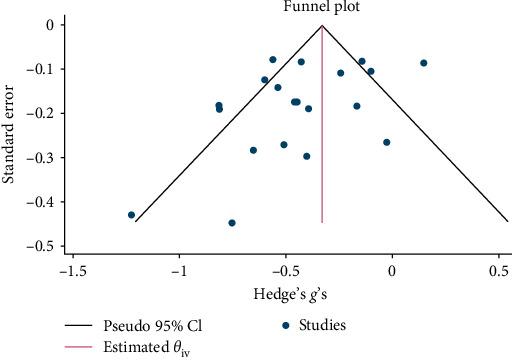
There is a treatment gap for Common Mental Disorders (CMDs) such as anxiety, depression, and post-traumatic stress disorder (PTSD), as well as non-specific psychological distress (NPD) in low- and middle-income countries (LAMIC), due to the lack of available clinicians and locally appropriate interventions. Task-shifting using non-specialist providers (NSP) and transdiagnostic approaches may address this. Transdiagnostic approaches can be effective at treating CMDs and NPD in high-income countries (HIC), but currently, there is no comprehensive synthesis of evidence regarding their effectiveness in LAMICs. This review addressed this gap by examining the effectiveness of transdiagnostic psychological interventions for symptoms of CMDs and NPD delivered by NSPs in LAMICs. Three databases were searched (Embase, PsycInfo, and PubMed). Hedge's 's were calculated using random-effect models to correct for small sample bias. Twenty-one transdiagnostic interventions across 20 studies were included. Moderate reductions at posttreatment were found in psychological distress (g = -0.64; 95% CI: -0.81 to -0.46), symptoms of anxiety (g = -0.61; 95% CI: -0.80 to -0.42), depression (g = -0.59; 95% CI: -0.75 to -0.44), and PTSD/trauma (g = -0.38; 95% CI: -0.59 to -0.16), with significant small reductions maintained at follow-up ranging from 13 to 26 weeks for NPD (SMD = - 0.37; 95% CI: -0.57 to -0.17), anxiety (g = - 0.41; 95% CI: -0.91 to 0.09), depression (g = -0.38; 95% CI: -0.59 to -0.16), and trauma symptoms (g = -0.23; 95% CI: -0.42 to -0.05). These findings are important and suggest that transdiagnostic approaches delivered by NSPs are effective at treating symptoms of CMDs and NPD in LAMICs. Future research should consider comparing task-shifting approaches with disorder-specific interventions and explore the effectiveness of longer sessions across various mental health conditions.
在低收入和中等收入国家(LAMIC),由于缺乏可用的临床医生和适合当地的干预措施,焦虑、抑郁和创伤后应激障碍(PTSD)等常见精神障碍(CMD)以及非特异性心理困扰(NPD)存在治疗缺口。利用非专科医疗服务提供者(NSP)进行任务转移和采用跨诊断方法或许可以解决这一问题。跨诊断方法在高收入国家(HIC)治疗CMD和NPD方面可能有效,但目前,关于其在LAMICs中的有效性尚无全面的证据综合。本综述通过考察NSPs在LAMICs中提供的跨诊断心理干预对CMD和NPD症状的有效性来填补这一空白。检索了三个数据库(Embase、PsycInfo和PubMed)。使用随机效应模型计算Hedge's 以校正小样本偏差。纳入了20项研究中的21种跨诊断干预措施。发现治疗后心理困扰(g = -0.64;95%CI:-0.81至-0.46)、焦虑症状(g = -0.61;95%CI:-0.80至-0.42)、抑郁(g = -0.59;95%CI:-0.75至-0.44)以及PTSD/创伤(g = -0.38;95%CI:-0.59至-0.16)有中度减轻,对于NPD(SMD = - 0.37;95%CI:-0.57至-0.17)、焦虑(g = - 0.41;95%CI:-0.91至0.09)、抑郁(g = -0.38;95%CI:-0.59至-0.16)和创伤症状(g = -0.23;95%CI:-0.42至-0.05),在13至26周的随访中维持了显著的小幅减轻。这些发现很重要,表明NSPs提供的跨诊断方法在治疗LAMICs中的CMD和NPD症状方面是有效的。未来的研究应考虑将任务转移方法与针对特定疾病的干预措施进行比较,并探索更长疗程在各种心理健康状况下的有效性。


 Zotero 插件