
靶向位点特异性N-糖基化B7H3可诱导强大的抗肿瘤免疫。
Targeting site-specific N-glycosylated B7H3 induces potent antitumor immunity.
作者信息
Huang Yun, Zhong Wen-Qing, Yang Xiao-Yu, Shan Jia-Lu, Zhou Ling, Li Zhi-Ling, Guo Yi-Qing, Zhang Kai-Ming, Du Tian, Zhang Hai-Liang, Hu Bing-Xin, Chen Yu-Hong, Yang Dong, Feng Gong-Kan, Tang Jun, Zhu Xiao-Feng, Deng Rong
机构信息
State Key Laboratory of Oncology in South China, Collaborative Innovation Center for Cancer Medicine, Guangdong Key Laboratory of Nasopharyngeal Carcinoma Diagnosis and Therapy, Sun Yat-sen University Cancer Center, Guangzhou, 510060, China.
Department of Radiation Oncology, The First Affiliated Hospital, Sun Yat-sen University, Guangzhou, 510080, China.
出版信息
Nat Commun. 2025 Apr 14;16(1):3546. doi: 10.1038/s41467-025-58740-3.
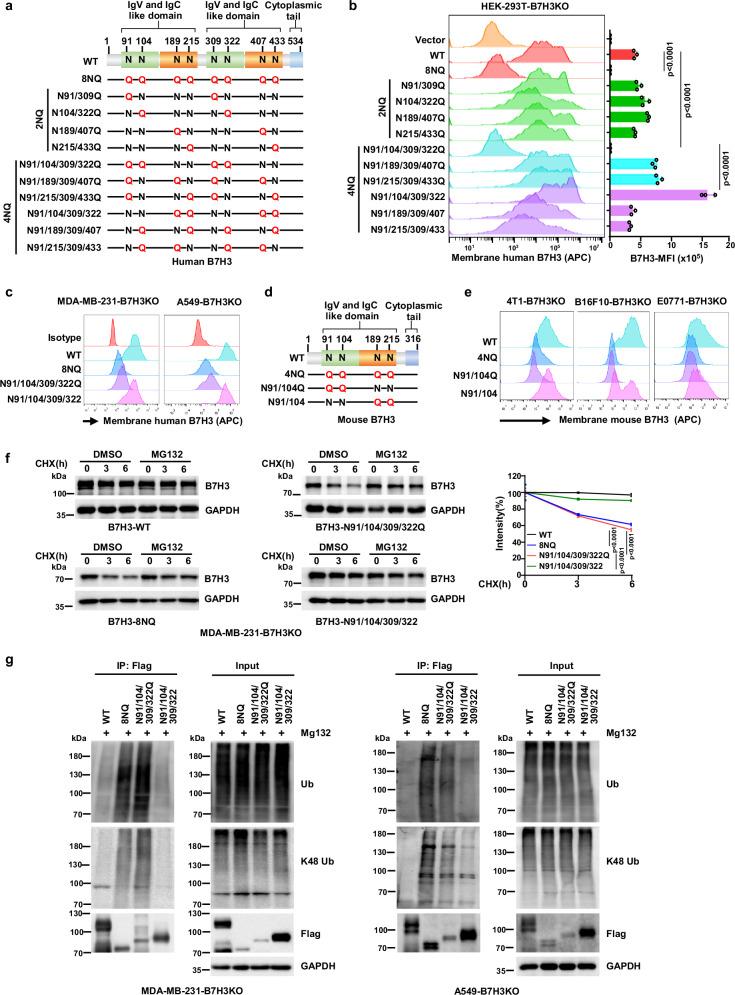
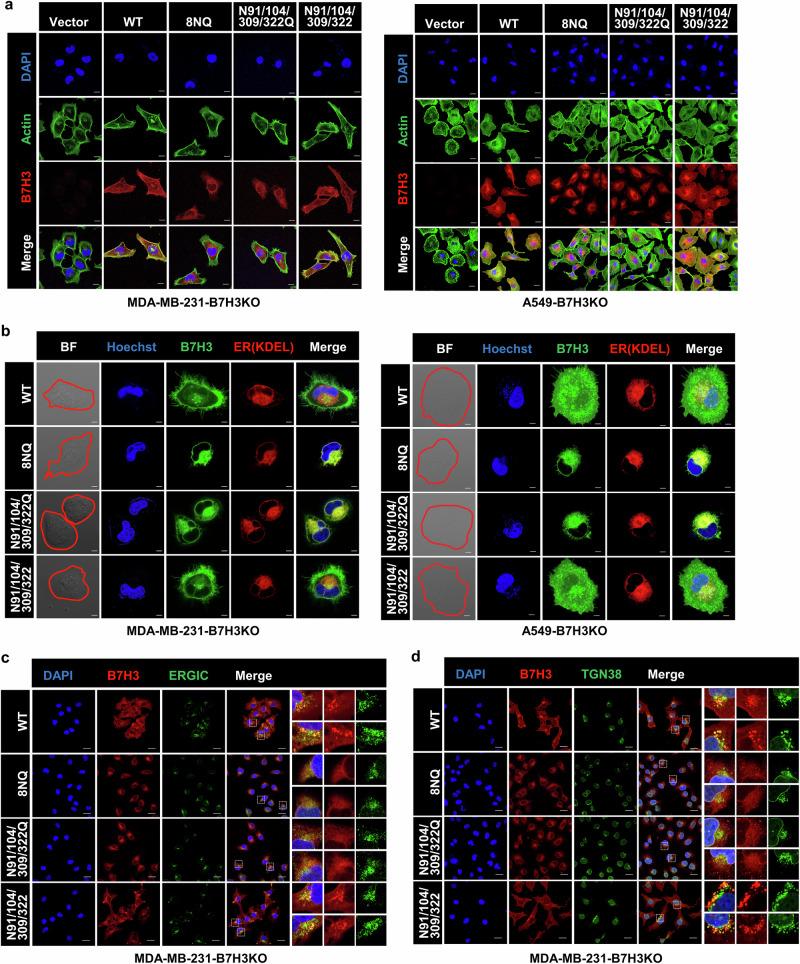
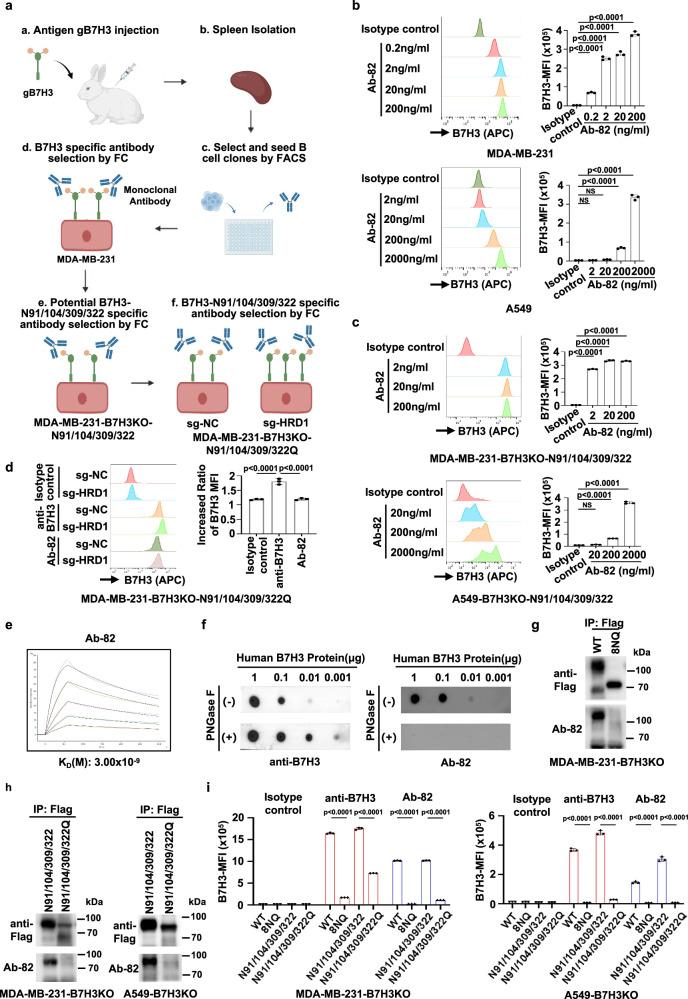
B7H3, an immune checkpoint molecule, is a highly N-glycosylated membrane protein. However, the key glycosylated asparagine residues that mediate the function of the B7H3 protein are still unclear. Here we identify that N-glycans attached to asparagine residues N91/309 and N104/322 are required for proper B7H3 localization on the cell surface membrane. We demonstrate that mutations in these two pairs of N-glycosylation sites induce ER accumulation of B7H3 by blocking its ER-to-Golgi translocation and subsequently promote its degradation via the endoplasmic reticulum-associated protein degradation pathway. Additional evidence suggests that N-glycosylation at N91/309 and N104/322 of B7H3 is essential for its inhibition of T-cell proliferation and activation. More importantly, a monoclonal antibody, Ab-82, preferentially targeting B7H3 glycosylated at N91/309 and N104/322 is developed, which exhibits the ability to elicit cytotoxic T lymphocyte-mediated antitumor immunity via B7H3 internalization. Together, these findings offer a rationale for targeting glycosylated B7H3 as a potential strategy for immunotherapy.
B7H3是一种免疫检查点分子,是一种高度N-糖基化的膜蛋白。然而,介导B7H3蛋白功能的关键糖基化天冬酰胺残基仍不清楚。在此我们确定,附着于天冬酰胺残基N91/309和N104/322的N-聚糖是B7H3在细胞表面膜上正确定位所必需的。我们证明,这两对N-糖基化位点的突变通过阻断B7H3从内质网到高尔基体的转运诱导其在内质网积累,随后通过内质网相关蛋白降解途径促进其降解。其他证据表明,B7H3在N91/309和N104/322处的N-糖基化对其抑制T细胞增殖和激活至关重要。更重要的是,开发了一种单克隆抗体Ab-82,其优先靶向在N91/309和N104/322处糖基化的B7H3,该抗体表现出通过B7H3内化引发细胞毒性T淋巴细胞介导的抗肿瘤免疫的能力。总之,这些发现为靶向糖基化B7H3作为一种潜在的免疫治疗策略提供了理论依据。



 Zotero 插件