
一项关于血清去γ-羧基凝血酶原作为肝癌诊断标志物的大规模回顾性研究:肝功能对特异性的影响。
A Large-Scale Retrospective Study of Serum Des-Gamma-Carboxy Prothrombin as a Diagnostic Marker of HCC: Effect of Liver Function on Specificity.
作者信息
Bu Hongying, Luo Weijia, Tao Wenli, Dong Chen, Wang Meifang, Ye Xu, Zeng Xi, Wang Boqing, Liu Chang, Yu Qi, Cao Deliang, Deng Hongyu, Nan Yuemin
机构信息
School of Public Health, Hengyang Medical School, University of South China, Hengyang, China.
Hunan Engineering Research Center for Early Diagnosis and Treatment of Liver Cancer, Hunan Province Key Laboratory of Tumor Cellular and Molecular Pathology, Cancer Research Institute, Hengyang Medical School, University of South China, Hengyang, Hunan, China.
出版信息
J Clin Lab Anal. 2025 May;39(10):e70025. doi: 10.1002/jcla.70025. Epub 2025 Apr 14.
BACKGROUND
This retrospective multicenter study is aimed at evaluating the diagnostic accuracy and influence factors of serum des-gamma-carboxy prothrombin (DCP) as a diagnostic biomarker of hepatocellular carcinoma (HCC).
METHODS
Clinical data were collected from 4555 subjects with DCP tests, composed of primary liver cancer (PLC), metastatic liver cancer (MLC), chronic hepatitis (CH), liver cirrhosis (LC), benign liver diseases (BLD), biliary tract diseases (BTD), non-liver cancers (NLC), and non-liver benign diseases (NLBD). The clinical data collected included medical history, treatment records, various serum tests, and imaging examination.
RESULTS
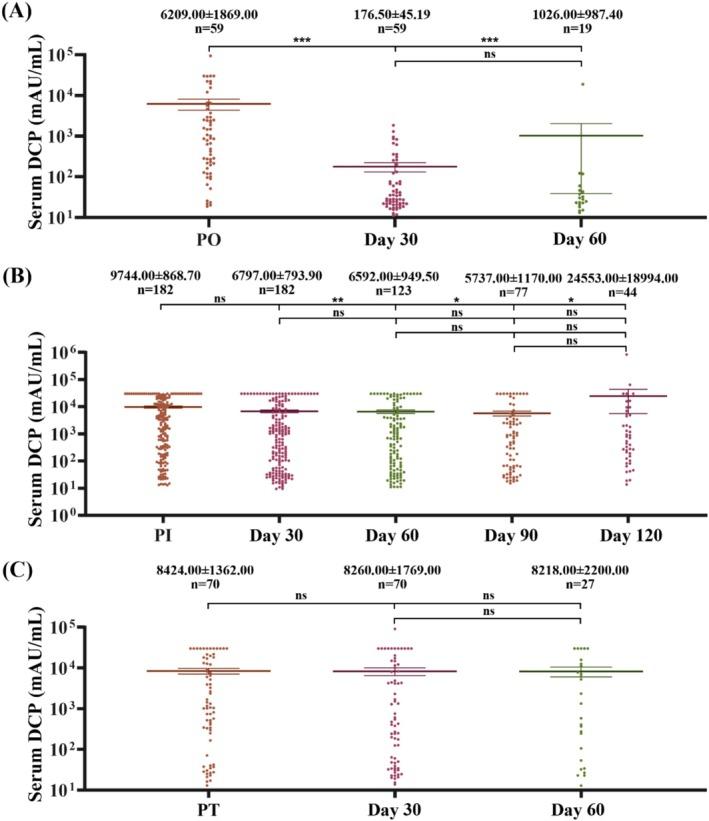
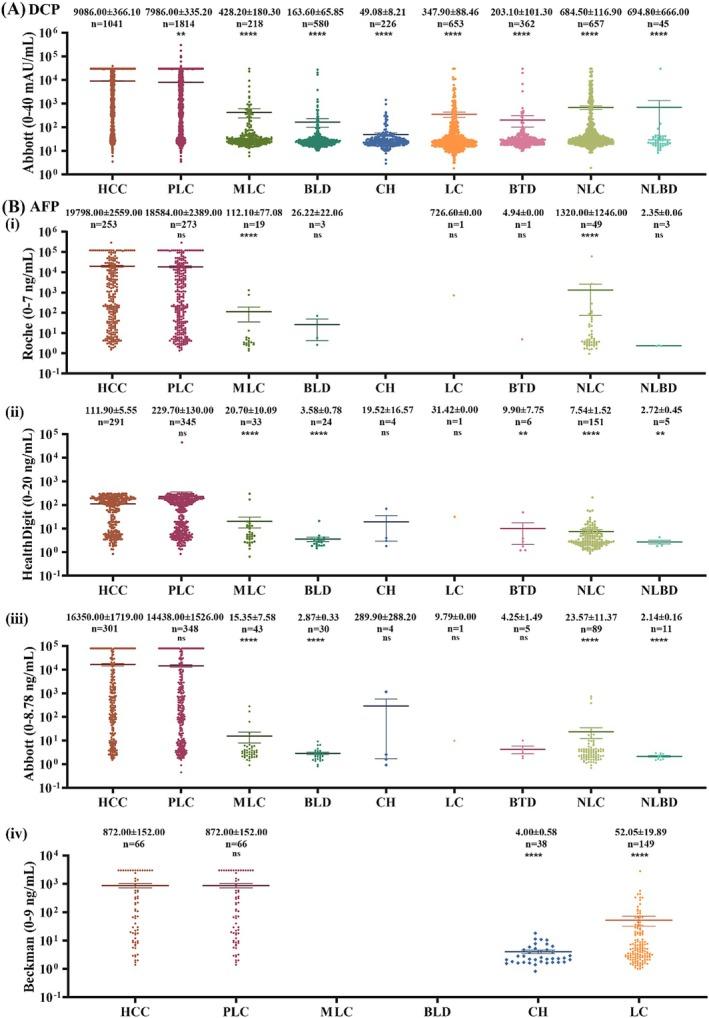
Serum DCP was measured with Abbott agents in each center. In HCC, serum DCP concentration was at 9086.00 ± 366.10 mAU/mL, higher than that in other diseases (p < 0.05). At 40.00 mAU/mL recommended by instruction, positive rates of serum DCP were at 85.11% in HCC, 30.12% in intrahepatic cholangiocellular carcinoma (ICC), 31.65% in MLC, 13.95% in BLD, 18.14% in CH, 27.87% in LC, 15.75% in BTD, 35.29% in NLC, and 20.00% in NLBD. In this study, the diagnostic specificity of serum DCP in HCC was affected by liver function. In HCC, serum AFP concentrations also increased compared to non-HCC diseases (p < 0.05), but specificity varied with agents from different providers. Serum DCP decreased after the surgical removal of HCC, but remained elusive in systemic treatment.
CONCLUSION
Serum DCP may serve as an optimal biomarker for the diagnosis of HCC, but its accuracy appears influenced by liver function; attention needs to be paid to the liver function of patients for false positivity.
背景
这项回顾性多中心研究旨在评估血清去γ-羧基凝血酶原(DCP)作为肝细胞癌(HCC)诊断生物标志物的诊断准确性及影响因素。
方法
收集了4555例进行DCP检测的受试者的临床资料,这些受试者包括原发性肝癌(PLC)、转移性肝癌(MLC)、慢性肝炎(CH)、肝硬化(LC)、肝脏良性疾病(BLD)、胆道疾病(BTD)、非肝癌(NLC)和非肝脏良性疾病(NLBD)。收集的临床资料包括病史、治疗记录、各种血清学检测和影像学检查。
结果
各中心均使用雅培试剂检测血清DCP。在HCC中,血清DCP浓度为9086.00±366.10 mAU/mL,高于其他疾病(p<0.05)。按照说明书推荐的40.00 mAU/mL标准,血清DCP的阳性率在HCC中为85.11%,肝内胆管细胞癌(ICC)中为30.12%,MLC中为31.65%,BLD中为13.95%,CH中为18.14%,LC中为27.87%,BTD中为15.75%,NLC中为35.29%,NLBD中为20.00%。在本研究中,HCC中血清DCP的诊断特异性受肝功能影响。与非HCC疾病相比,HCC中血清甲胎蛋白(AFP)浓度也升高(p<0.05),但特异性因不同厂家的试剂而异。HCC手术切除后血清DCP下降,但在全身治疗中仍不明确。
结论
血清DCP可能是诊断HCC的最佳生物标志物,但其准确性似乎受肝功能影响;对于假阳性情况,需要关注患者的肝功能。
 Zotero 插件