
血清素会形成中性粒细胞胞外陷阱,以促进神经内分泌前列腺癌在肝脏中的转移。
Serotonin sets up neutrophil extracellular traps to promote neuroendocrine prostate cancer metastasis in the liver.
作者信息
Tang Dean G
机构信息
Department of Pharmacology and Therapeutics, Roswell Park Comprehensive Cancer Center, Buffalo, New York, USA.
Experimental Therapeutics Graduate Program, University at Buffalo and Roswell Park Comprehensive Cancer Center, Buffalo, New York, USA.
出版信息
J Clin Invest. 2025 Apr 15;135(8). doi: 10.1172/JCI191687.
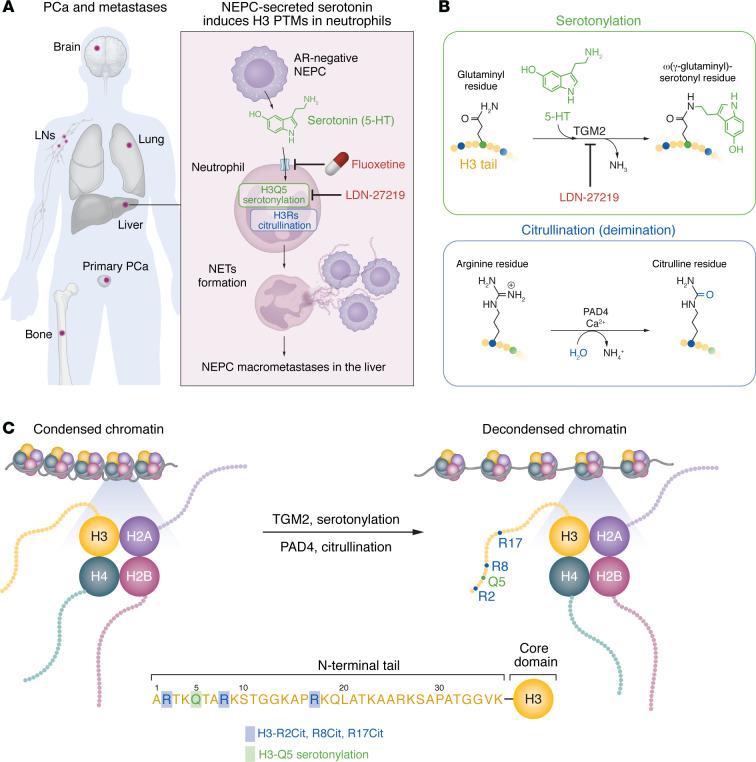
Castration-resistant prostate cancer frequently metastasizes to the liver, and prostate cancer liver metastases often present a neuroendocrine phenotype (i.e., neuroendocrine prostate cancer [NEPC]), but the underlying molecular underpinnings remain unclear. In this issue of the JCI, Liu et al. demonstrate that the neurotransmitter serotonin (also known as 5-hydroxytryptamine), produced by NEPC cells, gained access to and activated neutrophils by modifying histone 3 (H3) to form neutrophil extracellular traps, which in turn promoted NEPC macrometastases in the liver. The study suggests that blocking serotonin transport to neutrophils and inhibiting the enzymes that catalyze serotonin-mediated H3 modifications may represent alternative approaches to treating prostate cancer liver metastases.
去势抵抗性前列腺癌常转移至肝脏,且前列腺癌肝转移灶常呈现神经内分泌表型(即神经内分泌前列腺癌[NEPC]),但其潜在的分子机制仍不清楚。在本期《临床研究杂志》中,刘等人证明,NEPC细胞产生的神经递质血清素(也称为5-羟色胺)通过修饰组蛋白3(H3)进入并激活中性粒细胞,形成中性粒细胞胞外陷阱,进而促进NEPC在肝脏中的大转移。该研究表明,阻断血清素向中性粒细胞的转运并抑制催化血清素介导的H3修饰的酶,可能是治疗前列腺癌肝转移的替代方法。
 Zotero 插件