
新诊断B细胞非霍奇金淋巴瘤患者骨髓免疫细胞亚群的预后相关性
Prognostic relevance of bone marrow immune cell fractions in newly diagnosed B-cell non-Hodgkin lymphoma patients.
作者信息
Valvano Luciana, Vilella Rocchina, D'Auria Fiorella, D'Arena Giovanni, Libonati Rossana, Soda Michela, Telesca Alessia, Pietrantuono Giuseppe, Mansueto Giovanna Rosaria, Villani Oreste, D'Agostino Simona, Calice Giovanni, Statuto Teodora
机构信息
Laboratory of Clinical Research and Advanced Diagnostics, Centro di Riferimento Oncologico della Basilicata (IRCCS-CROB), Rionero in Vulture, Italy.
Laboratory of Clinical Pathology, Centro di Riferimento Oncologico della Basilicata (IRCCS-CROB), Rionero in Vulture, Italy.
出版信息
Ann Med. 2025 Dec;57(1):2490825. doi: 10.1080/07853890.2025.2490825. Epub 2025 Apr 15.
INTRODUCTION
Non-Hodgkin lymphomas (NHLs) are the most common hematological malignancies worldwide. Among these, B-cell lymphomas (B-NHLs) are the second leading cause of death in hematologic neoplasms.
MATERIAL AND METHODS
In this study, a detailed immunophenotypic analysis of lymphocytes in the bone marrow aspirate (BMA) of 75 patients with four different subtypes of B-NHLs was performed at diagnosis. The samples were analyzed by flow cytometry (FC) using a stain-lyse-no wash technique and a comprehensive six-color antibody panel.
RESULTS
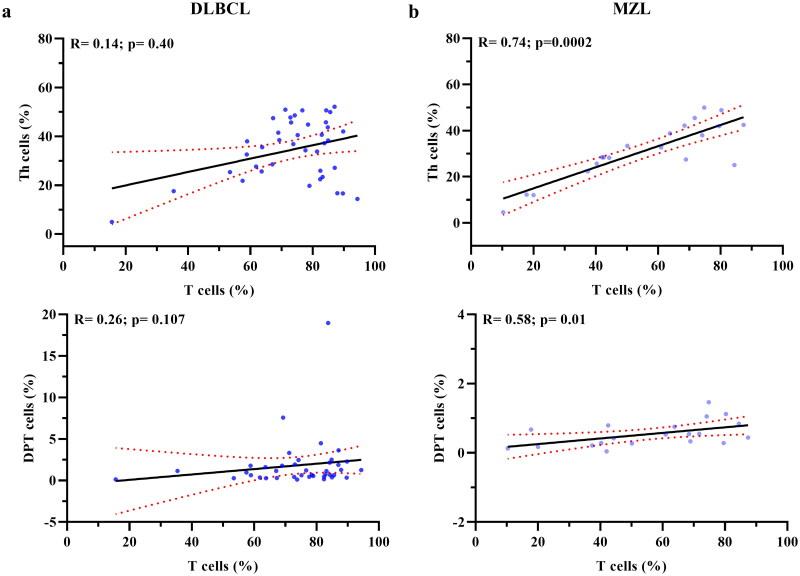
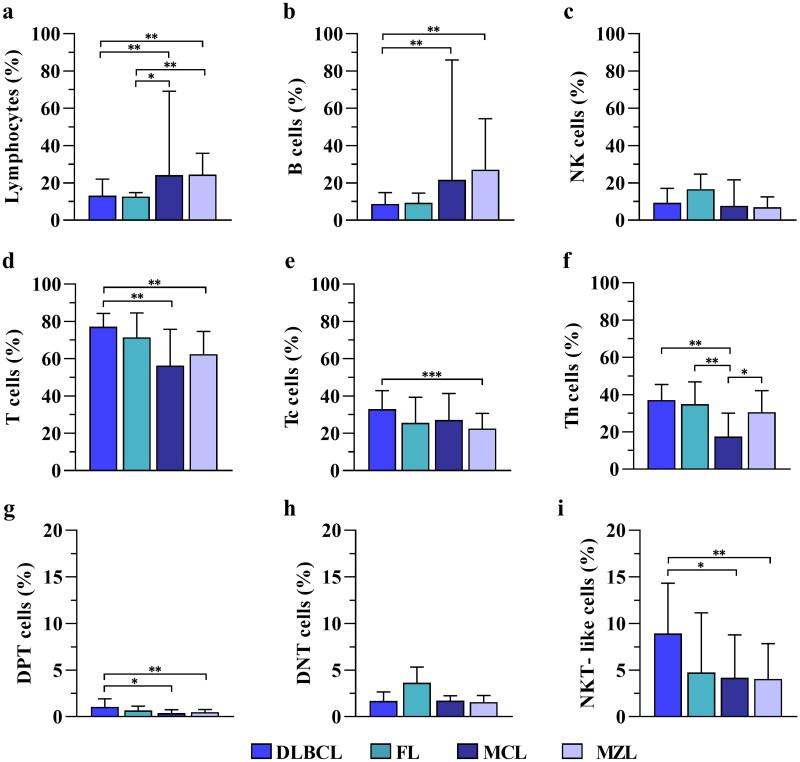
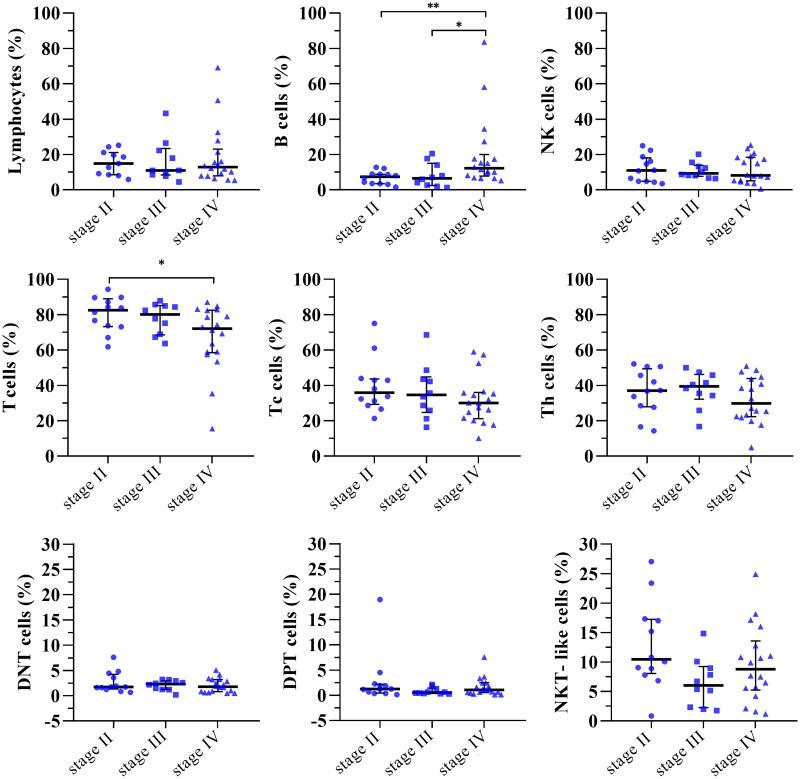
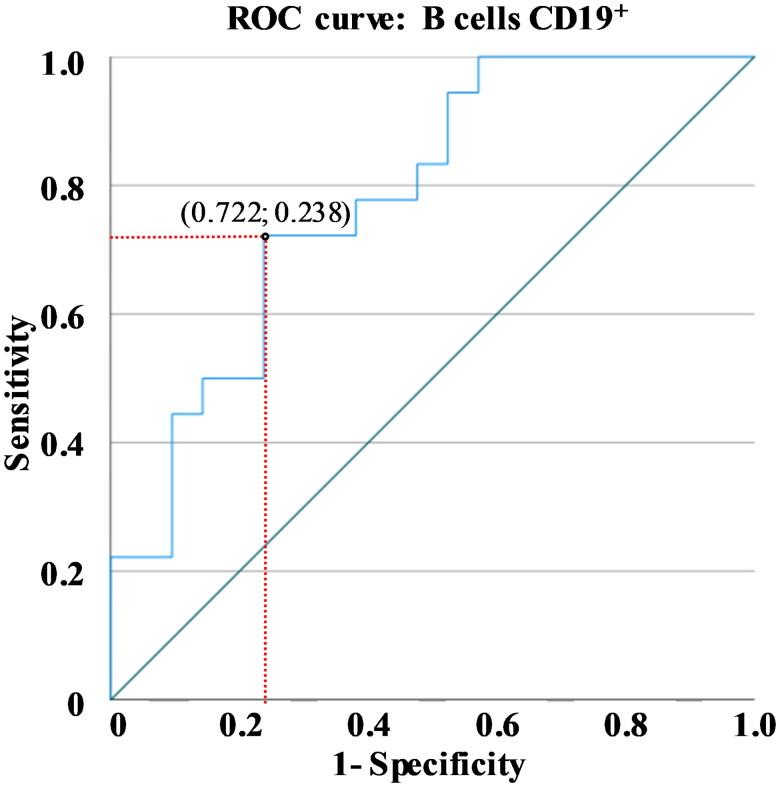
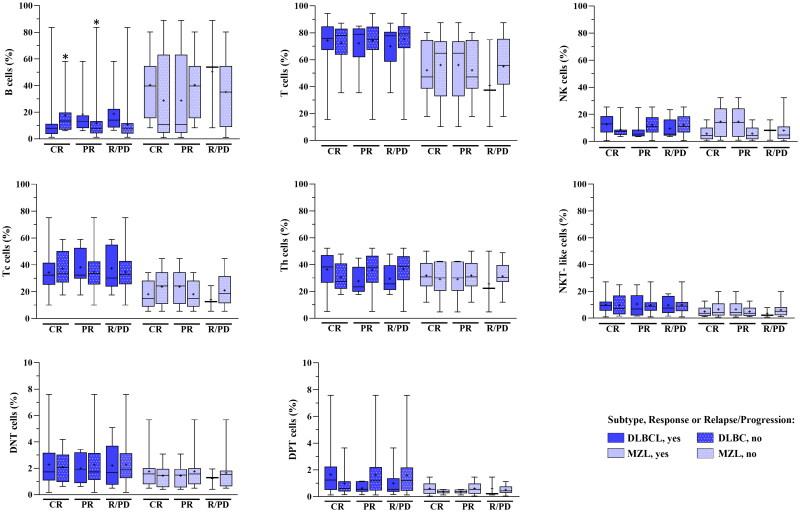
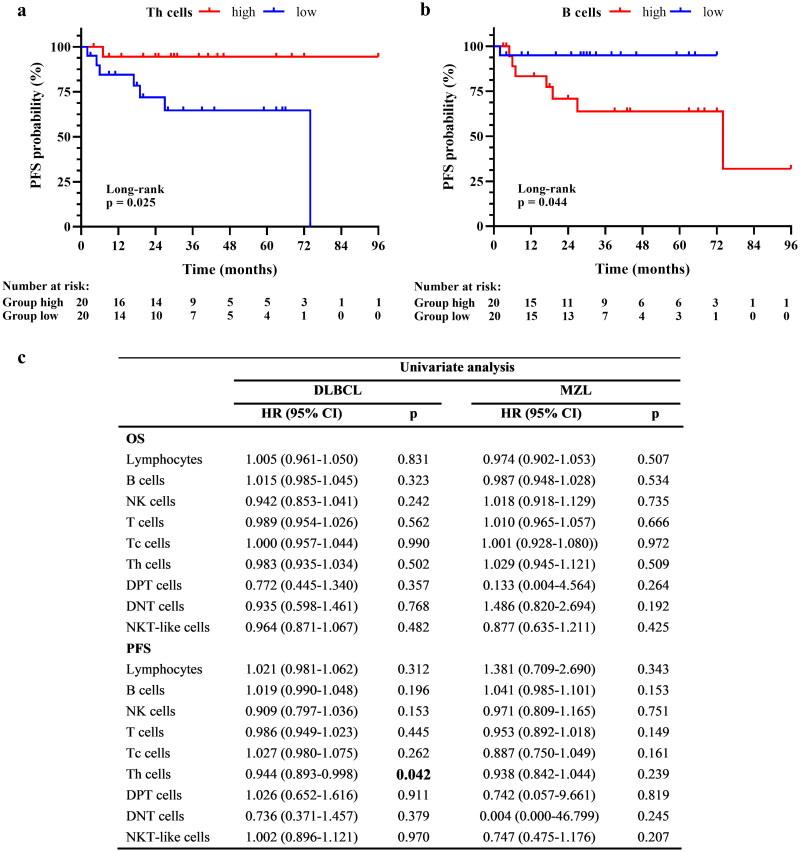
Our data showed a different trend in the percentage values of the distinct lymphocyte subsets, which did not seem to correlate with a worse prognosis, except for B cells in diffuse large B-cell lymphoma (DLBCL), which were significantly higher in stage IV than in stages II and III. ROC curve analysis showed that the B-cell percentage value could be used to predict the stage of the disease. Total lymphocytes and B cells were greater in lymphomas that presented a lower percentage of disease progression, specifically mantle cell lymphoma (MCL) and marginal zone lymphoma (MZL). In contrast, natural killer (NK) and T cells showed higher values in DLBCL and follicular lymphoma (FL), which progressed more frequently. Interestingly, in DLBCL patients with higher percentage values of double positive (DPT) and helper T cells (Th), we observed a good prognosis. Specifically, univariate Cox regression analyses indicated that a higher value of Th cells at diagnosis was a better prognostic predictor in patients with DLBCL.
CONCLUSIONS
These preliminary findings encourage us to further investigate the role of lymphocyte subpopulations in B-cell NHL.
引言
非霍奇金淋巴瘤(NHLs)是全球最常见的血液系统恶性肿瘤。其中,B细胞淋巴瘤(B-NHLs)是血液系统肿瘤中第二大死因。
材料与方法
在本研究中,对75例患有四种不同亚型B-NHLs的患者在诊断时的骨髓穿刺液(BMA)中的淋巴细胞进行了详细的免疫表型分析。使用染色-裂解-无需洗涤技术和全面的六色抗体组合通过流式细胞术(FC)对样本进行分析。
结果
我们的数据显示不同淋巴细胞亚群的百分比值呈现出不同的趋势,除弥漫性大B细胞淋巴瘤(DLBCL)中的B细胞外,这些趋势似乎与较差的预后无关,DLBCL中IV期的B细胞明显高于II期和III期。ROC曲线分析表明,B细胞百分比值可用于预测疾病分期。在疾病进展百分比更低的淋巴瘤中,特别是套细胞淋巴瘤(MCL)和边缘区淋巴瘤(MZL),总淋巴细胞和B细胞更多。相比之下,自然杀伤(NK)细胞和T细胞在进展更频繁的DLBCL和滤泡性淋巴瘤(FL)中显示出更高的值。有趣的是,在双阳性(DPT)和辅助性T细胞(Th)百分比值较高的DLBCL患者中,我们观察到了良好的预后。具体而言,单变量Cox回归分析表明,诊断时Th细胞较高的值是DLBCL患者更好的预后预测指标。
结论
这些初步发现促使我们进一步研究淋巴细胞亚群在B细胞NHL中的作用。
 Zotero 插件