
首发未治疗抑郁症患者全身免疫炎症指数与自杀未遂的相关性及其危险因素
Correlation Between Systemic Immune Inflammatory Index and Suicidal Attempt in Patients with First-Episode Untreated Depression and its Risk Factors.
作者信息
Wu Yigao, Jiang Wenhao, Chen Man, Jiang Qin, Huang Huilan, Guo Wenbin, Yuan Yonggui
机构信息
Department of Psychiatry and Psychosomatics, Zhongda Hospital, School of Medicine, Jiangsu Provincial Key Laboratory of Brain Science and Medicine, Southeast University, Nanjing, People's Republic of China.
Department of Medical Psychology, The First Affiliated Hospital of Wannan Medical College, Wuhu, People's Republic of China.
出版信息
Neuropsychiatr Dis Treat. 2025 Apr 11;21:827-839. doi: 10.2147/NDT.S512964. eCollection 2025.
OBJECTIVE
To examine the relationship between the systemic immune inflammatory index (SII) and suicide attempts (SA) in individuals experiencing their first episode of major depressive disorder (MDD).
METHODS
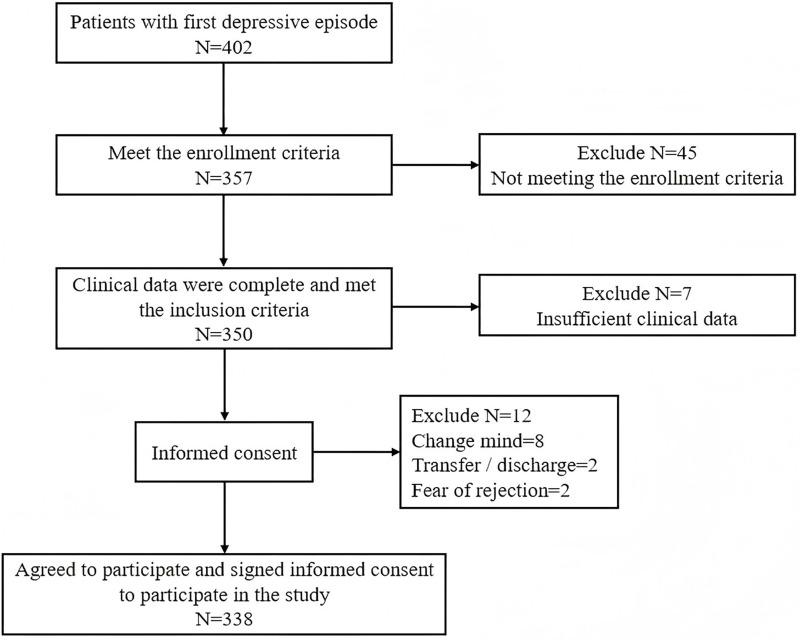
A retrospective analysis of 338 MDD patients (2020-2023) at the First Affiliated Hospital of Wannan Medical College and 76 healthy controls (HC) was conducted. MDD patients were categorized based on their history of SA. Differences in SII and clinical characteristics were analyzed, and a receiver operating characteristic (ROC) curve was used to determine the optimal SII cutoff for predicting SA. Binary logistic regression identified independent risk factors associated with SA.
RESULTS
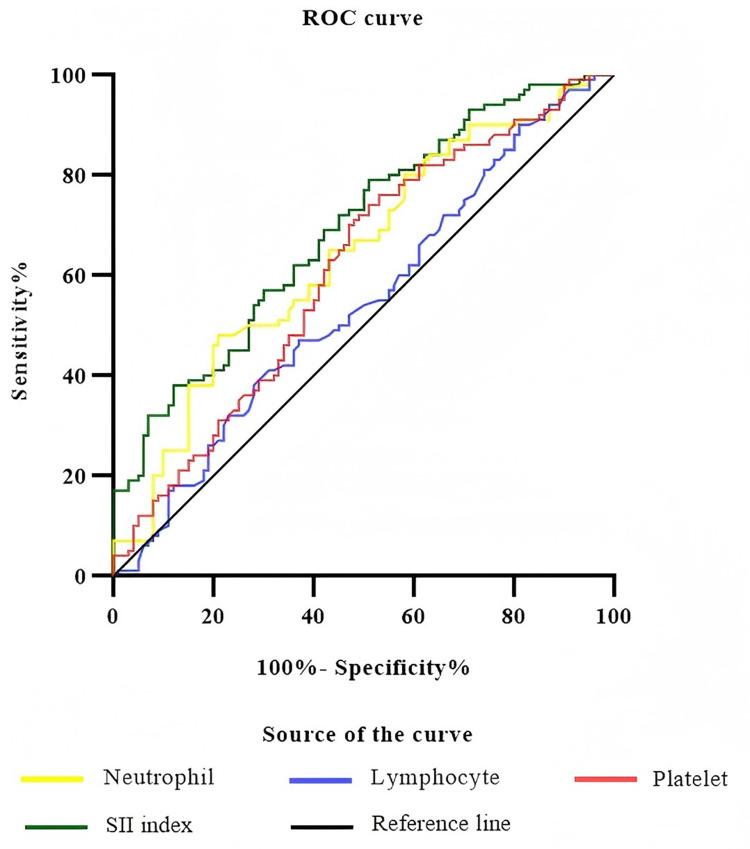
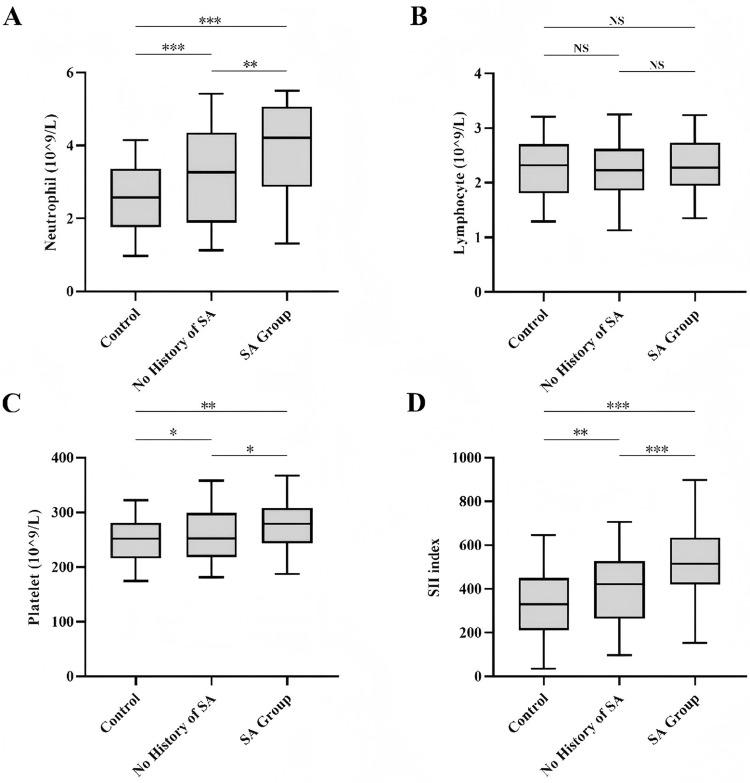
MDD patients exhibited higher levels of neutrophils, platelets, and SII compared to HC (all <0.05). SA Patients had higher HDRS scores, neutrophil counts, mean platelet counts, and SII values compared to those without SA (all <0.05). ROC analysis identified an optimal SII cutoff of 515.3, with 67% sensitivity, 70% specificity, and an area under the curve (AUC) of 0.692. After adjusting for gender, age, body mass index, disease duration, and quality of life, individuals with elevated SII values were 8.318 times more likely to have recent SA (OR=8.318, 95% CI: 3.767-17.546, <0.05). Patients with high SII values were 14.101 times more likely to have recent SA compared to those with low SII values (OR=14.101, 95% CI: 5.356-34.235, <0.05). However, high SII was not identified as a significant risk factor for previous SA (OR=0.607, 95% CI: 0.061-4.961, >0.05).
CONCLUSION
SII represents a cost-effective and accessible method for evaluating suicide risk in patients with MDD.
目的
探讨首次发作的重度抑郁症(MDD)患者的全身免疫炎症指数(SII)与自杀未遂(SA)之间的关系。
方法
对皖南医学院第一附属医院的338例MDD患者(2020 - 2023年)和76例健康对照者(HC)进行回顾性分析。MDD患者根据其自杀未遂史进行分类。分析SII和临床特征的差异,并使用受试者工作特征(ROC)曲线确定预测SA的最佳SII临界值。二元逻辑回归确定与SA相关的独立危险因素。
结果
与HC相比,MDD患者的中性粒细胞、血小板和SII水平更高(均P<0.05)。与无SA的患者相比,SA患者的HDRS评分、中性粒细胞计数、平均血小板计数和SII值更高(均P<0.05)。ROC分析确定最佳SII临界值为515.3,敏感性为67%,特异性为70%,曲线下面积(AUC)为0.692。在调整性别、年龄、体重指数、病程和生活质量后,SII值升高的个体近期发生SA的可能性高8.318倍(OR = 8.318,95%CI:3.767 - 17.546,P<0.05)。与SII值低的患者相比,SII值高的患者近期发生SA的可能性高14.101倍(OR = 14.101,95%CI:5.356 - 34.235,P<0.05)。然而,高SII未被确定为既往SA的显著危险因素(OR = 0.607,95%CI:0.061 - 4.961,P>0.05)。
结论
SII是评估MDD患者自杀风险的一种经济有效且可及的方法。
 Zotero 插件