
针对慢性肾脏病中的炎症失衡:聚焦于抗炎和促炎症消退介质
Targeting Inflammatory Imbalance in Chronic Kidney Disease: Focus on Anti-Inflammatory and Resolution Mediators.
作者信息
Rispoli Rosaria Margherita, Popolo Ada, De Fabrizio Vincenzo, d'Emmanuele di Villa Bianca Roberta, Autore Giuseppina, Dalli Jesmond, Marzocco Stefania
机构信息
Department of Pharmacy, University of Salerno, Via Giovanni Paolo II 132, 84084 Fisciano, Italy.
PhD Program in Drug Discovery and Development, University of Salerno, Via Giovanni Paolo II 132, 84084 Fisciano, Italy.
出版信息
Int J Mol Sci. 2025 Mar 27;26(7):3072. doi: 10.3390/ijms26073072.
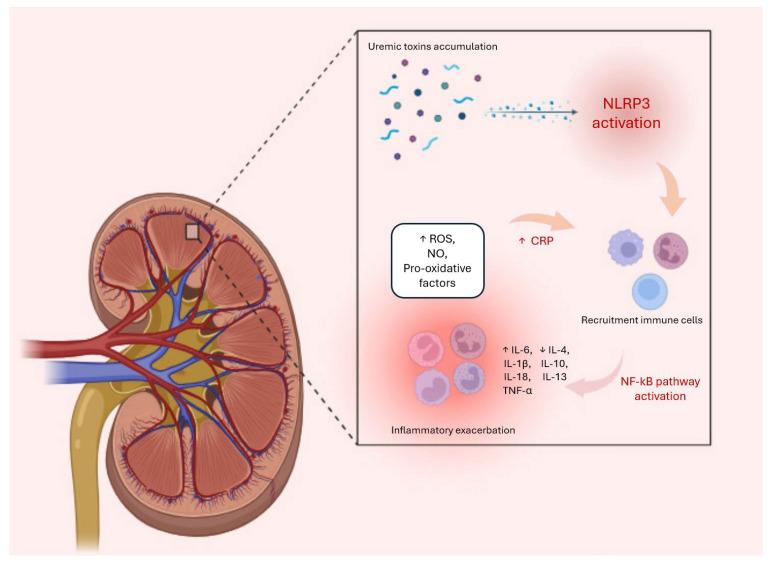
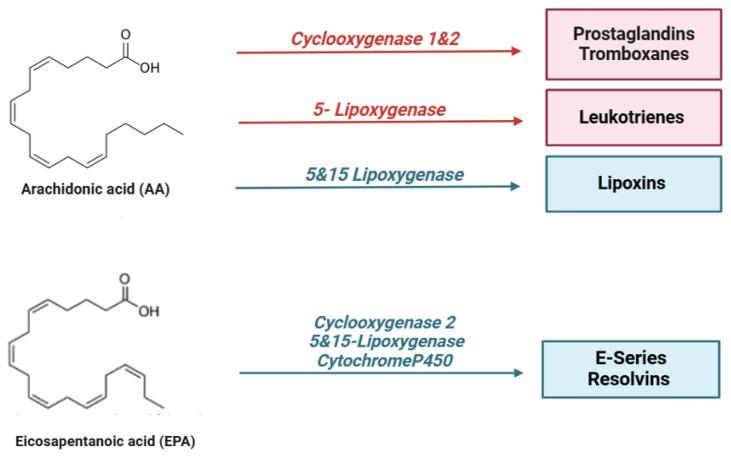
Chronic kidney disease (CKD) is a condition caused by the gradual decline of renal function that approximatively affects 10-12% of the world population, thus representing a public health priority. In CKD patients, chronic and systemic low-grade inflammation is observed, and it significantly contributes to disease development and progression, especially for patients with advanced disease. It also results in CKD-associated complications and increased mortality. The low-grade inflammation is due to different factors, such as the decline of glomerular filtration rate, increased immune system activation, reactive oxygen species release, and intestinal homeostasis. Therefore, the possibility to control chronic low-grade inflammation in CKD deserves great attention. In this review, we will examine the current possible pharmacological approaches to counteract the inflammatory state in CKD, focusing our attention both on the pro-inflammatory factors and the pro-resolving mediators involved in CKD inflammatory state.
慢性肾脏病(CKD)是一种由肾功能逐渐衰退引起的病症,大约影响全球10% - 12%的人口,因此成为公共卫生的重点关注对象。在CKD患者中,可观察到慢性全身性低度炎症,它对疾病的发生和发展有显著影响,尤其是对于晚期疾病患者。它还会导致与CKD相关的并发症并增加死亡率。低度炎症是由多种因素引起的,如肾小球滤过率下降、免疫系统激活增加、活性氧释放以及肠道内环境稳态失衡。因此,控制CKD中慢性低度炎症的可能性值得高度关注。在本综述中,我们将研究目前对抗CKD炎症状态的可能药理学方法,重点关注参与CKD炎症状态的促炎因子和促消退介质。

 Zotero 插件