
番茄(L.)信号转导子及转录激活子(STAT)在种子萌发和低温胁迫响应中的功能
Functions of Tomato ( L.) Signal Transducer and Activator of Transcription (STAT) in Seed Germination and Low-Temperature Stress Response.
作者信息
Zhang Yidan, Zhao Jiahui, Li Jingyuan, Li Yanting, Jiang Libo, Wang Na
机构信息
College of Life Sciences and Medicine, Shandong University of Technology, Zibo 255000, China.
出版信息
Int J Mol Sci. 2025 Apr 3;26(7):3338. doi: 10.3390/ijms26073338.
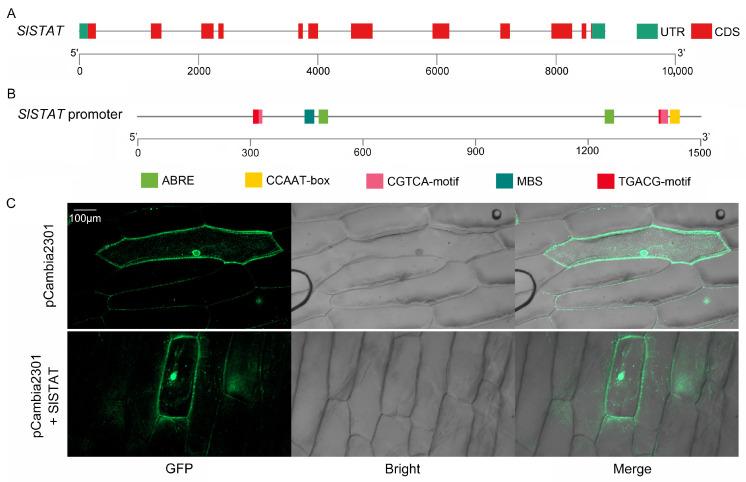
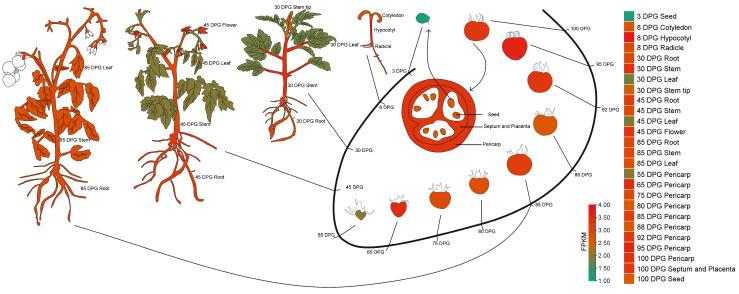
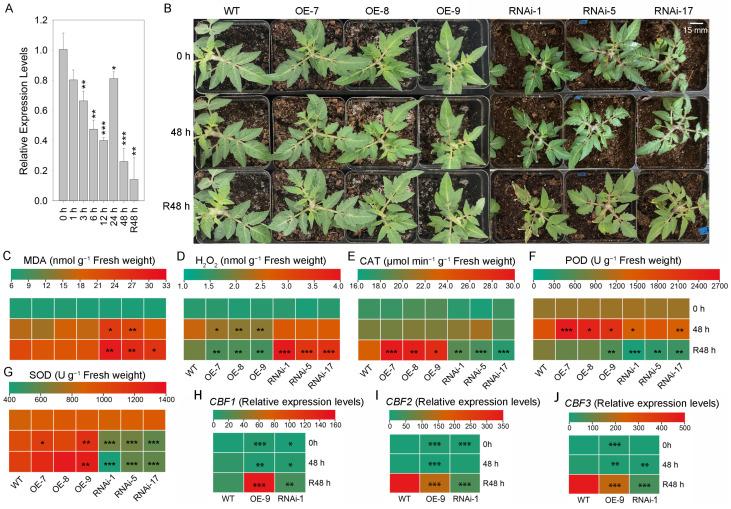
Tomato ( L.) is one of the major vegetable crops worldwide. Research on the Janus kinase-signal transducer and activator of transcription (JAK-STAT) signaling pathway in tomatoes and other plant systems is extremely limited. In this study, the roles of STAT, a crucial element of the JAK-STAT signaling pathway in tomato seed germination and low-temperature stress responses are examined, employing gene family analysis and genetic transformation. The results indicate that the genome contains only one member of the STAT gene family, . Subcellular localization experiments reveal that SlSTAT is found in both the cytoplasm and nucleus, suggesting its potential involvement in biological functions within these cellular compartments. Among the 26 different tomato tissue/organs tested, exhibited higher expression levels in hypocotyl (8 days past germination; 8 DPG), and low expression of significantly reduced the germination rate and impacted biomass at 8 DPG. In addition, the gene was significantly downregulated during low-temperature treatment. Compared with the wild-type (WT) tomatoes, the -overexpressing plants showed more resistance to low-temperature conditions, whereas the downexpressing tomatoes exhibited increased sensitivity. The expressions of low-temperature marker genes (-) and -methyladenosine (mA)-modification-related genes (mA writer, reader, and eraser genes) were detected to explore possible molecular mechanisms by which causes changes in tomato low-temperature stress resistance. The expression changes of - in transgenic plants do not merely follow a straightforward linear relationship with the changes in expression, suggesting a more complex molecular mechanism and a non-direct interaction between SlSTAT and the promoters of . On the other hand, also changes the expression levels of RNA mA-modification-related genes, especially (writer gene), (reader genes), and (eraser gene), ultimately leading to changes in the levels of mA modification. These research findings lay the groundwork for exploring functions of JAK-STAT pathway in tomato development and stress responses, expanding the scope of JAK-STAT signaling studies in plant systems.
番茄(L.)是全球主要的蔬菜作物之一。对番茄及其他植物系统中 Janus 激酶 - 信号转导子和转录激活子(JAK - STAT)信号通路的研究极为有限。在本研究中,利用基因家族分析和遗传转化,研究了 JAK - STAT 信号通路的关键元件 STAT 在番茄种子萌发和低温胁迫响应中的作用。结果表明,基因组中仅包含 STAT 基因家族的一个成员, 。亚细胞定位实验表明 SlSTAT 存在于细胞质和细胞核中,这表明它可能参与这些细胞区室中的生物学功能。在测试的 26 种不同番茄组织/器官中, 在胚轴(发芽后 8 天;8 DPG)中表现出较高的表达水平,而 的低表达显著降低了发芽率并影响了 8 DPG 时的生物量。此外,在低温处理期间 基因显著下调。与野生型(WT)番茄相比,过表达 的植株对低温条件表现出更强的抗性,而低表达的番茄则表现出更高的敏感性。检测了低温标记基因( - )和 N6 - 甲基腺苷(mA)修饰相关基因(mA 写入器、读取器和擦除器基因)的表达,以探索 导致番茄低温胁迫抗性变化的可能分子机制。转基因植物中 - 的表达变化并不只是与 表达的变化呈现简单的线性关系,这表明存在更复杂的分子机制以及 SlSTAT 与 的启动子之间的非直接相互作用。另一方面, 还改变了 RNA mA 修饰相关基因的表达水平,特别是 (写入器基因)、 (读取器基因)和 (擦除器基因),最终导致 mA 修饰水平的变化。这些研究结果为探索 JAK - STAT 通路在番茄发育和胁迫响应中的功能奠定了基础,扩展了植物系统中 JAK - STAT 信号研究的范围。


 Zotero 插件