
推进基于废水的流行病学中的健康公平:一项全球批判性综述与概念框架
Advancing health equity in wastewater-based epidemiology: A global critical review and conceptual framework.
作者信息
Moallef Soroush, Balasubramanian Ruchita, Krieger Nancy, Tabb Loni P, Chen Jarvis T, Hanage William P, Bassett Mary T, Cowger Tori L
机构信息
François-Xavier Bagnoud (FXB) Center for Health and Human Rights, Harvard T.H. Chan School of Public Health, Boston, MA, USA.
Department of Social and Behavioral Sciences, Harvard T.H. Chan School of Public Health, Boston, MA, USA.
出版信息
SSM Popul Health. 2025 Mar 19;30:101786. doi: 10.1016/j.ssmph.2025.101786. eCollection 2025 Jun.
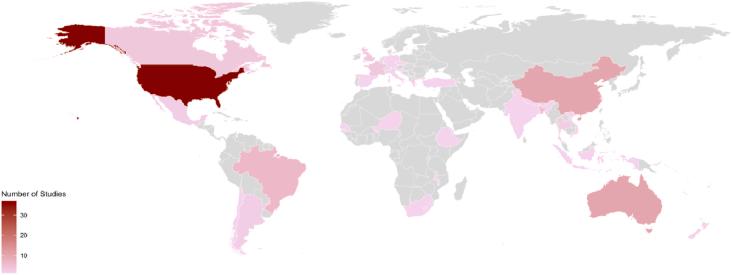
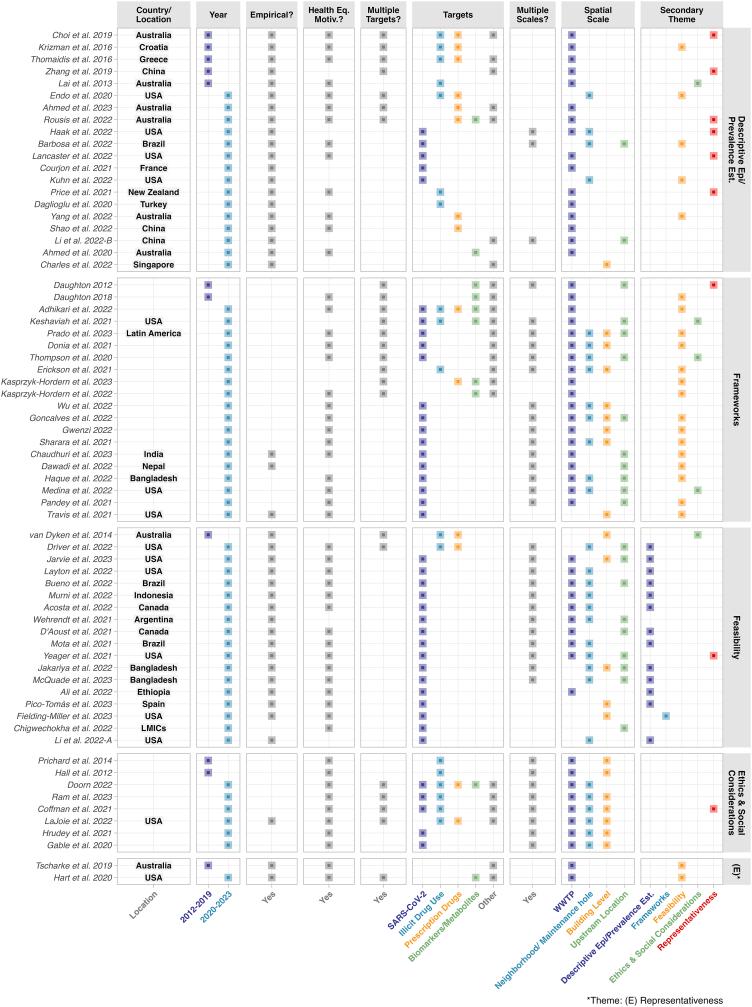
Population health data from wastewater-based epidemiology (WBE) are being used at unprecedented scales worldwide, yet there is limited focus on how to advance health equity in the field. Addressing this gap, we conducted a critical review of published literature in PubMed, targeting studies at the intersection of WBE and health equity. Of 145 articles assessed in full-text screening, we identified 68 studies with health equity considerations. These studies spanned various spatial scales and biochemical targets, addressing domains such as study design and methodologies, ethical and social considerations, and the feasibility and implementation of WBE monitoring. We summarize and synthesize health equity-oriented considerations across the identified domains. We further propose five key considerations to advance health equity in WBE research and practice, and integrate these considerations into a conceptual framework to illustrate how they apply to major steps in the process of conducting WBE. These considerations include global inequities in WBE access, the need to prevent potential harms and stigma via data misuse (inappropriate reporting of data and potential use of WBE for criminal surveillance), and the importance of regulation and community engagement, particularly amidst the growing privatization of WBE, especially in the United States.
基于废水的流行病学(WBE)所产生的人群健康数据正在全球范围内以前所未有的规模被使用,但该领域对如何促进健康公平的关注却很有限。为了填补这一空白,我们对PubMed上发表的文献进行了批判性综述,目标是针对WBE与健康公平交叉领域的研究。在全文筛选评估的145篇文章中,我们确定了68项考虑了健康公平的研究。这些研究涵盖了各种空间尺度和生化指标,涉及研究设计和方法、伦理和社会考量以及WBE监测的可行性和实施等领域。我们总结并综合了已确定领域中以健康公平为导向的考量因素。我们进一步提出了五个关键考量因素,以促进WBE研究和实践中的健康公平,并将这些考量因素整合到一个概念框架中,以说明它们如何应用于开展WBE过程中的主要步骤。这些考量因素包括WBE获取方面的全球不平等、通过数据滥用(数据的不当报告以及WBE可能被用于刑事监视)防止潜在危害和污名化的必要性,以及监管和社区参与的重要性,特别是在美国WBE日益私有化的背景下。

 Zotero 插件