
依达拉奉与5-甲酰基嘧啶碱基及含有5-甲酰基胞苷残基的DNA寡核苷酸共价结合的高分辨质谱分析。
HR-MS Analysis of the Covalent Binding of Edaravone to 5-Formylpyrimidine Bases and a DNA Oligonucleotide Containing a 5-Formylcytidine Residue.
作者信息
Regnault Romain, Kouach Mostafa, Goossens Laurence, Thuru Xavier, Bailly Christian, Goossens Jean-François
机构信息
ULR 7365 GRITA - Groupe de Recherche sur les Formes Injectables et Technologies Associées, University of Lille, CHU Lille, Lille, France.
Institute of Pharmaceutical Chemistry Albert Lespagnol (ICPAL), Faculty of Pharmacy, University of Lille, Lille, France.
出版信息
Rapid Commun Mass Spectrom. 2025 Jul 30;39(14):e10050. doi: 10.1002/rcm.10050.
RATIONALE
Edaravone (EDA) is a radical scavenger and an antioxidant drug approved to treat amyotrophic lateral sclerosis and used as a research tool to explore treatment of neurodegenerative diseases and cancers. It is also a reactive agent, known as PMP (1-phenyl-3-methyl-5-pyrazolone), used for the analysis of polysaccharides composition. EDA can react with sugars and aromatic aldehydes. In this context, we have investigated the reactivity of EDA toward the biologically relevant formylated nucleobases, nucleosides, and an oligonucleotide containing a formylated residue.
METHODS
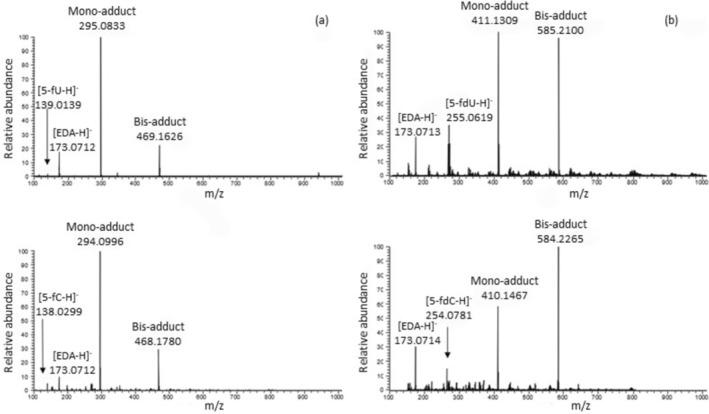
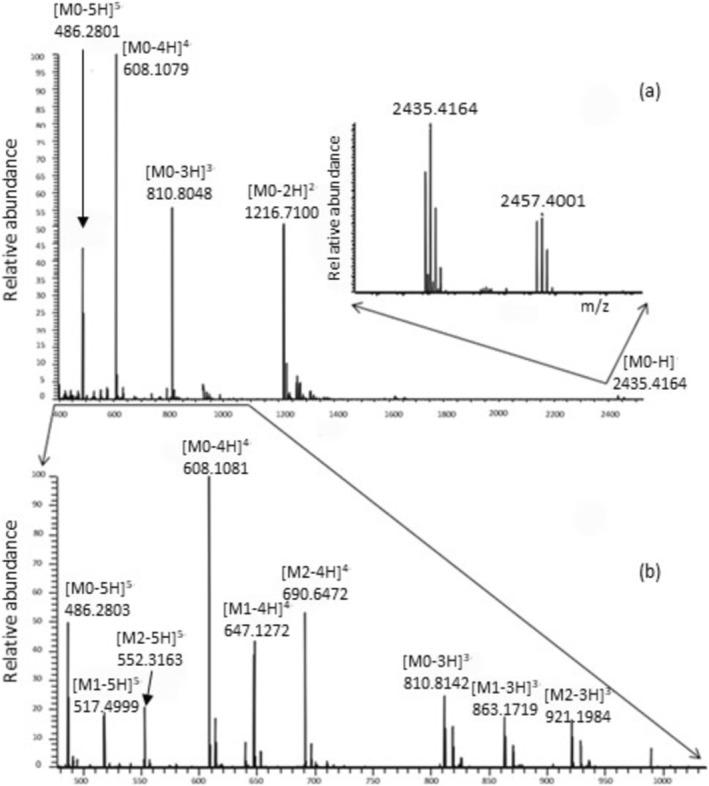
The formation of both mono- and bis-adducts between EDA and the formylated nucleobases (5-formyluracil (5fU) and 5-formylcytosine (5fC)) or the corresponding nucleosides 5-fdU and 5-fdC was characterized using high-resolution mass spectrometry (HR-MS). Similarly, the covalent binding of EDA to an 8-mer palindromic oligonucleotide d (TATG[*C]ATA) containing a single 5-fdC residue [*C] under physiological conditions was investigated using mass spectrometry.
RESULTS
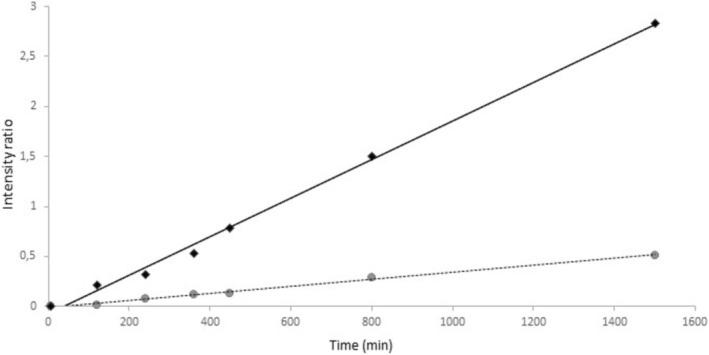
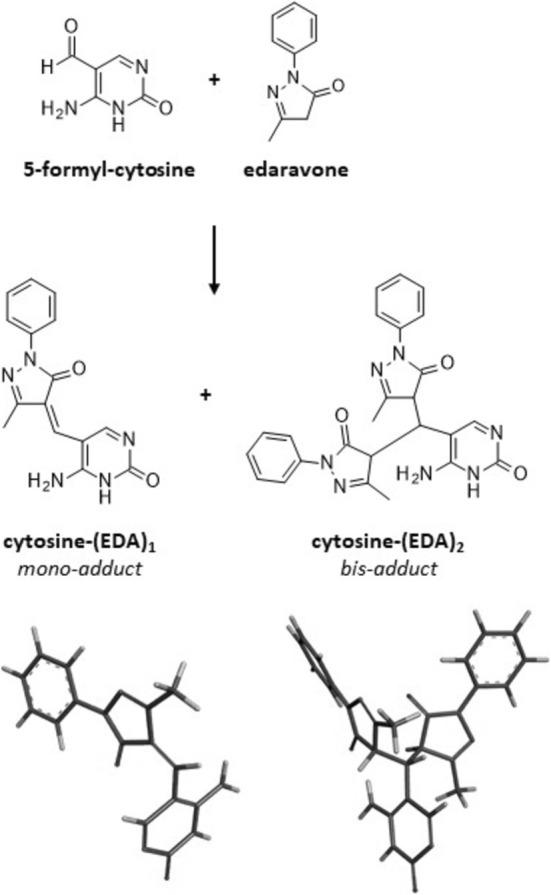
For the first time, EDA is shown to react with formylated pyrimidines. Covalent and stable adducts were identified. EDA was found to react efficiently with the formylated oligonucleotide to generate mono- and bis-adducts. The rate of formation of the mono-adduct was five times higher than that of the bis-adduct. The reaction of EDA with aldehydic DNA modifications such as 5fU/5fC may have important consequences in terms of gene expression.
CONCLUSIONS
These observations raise implications for an epigenetic contribution to the mechanism of action of EDA. The biological implications of our in vitro results are discussed, notably in the frame of neurodegenerative diseases and cancers.
原理
依达拉奉(EDA)是一种自由基清除剂和抗氧化药物,已被批准用于治疗肌萎缩侧索硬化症,并作为探索神经退行性疾病和癌症治疗方法的研究工具。它也是一种反应剂,即1-苯基-3-甲基-5-吡唑啉酮(PMP),用于分析多糖组成。EDA可与糖类和芳香醛发生反应。在此背景下,我们研究了EDA与具有生物学相关性的甲酰化核碱基、核苷以及含有甲酰化残基的寡核苷酸的反应活性。
方法
使用高分辨率质谱(HR-MS)对EDA与甲酰化核碱基(5-甲酰基尿嘧啶(5fU)和5-甲酰基胞嘧啶(5fC))或相应核苷5-氟-2'-脱氧尿苷(5-fdU)和5-氟-2'-脱氧胞苷(5-fdC)之间单加合物和双加合物的形成进行了表征。同样,在生理条件下,使用质谱研究了EDA与含有单个5-fdC残基[*C]的8聚体回文寡核苷酸d(TATG[*C]ATA)的共价结合。
结果
首次表明EDA可与甲酰化嘧啶发生反应。鉴定出了共价且稳定的加合物。发现EDA能有效地与甲酰化寡核苷酸反应生成单加合物和双加合物。单加合物的形成速率比双加合物高五倍。EDA与醛基化DNA修饰(如5fU/5fC)的反应可能对基因表达产生重要影响。
结论
这些观察结果对EDA作用机制的表观遗传学贡献具有启示意义。我们讨论了体外实验结果的生物学意义,特别是在神经退行性疾病和癌症的背景下。


 Zotero 插件