
细菌辅助的雷公藤红素脂质体用于在小鼠模型中有效化疗肺癌
Bacteria-Assisted Celastrol Liposomes for Effective Chemotherapy Against Lung Cancer in Mice Model.
作者信息
Wang Xinyi, Gao Chao, Zhang Xialin, Gu Yingqi, Fu Shaozhi, Lin Sheng
机构信息
Department of Oncology, the Affiliated Hospital of Southwest Medical University, Luzhou, 646000, People's Republic of China.
出版信息
Int J Nanomedicine. 2025 Apr 15;20:4645-4660. doi: 10.2147/IJN.S514064. eCollection 2025.
INTRODUCTION
Lung cancer has a high resistance rate to current chemotherapies. Therefore, there is an urgent need to develop new anticancer drugs. Celastrol is a promising anticancer bioactive compound for various types of cancers. However, its poor solubility and severe liver damage have limited its clinical application.
METHODS
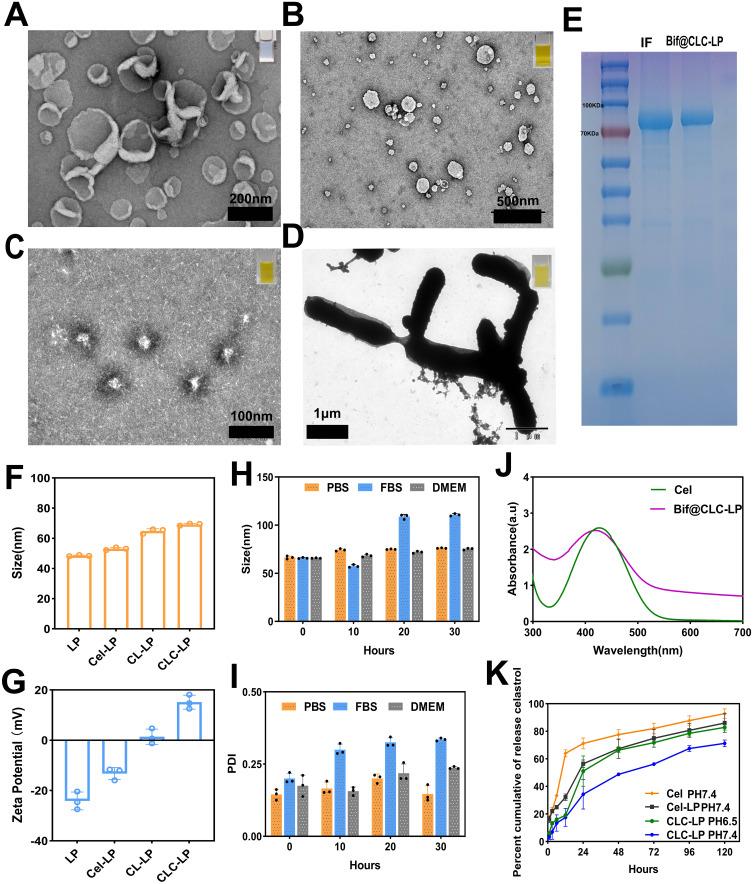
BIF@CEL/LF/CMCS-Lipo (Bif@CLC-LP), a self-driving biomotor that targets tumor tissues, was used to deliver celastrol, which was encapsulated in surface-modified lactoferrin liposomes, which were then coated with carboxymethyl chitosan and loaded onto the surface of (Bif). Extensive in vitro and in vivo experiments were performed to assess its physicochemical and antitumor properties and safety in treating lung cancer.
RESULTS
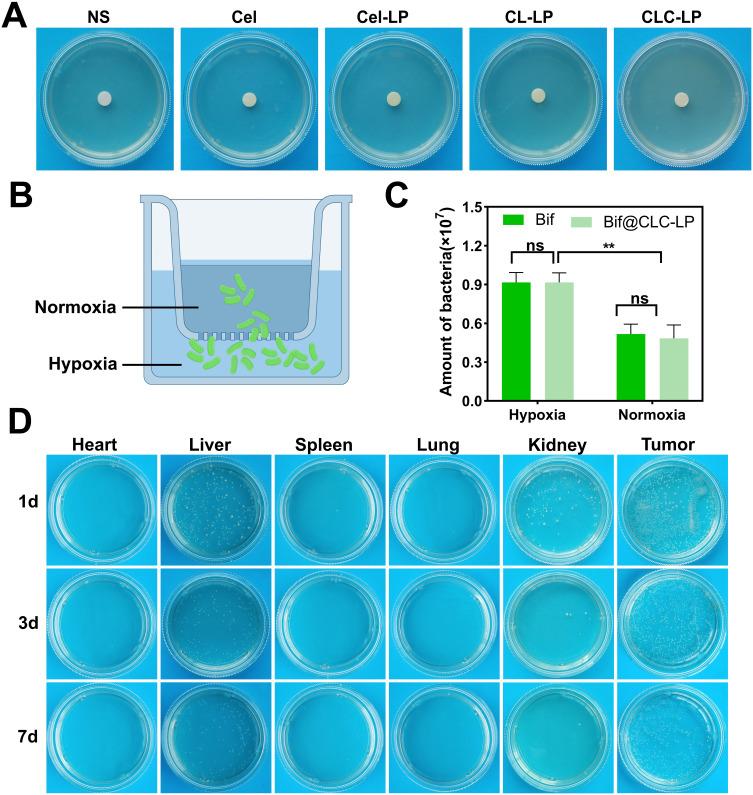
Bif@CLC-LP responds to pH and is bioselective, precisely targeting hypoxic regions of tumors. In the acidic tumor environment, the carboxymethyl chitosan coating breaks down, releasing liposomes that can specifically target the cancer surface receptor for endocytosis. This process increases the production of reactive oxygen species (ROS) and decreases the mitochondrial membrane potential in lung cancer cells, leading to apoptosis.
CONCLUSION
In our work, Bif@CLC-LP significantly inhibited tumor growth while minimizing celastrol-induced liver damage in a mouse lung cancer model. This bacteria-mediated liposome delivery system is a promising new nanoplatform for treating different types of solid cancer.
引言
肺癌对当前化疗的耐药率很高。因此,迫切需要开发新的抗癌药物。雷公藤红素是一种对多种癌症有前景的抗癌生物活性化合物。然而,其溶解性差和严重的肝损伤限制了其临床应用。
方法
使用BIF@CEL/LF/CMCS-Lipo(Bif@CLC-LP),一种靶向肿瘤组织的自驱动生物马达,来递送包裹在表面修饰乳铁蛋白脂质体中的雷公藤红素,然后用羧甲基壳聚糖包被并负载到(Bif)表面。进行了广泛的体外和体内实验,以评估其物理化学性质、抗肿瘤特性以及治疗肺癌的安全性。
结果
Bif@CLC-LP对pH有响应且具有生物选择性,能精确靶向肿瘤的缺氧区域。在酸性肿瘤环境中,羧甲基壳聚糖包被分解,释放出可特异性靶向癌症表面受体进行内吞作用的脂质体。这一过程增加了肺癌细胞中活性氧(ROS)的产生并降低了线粒体膜电位,导致细胞凋亡。
结论
在我们的研究中,Bif@CLC-LP在小鼠肺癌模型中显著抑制了肿瘤生长,同时将雷公藤红素诱导的肝损伤降至最低。这种细菌介导的脂质体递送系统是一种有前景的用于治疗不同类型实体癌的新型纳米平台。





 Zotero 插件