
用于癌症免疫治疗的共享新抗原。
Shared neoantigens for cancer immunotherapy.
作者信息
Goloudina Anastasia, Le Chevalier Fabien, Authié Pierre, Charneau Pierre, Majlessi Laleh
机构信息
Pasteur-TheraVectys Joint Lab, Institut Pasteur, Université de Paris, Virology Department, 28 rue du Dr. Roux, 75015 Paris, France.
出版信息
Mol Ther Oncol. 2025 Mar 28;33(2):200978. doi: 10.1016/j.omton.2025.200978. eCollection 2025 Jun 18.
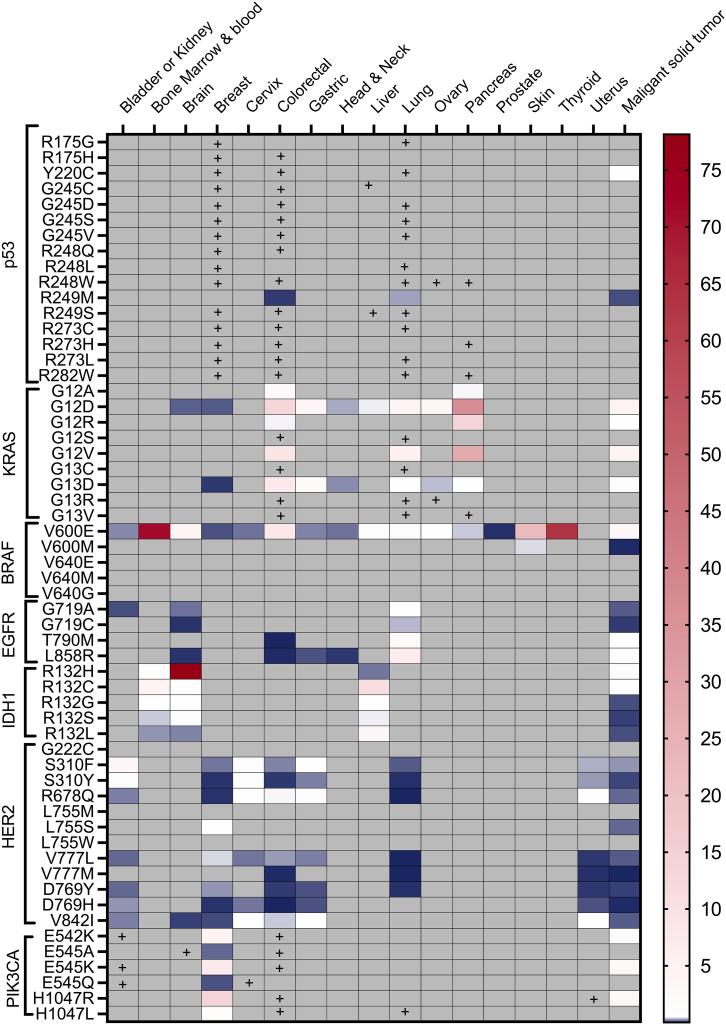
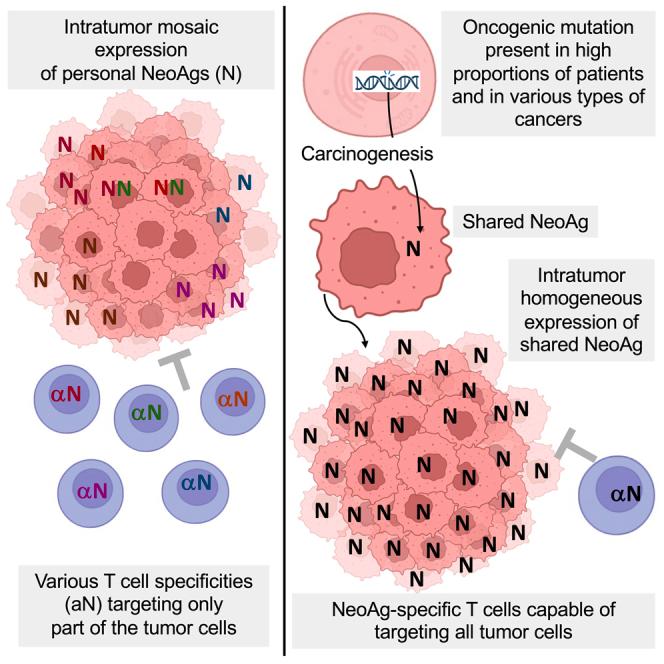
Exploration of neoantigens holds the potential to be productive in immuno-oncotherapy. Among tumor-specific antigens, neoantigens result from genetic instability that gives rise to non-synonymous somatic mutations, highly specific to tumor cells. In addition to point mutations, gene rearrangements, indels leading to frameshifts, chromosomal translocations or inversions that may lead to fusion proteins, alternative mRNA splicing, and integration of genetic material of oncogenic viruses into the host genome provide consistent sources of neoantigens that are absent in healthy tissues. Out of these alterations, 2%-3% may generate T cell neoepitopes, possibly detectable by TCRs. Neoantigens are absent in healthy tissues and are thus at low risk of triggering autoimmunity. In addition, the host lymphocytes have not been rendered tolerant toward them and it is possible to induce immune responses against them. Here, we overview the two categories of neoantigens, i.e., private and shared, and their use in immuno-oncotherapy in selected pre-clinical and clinical studies. The vast majority of commonly occurring tumor-specific mutations are cancer causing and are permanently expressed by all malignant tumor cells, preventing the latter from escaping vaccine-induced anti-neoantigen immunity. The use of public neoantigens combined with efficient vaccine platforms can provide non-personalized "off-the-shelf" therapeutic vaccine candidates for broad-spectrum immunotherapy purposes.
新抗原的探索在免疫肿瘤治疗中具有产生疗效的潜力。在肿瘤特异性抗原中,新抗原源于基因不稳定,这种不稳定会导致非同义体细胞突变,对肿瘤细胞具有高度特异性。除了点突变外,基因重排、导致移码的插入或缺失、可能导致融合蛋白的染色体易位或倒位、可变mRNA剪接以及致癌病毒的遗传物质整合到宿主基因组中,这些都为健康组织中不存在的新抗原提供了持续的来源。在这些改变中,2%-3%可能产生T细胞新表位,可能被TCR检测到。新抗原在健康组织中不存在,因此引发自身免疫的风险较低。此外,宿主淋巴细胞尚未对它们产生耐受性,有可能诱导针对它们的免疫反应。在此,我们概述了两类新抗原,即私有新抗原和共享新抗原,以及它们在选定的临床前和临床研究中的免疫肿瘤治疗应用。绝大多数常见的肿瘤特异性突变都是致癌的,并且由所有恶性肿瘤细胞永久表达,从而防止后者逃避疫苗诱导的抗新抗原免疫。使用公共新抗原并结合高效的疫苗平台可为广谱免疫治疗提供非个性化的“现成”治疗性疫苗候选物。

 Zotero 插件