
居家隔离时长、父母情商及家庭社会经济地位对疫情期间儿童焦虑情绪的影响:对29550名家长的调查
The Effects of Home Quarantine Duration, Parental Emotional Intelligence, and Family Socioeconomic Status on Children's Anxiety During the Pandemic: A Survey of 29,550 Parents.
作者信息
Xiang Jiaxin, Wu Jing, Lian Chongyan, Lin Xiaoxiao
机构信息
School of Education, Guangzhou University, Guangzhou, Guangdong, 510006, People's Republic of China.
Department of Early Childhood Education, Shenzhen Polytechnic University, Shenzhen, Guangdong, 518055, People's Republic of China.
出版信息
Psychol Res Behav Manag. 2025 Apr 16;18:953-964. doi: 10.2147/PRBM.S522988. eCollection 2025.
BACKGROUND
The pandemic has led to unprecedented home quarantine measures affecting children's anxiety levels due to routine disruptions. This study investigated the role of the length of the quarantine period, parents' emotional intelligence, and family socioeconomic status (SES) in influencing children's anxiety.
OBJECTIVE
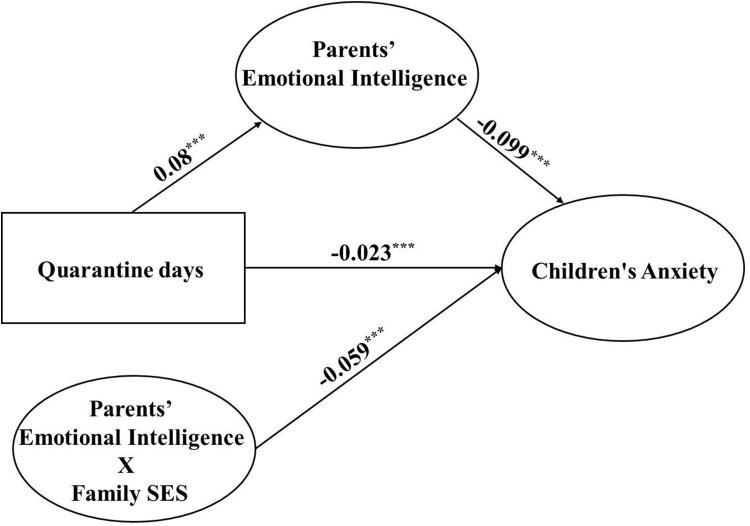
This study aims to examine the relationship between quarantine duration and children's anxiety and to explore the mediating role of parents' emotional intelligence and the moderating role of family socioeconomic status in this relationship.
METHODS
An online questionnaire surveyed 29,550 parents in Guangdong, Hubei, Henan, and Guangxi provinces of China. The measurement tools used included the Preschool Anxiety Scale, the Family Socioeconomic Status (SES) Scale, and the Emotional Intelligence Questionnaire. The data were analyzed via SPSS 25.0 and Mplus 8.0.
RESULTS
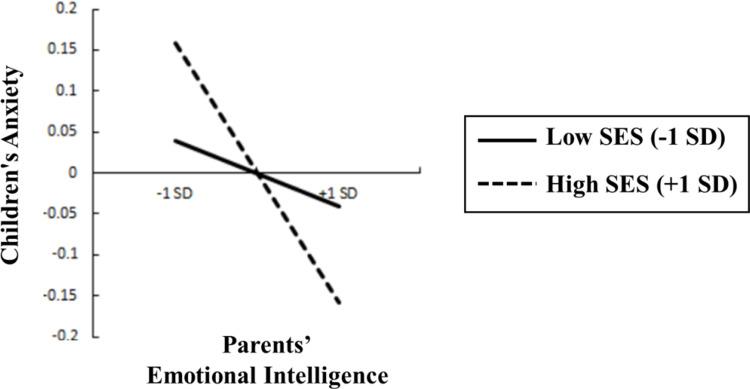
A longer quarantine period (as measured by the number of days) significantly reduced children's anxiety. Parents' emotional intelligence mediates the relationship between quarantine days and children's anxiety, explaining 51.79% of the effect. Family SES moderates the mediating effect of parents' emotional intelligence on children's anxiety, benefiting higher-SES families more than lower-SES families. Children's adaptation during the quarantine period demonstrates psychological resilience.
CONCLUSION
The mediating effect of parents' emotional intelligence accounted for 51.79% of the total effect of quarantine duration on children's anxiety, with longer quarantine periods associated with decreased anxiety. Family socioeconomic status moderated this effect, benefiting higher-socioeconomic-status families more than lower-socioeconomic-status families. Children's adaptation during the quarantine period demonstrates psychological resilience. To alleviate anxiety, policies should focus on supporting families with lower socioeconomic status and enhancing parental emotional skills.
背景
这场疫情导致了前所未有的居家隔离措施,由于日常活动被打乱,影响了儿童的焦虑水平。本研究调查了隔离期时长、父母的情商以及家庭社会经济地位(SES)在影响儿童焦虑方面的作用。
目的
本研究旨在检验隔离期时长与儿童焦虑之间的关系,并探讨父母情商的中介作用以及家庭社会经济地位在这种关系中的调节作用。
方法
通过在线问卷对中国广东、湖北、河南和广西四省的29550名家长进行了调查。所使用的测量工具包括学前焦虑量表、家庭社会经济地位(SES)量表和情商量表。数据通过SPSS 25.0和Mplus 8.0进行分析。
结果
更长的隔离期(以天数衡量)显著降低了儿童的焦虑。父母的情商在隔离天数与儿童焦虑之间起中介作用,解释了51.79%的效应。家庭SES调节了父母情商对儿童焦虑的中介作用,对高SES家庭的益处大于低SES家庭。儿童在隔离期的适应表现出心理韧性。
结论
父母情商的中介作用占隔离期时长对儿童焦虑总效应的51.79%,隔离期越长,焦虑程度越低。家庭社会经济地位调节了这一效应,对高社会经济地位家庭的益处大于低社会经济地位家庭。儿童在隔离期的适应表现出心理韧性。为减轻焦虑,政策应侧重于支持社会经济地位较低的家庭,并提高父母的情感技能。


 Zotero 插件