
人工智能与人类对整形外科负压伤口治疗的系统文献综述对比
Artificial Intelligence Versus Human Systematic Literature Review Into Negative-pressure Wound Therapy in Plastic Surgery.
作者信息
Deering Augustine J, Harrah Payden A, Lue Melinda, Sheikh Daanish, Fries C Anton
机构信息
From the Long School of Medicine, University of Texas Health Science Center San Antonio, San Antonio, TX.
Division of Plastic Surgery, Baylor Scott and White Health, Temple, TX.
出版信息
Plast Reconstr Surg Glob Open. 2025 Apr 18;13(4):e6699. doi: 10.1097/GOX.0000000000006699. eCollection 2025 Apr.
BACKGROUND
The potential of artificial intelligence (AI) to support physician evidence-based medicine is vast. We compared AI's ability to perform a systematic review of the literature to that of human investigators. Negative-pressure wound therapy (NPWT), a mainstay of wound management with a large but varied body of evidence, was therefore chosen as the subject of this investigation. Producing high-level evidence of NPWT's impact on wound healing has been challenging due to trial design issues, making a systematic review important and challenging. In this article, NPWT efficacy and the ability of AI to assess levels of evidence were evaluated.
METHODS
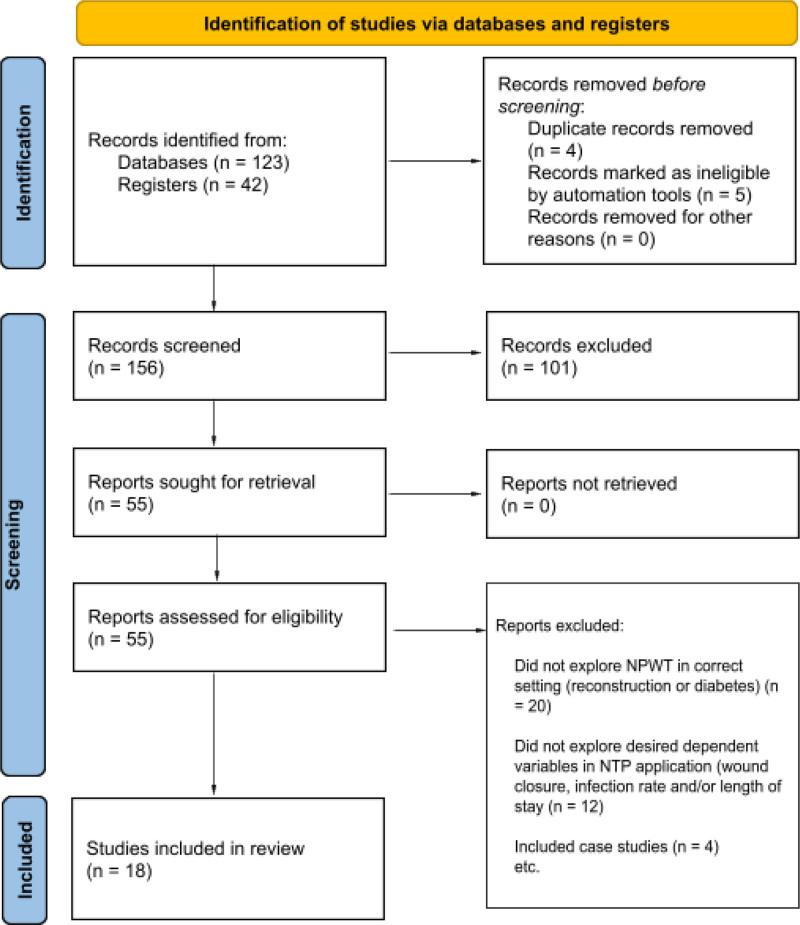
A literature search was conducted using PubMed, SCOPUS, and CINAHL. The resulting articles were screened using Preferred Reporting Items for Systematic Reviews and Meta-Analysis guidelines. The Grading of Recommendations, Assessment, Development, and Evaluations criteria were applied by both humans and AI to analyze the quality and evidence of each article.
RESULTS
Eighteen studies on 3131 patients were reviewed. Seven studies addressed length of stay; five showed shorter stays with NPWT. Fourteen studies examined infection rates. Eight found significant improvement with the use of NPWT. Twelve articles analyzed time to wound closure, and nine of those articles found reduced time when NPWT was utilized. AI generally assigned lower quality of evidence scores compared with humans.
CONCLUSIONS
AI is a promising tool but remains limited in accurately determining evidence quality. AI's lower scores may reflect reduced bias. Multiple confounders and the diversity of its application lead to a lack of high-level evidence of NPWT's efficacy.
背景
人工智能(AI)在支持医生循证医学方面的潜力巨大。我们将AI对文献进行系统综述的能力与人类研究者的能力进行了比较。负压伤口治疗(NPWT)是伤口管理的主要手段,其证据数量众多但各不相同,因此被选作本研究的主题。由于试验设计问题,要得出NPWT对伤口愈合影响的高级证据具有挑战性,这使得系统综述既重要又具有挑战性。在本文中,我们评估了NPWT的疗效以及AI评估证据水平的能力。
方法
使用PubMed、SCOPUS和CINAHL进行文献检索。根据系统综述和Meta分析的首选报告项目指南对所得文章进行筛选。人类和AI均应用推荐分级、评估、制定和评价标准来分析每篇文章的质量和证据。
结果
对涉及3131例患者的18项研究进行了综述。7项研究涉及住院时间;5项研究表明NPWT可缩短住院时间。14项研究检查了感染率。8项研究发现使用NPWT有显著改善。12篇文章分析了伤口闭合时间,其中9篇文章发现使用NPWT可缩短时间。与人类相比,AI通常给出的证据质量得分较低。
结论
AI是一种有前途的工具,但在准确确定证据质量方面仍然有限。AI的较低得分可能反映出偏差较小。多种混杂因素及其应用的多样性导致缺乏NPWT疗效的高级证据。
 Zotero 插件