
动脉搏动和跨髓压协同驱动类淋巴系统流动。
Arterial pulsations and transmantle pressure synergetically drive glymphatic flow.
作者信息
Nozaleda Guillermo L, Coenen Wilfried, Haughton Victor, Sánchez Antonio L
机构信息
Department of Mechanical and Aerospace Engineering, University of California San Diego, La Jolla, CA, 92093-0411, USA.
Departamento de Ingeniería Térmica y de Fluidos, Universidad Carlos III de Madrid, 28911, Leganés, Spain.
出版信息
Sci Rep. 2025 Apr 21;15(1):13798. doi: 10.1038/s41598-025-97631-x.
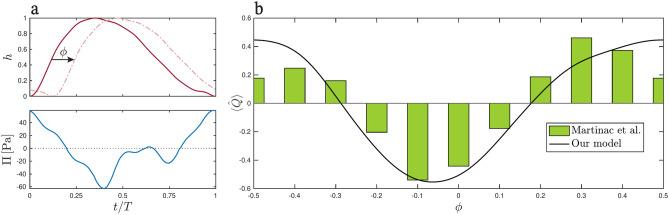
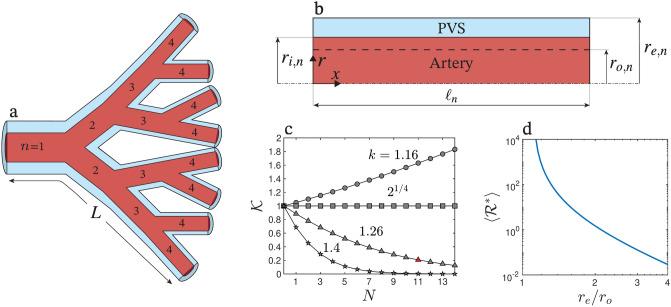
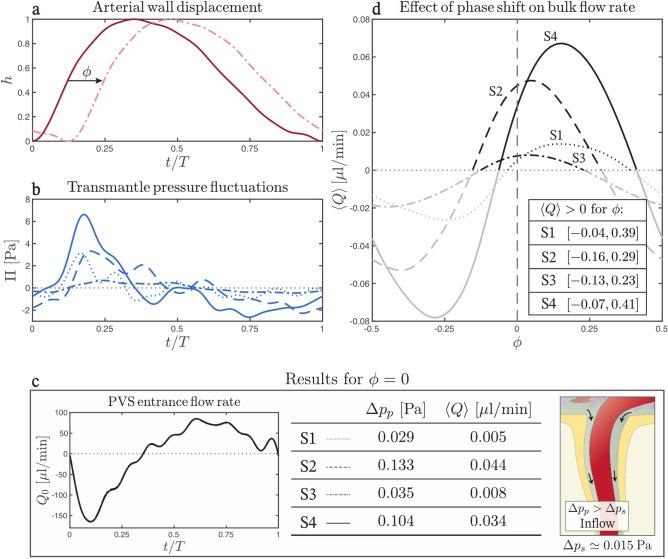
Clearance of waste material from the brain by the glymphatic system results from net flow of cerebrospinal fluid (CSF) through perivascular spaces surrounding veins and arteries. In periarterial spaces, this bulk flow is directed from the cranial subarachnoid space towards the brain's interior. The precise pumping mechanism explaining this net inflow remains unclear. While in vivo experiments have shown that the pulsatile motion in periarterial spaces is synchronized with arterial pulsations, peristalsis alone has been deemed insufficient to explain bulk flow. In this study we examine an alternative mechanism based on the interaction between arterial pulsations and fluctuations in transmantle pressure. Previously studied using pressure data from a hydrocephalus patient, this mechanism is analyzed here in healthy subjects using in vivo flow measurements obtained via phase-contrast magnetic resonance imaging. Arterial pulsations are derived from flow-rate measurements of arterial blood entering the cranial cavity, while transmantle-pressure fluctuations are computed using measurements of CSF flow in the cerebral aqueduct. The two synchronized waveforms are integrated into a canonical multi-branch model of the periarterial spaces, yielding a closed-form expression for the bulk flow. The results confirm that the dynamic interactions between arterial pulsations and transmantle pressure are sufficient to generate a positive inflow along periarterial spaces.
类淋巴系统将脑内的废物清除,这是由脑脊液(CSF)通过围绕静脉和动脉的血管周围间隙的净流动实现的。在动脉周围间隙中,这种大量流动是从颅蛛网膜下腔流向脑内部。解释这种净流入的精确泵送机制仍不清楚。虽然体内实验表明动脉周围间隙中的脉动运动与动脉搏动同步,但仅靠蠕动被认为不足以解释大量流动。在本研究中,我们研究了一种基于动脉搏动与跨脑压波动之间相互作用的替代机制。此前曾利用一名脑积水患者的压力数据进行研究,在此我们使用通过相位对比磁共振成像获得的体内血流测量数据,对健康受试者中的这一机制进行分析。动脉搏动源自进入颅腔的动脉血流速率测量,而跨脑压波动则通过测量中脑导水管中的脑脊液流动来计算。这两个同步波形被整合到动脉周围间隙的典型多分支模型中,得出大量流动的闭式表达式。结果证实,动脉搏动与跨脑压之间的动态相互作用足以沿动脉周围间隙产生正向流入。



 Zotero 插件