
一种利用基于昆虫的菠菜食物残渣靶向癌症组织进行基因治疗的新方法。
A novel approach in using insect-based spinach-food waste for gene targeting to cancer tissues.
作者信息
Majd-Marani Shadi, Eftekhari Ali, Elias Sabry G, Beffa Roland, Alebrahim Mohammad Taghi, Mishra Abhay Prakash, Afrouz Mehdi
机构信息
Department of Plant Production and Genetics, University of Mohaghegh Ardabili, Ardabil, Iran.
Faculty of Engineering & Natural Sciences, Tampere University, P.O. Box 541, Tampere, 33101, Finland.
出版信息
Sci Rep. 2025 Apr 22;15(1):13905. doi: 10.1038/s41598-025-98418-w.
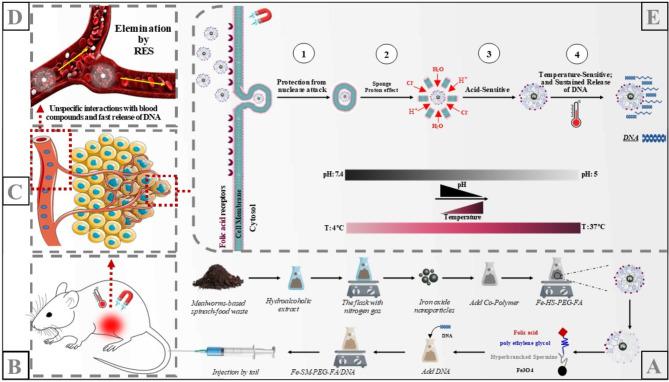
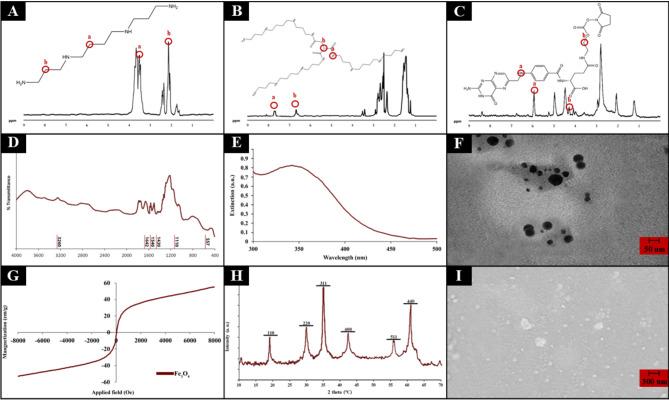
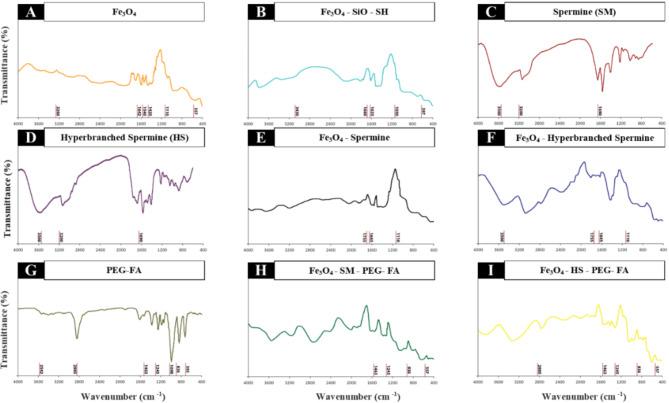
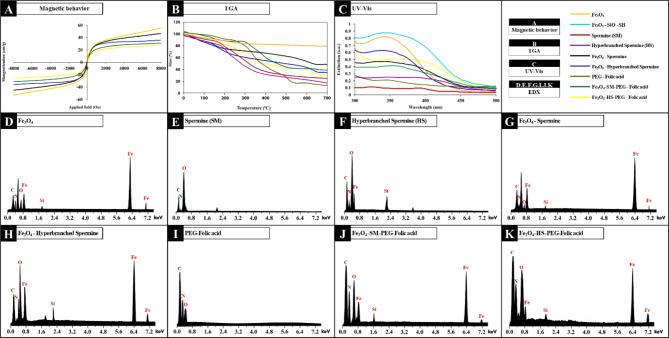
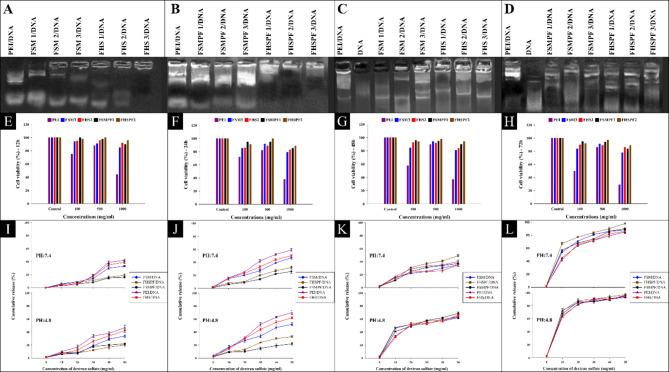
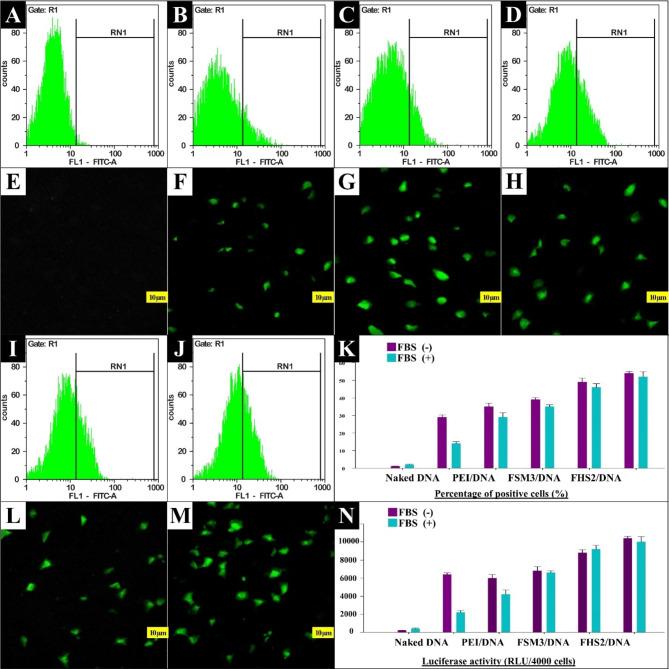
In our study, we prepared FeO nanoparticles (NPs) using food waste extract of Mealworm (Tenebrio molitor) larvae fed spinach (Spinacia oleracea), which is rich in iron. A coating was applied to FeO NPs containing hyperbranched spermine-polyethylene glycol-folic acid (FHSPF) and spermine-polyethylene glycol-folic acid (FSMPF). Polymer was loaded with siRNA or DNA. DLS, H-NMR, FTIR, EDX, Zeta potential and TEM were used to analyze morphology of NPs. Biocompatibility, DNA release, and gene transfer properties were evaluated. Coats concentration in our NPs increased zeta potential, DNA release, encapsulation, and gene delivery efficiency. As determined by cell viability, our NPs exhibit low cytotoxicity and good compatibility; on the other hand, we evaluated their ability to transfer into MCF-7 cells using fluorescence microscopy and flow cytometry. According to this analysis, increasing DNA or siRNA concentration in NPs improved gene transfer efficiency. As a result of cytotoxicity assay, FHSPF2 NPs showed high biocompatibility; NPs were demonstrated to deliver siRNA-FAM to breast cancer cells and mice in vivo, and they were also rated excellent for delivering siRNA-FAM to the tumor site using external magnetic fields. Magnetic fields significantly cause NPs to adsorb at the tumor site.
在我们的研究中,我们使用喂食富含铁的菠菜(菠菜属)的黄粉虫(黄粉虫)幼虫的食物残渣提取物制备了FeO纳米颗粒(NPs)。对含有超支化精胺-聚乙二醇-叶酸(FHSPF)和精胺-聚乙二醇-叶酸(FSMPF)的FeO NPs进行了涂层处理。聚合物负载了siRNA或DNA。使用动态光散射(DLS)、核磁共振氢谱(H-NMR)、傅里叶变换红外光谱(FTIR)、能量散射X射线光谱(EDX)、zeta电位和透射电子显微镜(TEM)分析了纳米颗粒的形态。评估了生物相容性、DNA释放和基因转移特性。我们纳米颗粒中的涂层浓度提高了zeta电位、DNA释放、包封率和基因传递效率。通过细胞活力测定,我们的纳米颗粒表现出低细胞毒性和良好的相容性;另一方面,我们使用荧光显微镜和流式细胞术评估了它们转移到MCF-7细胞中的能力。根据该分析,增加纳米颗粒中DNA或siRNA的浓度可提高基因转移效率。细胞毒性试验结果表明,FHSPF2纳米颗粒具有高生物相容性;纳米颗粒被证明可在体内将siRNA-FAM递送至乳腺癌细胞和小鼠,并且在使用外部磁场将siRNA-FAM递送至肿瘤部位方面也被评为优秀。磁场显著导致纳米颗粒吸附在肿瘤部位。


 Zotero 插件