
简化复杂胰岛素治疗方案对2型糖尿病糖代谢参数及靶器官损害的疗效:一项回顾性队列研究
Efficacy of Simplifying Complex Insulin Regimen on Glycometabolic Parameters and Target Organ Damage in Type 2 Diabetes: A Retrospective Cohort Study.
作者信息
Fejes Roland, Kádár Csilla, Kovács-Huber Róbert, Taybani Zoltán, Juhász László, Rutai Attila, Tallósy Szabolcs Péter
机构信息
Institute of Surgical Research, Albert Szent-Györgyi Medical School, University of Szeged, Szeged, Hungary.
Department of Internal Medicine, Hódmezővásárhely-Makó Healthcare Center, Makó, Hungary.
出版信息
J Diabetes Res. 2025 Apr 15;2025:9141564. doi: 10.1155/jdr/9141564. eCollection 2025.
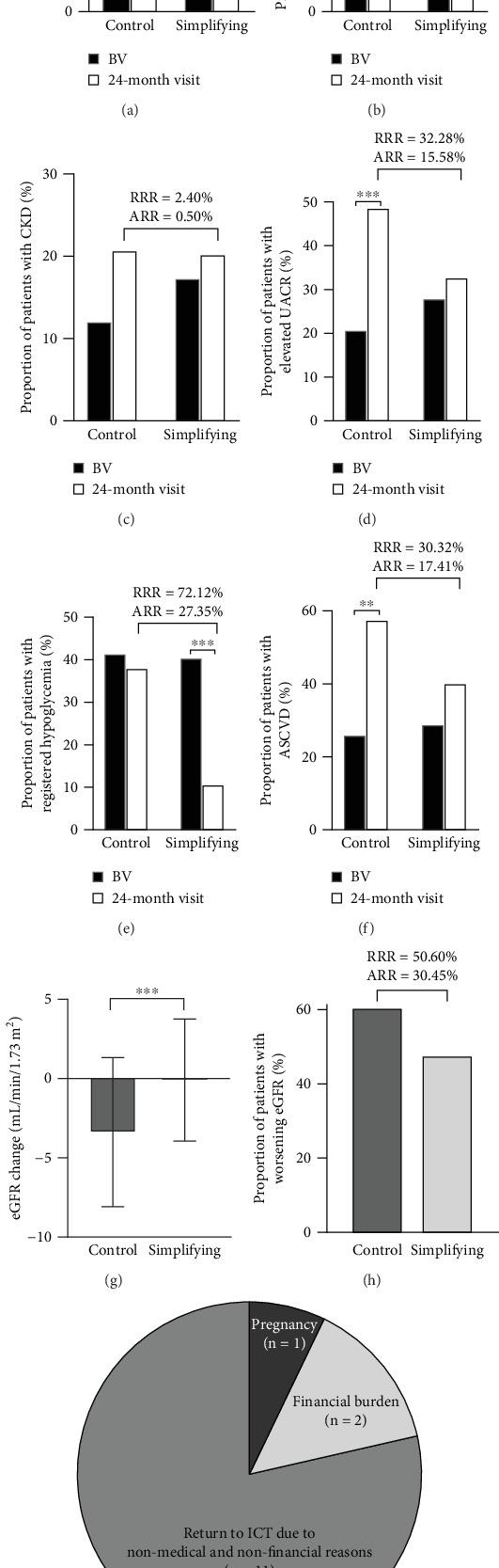
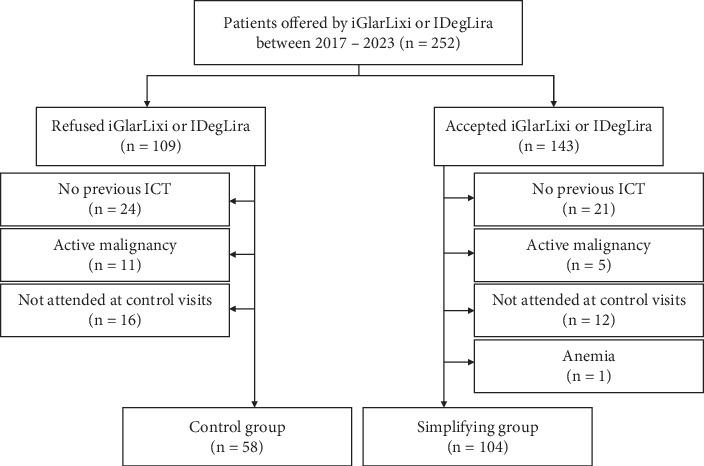
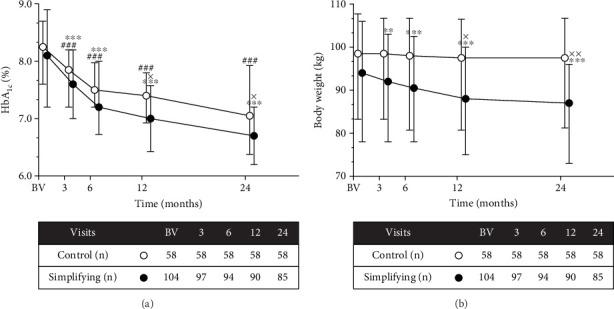
Fixed-ratio combinations (FRCs) provide an alternative to intensified conservative insulin treatments (ICTs); however, therapy simplification in patients with high total daily insulin dose (TDD) or high HbA is a debated issue; additionally, its influence on target organ damage (TOD) is less known. Data were retrospectively collected from patients with Type 2 diabetes, including 58 patients who continued ICT and 104 patients who underwent therapy simplification between January 1, 2017, and January 1, 2023. Patient characteristics and therapy details are at baseline and 3, 6, 12, and 24 months after FRC initiation. HbA significantly decreased in both groups (-0.9% [-1.6%, -0.5%] with ICT vs. -1.3% [-2.1%, -0.3%] with FRC), whereas body weight significantly decreased only after simplification (-1 kg [-4, 1] vs. -5 kg [-7, -2]). Diabetes duration was not associated with therapy efficacy. Significant HbA reduction and FRC dose elevation occurred earlier in patients with an initial HbA > 8.0% than in those with an initial HbA < 8.0%. FRC dose was significantly higher at 3 months in patients with a TDD of > 60 U/day than in those with lower TDD. Relative risk reduction with therapy simplification was 72.1%, 50.6%, 32.3%, and 59.7% for hypoglycemia, renal function decline, microalbuminuria, and macrovascular complications, respectively. Risk of retinopathy, neuropathy, and chronic kidney disease did not significantly change with FRCs. FRCs are safe and as effective as ICT even in patients with high initial HbA, high TDD, or long diabetes duration. A protective role of FRCs in diabetic ASCVD has been proven, but their protective role in CKD was not observed. The significant improvements in glycemic and weight control, as well as in TODs, suggest that therapy simplification may represent a more favorable approach compared to the continuation of previous ICT even in patients characterized by high baseline TDD and HbA levels.
固定比例联合治疗方案(FRCs)为强化胰岛素保守治疗(ICTs)提供了一种替代方案;然而,对于每日胰岛素总剂量(TDD)高或糖化血红蛋白(HbA)高的患者而言,简化治疗是一个存在争议的问题;此外,其对靶器官损害(TOD)的影响尚鲜为人知。我们回顾性收集了2型糖尿病患者的数据,其中包括2017年1月1日至2023年1月1日期间继续接受ICT治疗的58例患者和接受治疗简化的104例患者。患者的特征和治疗细节记录于基线时以及FRC开始后的3、6、12和24个月。两组患者的HbA均显著降低(ICT组降低-0.9% [-1.6%, -0.5%],FRC组降低-1.3% [-2.1%, -0.3%]),而体重仅在简化治疗后显著降低(-1千克 [-4, 1] 对比 -5千克 [-7, -2])。糖尿病病程与治疗效果无关。初始HbA>8.0%的患者,其HbA显著降低和FRC剂量升高的时间早于初始HbA<8.0%的患者。TDD>60U/天的患者在3个月时的FRC剂量显著高于TDD较低的患者。治疗简化使低血糖、肾功能下降、微量白蛋白尿和大血管并发症的相对风险分别降低72.1%、50.6%、32.3%和59.7%。视网膜病变、神经病变和慢性肾脏病的风险在FRC治疗后无显著变化。即使对于初始HbA高、TDD高或糖尿病病程长的患者,FRC也是安全的,且与ICT效果相当。FRC在糖尿病动脉粥样硬化性心血管疾病(ASCVD)中已被证实具有保护作用,但在慢性肾脏病(CKD)中未观察到其保护作用。血糖和体重控制以及TODs的显著改善表明,即使对于基线TDD和HbA水平较高的患者,与继续之前的ICT相比,治疗简化可能是一种更有利的方法。


 Zotero 插件