
基于脑药代动力学特征探讨4-羟基丁酸对大脑中动脉闭塞/再灌注(MCAO/R)模型大鼠血脑屏障完整性的保护作用。
Protective effects of 4-HBd on blood-brain barrier integrity in MCAO/R model rats based on brain pharmacokinetic characteristics.
作者信息
Feng Jin, Yang Qian, Chen Ming, Wang Yan, Luo Dan, Hu Dongxiong, Cheng Jianjun, Song Xuelan, Zhou Xiaonan, Meng Qingting, Lin Qing, He Fangyan
机构信息
Department of Pharmacology, School of Chinese Materia Medica, Yunnan University of Chinese Medicine, Kunming, China.
School of Basic Medicine, Yunnan University of Chinese Medicine, Kunming, China.
出版信息
Front Pharmacol. 2025 Apr 8;16:1528839. doi: 10.3389/fphar.2025.1528839. eCollection 2025.
OBJECTIVES
This study explored the brain-targeting properties and mechanisms of 4-hydroxybenzaldehyde (4-HBd), the primary active component of , in mitigating ischemic stroke (IS)-induced injury by preserving blood-brain barrier (BBB) integrity, based on brain pharmacokinetic characteristics.
METHODS
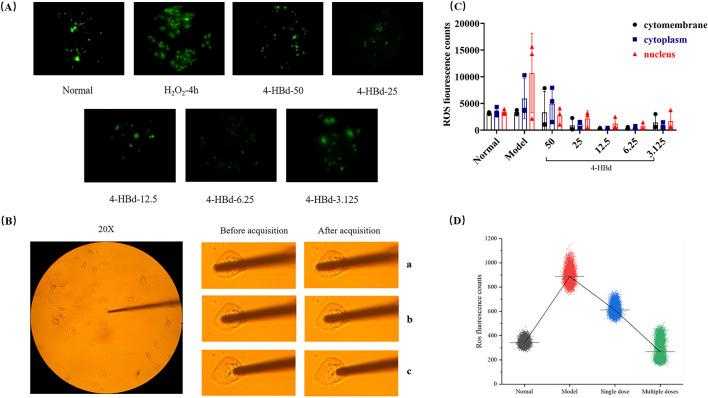
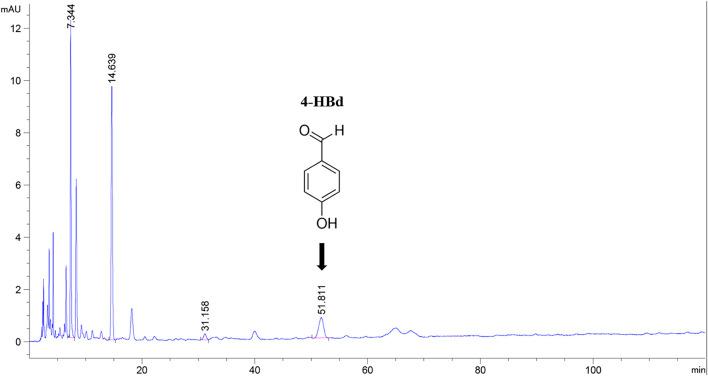
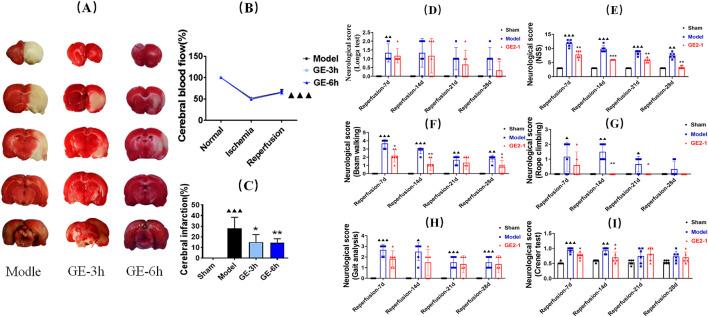
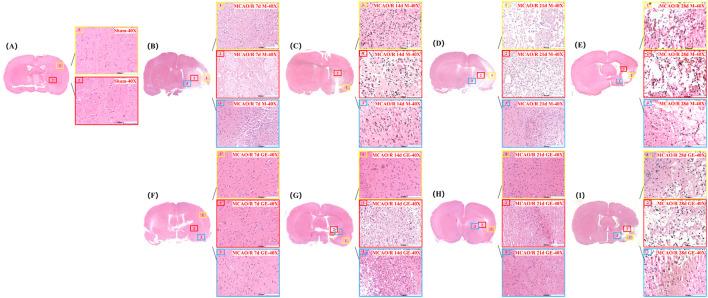
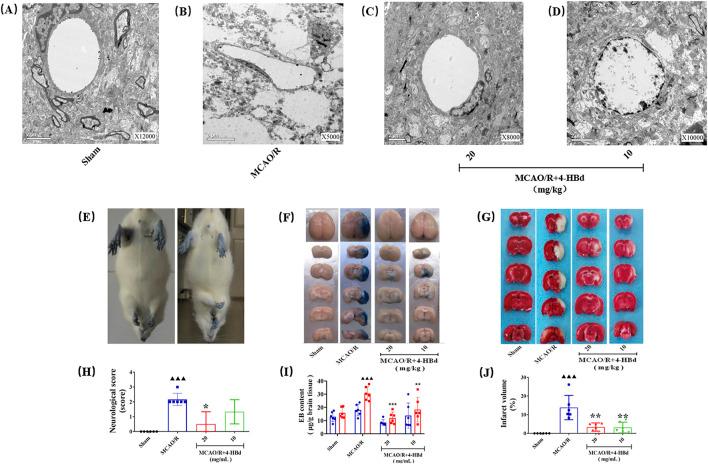
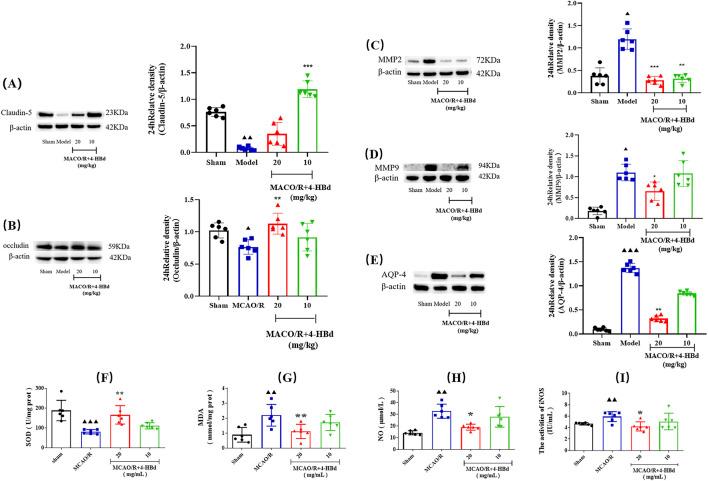
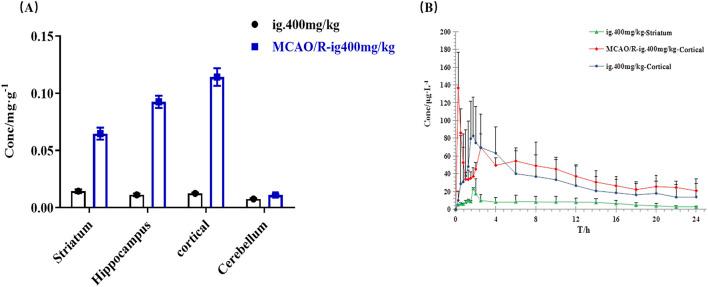
The anti-IS effects of the extract were assessed using a rat middle cerebral artery occlusion/reperfusion (MCAO/R) model, leading to the identification of 4-HBd as the principal active ingredient. BBB protection was evaluated through neurological scoring, Evans Blue (EB) extravasation, cerebral infarct volume, and ultrastructural integrity. Oxidative stress markers, including superoxide dismutase (SOD), malondialdehyde (MDA), nitric oxide (NO), and inducible nitric oxide synthase (iNOS), were quantified in ischemic brain tissue via biochemical assays. The expression levels of tight junction (TJ) proteins claudin-5 and occludin, as well as matrix metalloproteinase MMP-2/9 and aquaporin-4 (AQP-4), were analyzed by Western blotting. Microdialysis, combined with liquid chromatography-tandem mass spectrometry (LC-MS/MS), was employed to determine the temporal distribution of 4-HBd in the brains of both normal and MCAO/R model rats. The ability of 4-HBd to scavenge intracellular reactive oxygen species (ROS) in brain endothelial cells (bEnd.3) was evaluated using a single-cell biochemical analyzer.
RESULTS
ethanol extract exhibited significant anti-IS effects. When compared with the model group, 4-HBd treatment markedly alleviated BBB disruption and neurological deficits, suppressed oxidative stress in ischemic brain tissue, reduced MDA and NO levels, and enhanced SOD activity. The expressions of claudin-5, occludin, MMP-2/9, and AQP-4 were significantly upregulated in the 4-HBd group relative to the model group. Additionally, 4-HBd selectively eliminated nuclear-derived ROS. Pharmacokinetic analysis demonstrated that 4-HBd preferentially accumulated in the striatum and cortex of both normal and MCAO/R model rats. Under ischemic conditions, 4-HBd exhibited accelerated cortical penetration, increased exposure, and prolonged retention.
CONCLUSION
These findings indicate that 4-HBd exerts a pronounced brain-targeting effect and preserves BBB integrity via the RNS/ROS-MMP-TJ signaling pathway, highlighting its potential as a therapeutic agent for IS.
目的
本研究基于脑药代动力学特征,探讨了石蒜主要活性成分4-羟基苯甲醛(4-HBd)在减轻缺血性脑卒中(IS)诱导的损伤方面的脑靶向特性及机制,其通过维持血脑屏障(BBB)完整性来实现。
方法
使用大鼠大脑中动脉闭塞/再灌注(MCAO/R)模型评估石蒜提取物的抗IS作用,从而确定4-HBd为主要活性成分。通过神经功能评分、伊文思蓝(EB)外渗、脑梗死体积和超微结构完整性评估BBB保护作用。通过生化分析对缺血脑组织中的氧化应激标志物进行定量,包括超氧化物歧化酶(SOD)、丙二醛(MDA)、一氧化氮(NO)和诱导型一氧化氮合酶(iNOS)。通过蛋白质免疫印迹分析紧密连接(TJ)蛋白claudin-5和occludin以及基质金属蛋白酶MMP-2/9和水通道蛋白-4(AQP-4)的表达水平。采用微透析结合液相色谱-串联质谱(LC-MS/MS)法测定正常大鼠和MCAO/R模型大鼠脑内4-HBd的时间分布。使用单细胞生化分析仪评估4-HBd清除脑内皮细胞(bEnd.3)内细胞内活性氧(ROS)的能力。
结果
石蒜乙醇提取物表现出显著抗IS作用。与模型组相比,4-HBd治疗显著减轻了BBB破坏和神经功能缺损,抑制了缺血脑组织中的氧化应激,降低了MDA和NO水平,并增强了SOD活性。相对于模型组,4-HBd组中claudin-5、occludin、MMP-2/9和AQP-4的表达显著上调。此外,4-HBd选择性清除核源性ROS。药代动力学分析表明,4-HBd优先在正常大鼠和MCAO/R模型大鼠的纹状体和皮质中蓄积。在缺血条件下,4-HBd表现出更快的皮质渗透、增加的暴露量和延长的滞留时间。
结论
这些研究结果表明,4-HBd具有显著的脑靶向作用,并通过RNS/ROS-MMP-TJ信号通路维持BBB完整性,突出了其作为IS治疗药物的潜力。

 Zotero 插件