
经济激励对疫苗接种犹豫的影响:近期研究的叙述性综述
The Influence of Financial Incentives on Vaccination Hesitancy: A Narrative Review of Recent Research.
作者信息
Wong Jason, Gill Camrin, Abdo Amir, Eisa Ava
机构信息
College of Pharmacy, Western University of Health Sciences, 309 E. Second St., Pomona, CA 91766, USA.
出版信息
Vaccines (Basel). 2025 Feb 28;13(3):256. doi: 10.3390/vaccines13030256.
BACKGROUND
Vaccine hesitancy represents a significant global health challenge that greatly hinders public health efforts focused on managing the transmission of infectious diseases. A wealth of original research conducted worldwide has examined various incentives that could help alleviate vaccine hesitancy and increase vaccination rates. Although some findings are conflicting, no comprehensive review has yet assessed the overall effectiveness of these strategies. This study aims to bridge this knowledge gap by examining how financial incentives influence people's willingness to undergo vaccination.
METHODS
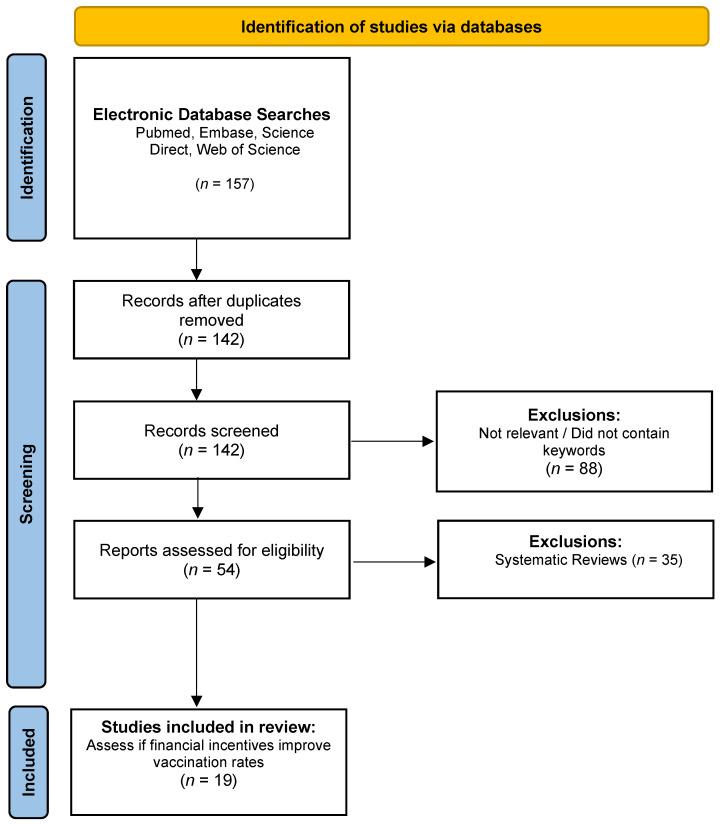
In August 2024, we extensively searched four databases for studies focusing on financial incentives and vaccination rates. Examples of financial incentives included lottery tickets and hypothetical or physical monetary rewards ranging in various amounts depending on the study. We selected nineteen relevant articles from a larger pool and evaluated them for validity and bias.
RESULTS
Around eighty percent of the research focused on COVID-19 vaccines, driven by the ongoing pandemic and the debates surrounding their use. Most of the studies indicated a positive influence of financial incentives on vaccination rates, although they often came with a higher risk of bias. Conversely, several studies suggest that financial incentives do not result in benefits. Instead, they highlight other factors that have a more profound effect on influencing people to undergo vaccination. The remaining studies are inconclusive regarding the effectiveness of financial incentives, concluding the need for further research. The strategies to mitigate these concerns included a combination of legal and monetary incentives.
SUMMARY
The effectiveness of financial incentives in boosting vaccination rates seems to differ significantly based on the region and context. They tend to be more effective in economically disadvantaged developing countries. In contrast, in developed nations, they may be ineffective or counterproductive due to various confounding factors such as financial background, lack of trust in the healthcare system, and/or lack of patient education. In resource-rich areas, educational programs often yield better results, and addressing widespread mistrust in healthcare systems and governmental policies through transparency is essential. Ultimately, employing tailored incentives alongside public education could enhance vaccination acceptance, particularly in culturally diverse countries like the United States, where understanding community preferences is crucial.
背景
疫苗犹豫是一项重大的全球卫生挑战,严重阻碍了旨在控制传染病传播的公共卫生工作。全球范围内进行了大量原创研究,探讨了各种有助于减轻疫苗犹豫并提高疫苗接种率的激励措施。尽管有些研究结果相互矛盾,但尚未有全面综述评估这些策略的整体有效性。本研究旨在通过考察经济激励措施如何影响人们接种疫苗的意愿来填补这一知识空白。
方法
2024年8月,我们广泛检索了四个数据库,查找关注经济激励措施和疫苗接种率的研究。经济激励措施的例子包括彩票以及根据研究不同金额的假设性或实际货币奖励。我们从大量文章中筛选出19篇相关文章,并对其有效性和偏差进行评估。
结果
受持续的疫情及其使用引发的争论影响,约80%的研究聚焦于新冠疫苗。大多数研究表明经济激励措施对疫苗接种率有积极影响,尽管这些研究往往偏差风险较高。相反,一些研究表明经济激励措施并无益处。相反,它们强调了其他对影响人们接种疫苗有更深远影响的因素。其余研究关于经济激励措施的有效性尚无定论,认为有必要进一步研究。减轻这些担忧的策略包括法律和货币激励措施的结合。
总结
经济激励措施在提高疫苗接种率方面的有效性似乎因地区和背景差异显著。它们在经济弱势的发展中国家往往更有效。相比之下,在发达国家,由于各种混杂因素,如经济背景、对医疗系统缺乏信任和/或缺乏患者教育,它们可能无效或适得其反。在资源丰富的地区,教育项目往往能产生更好的效果,通过透明度解决对医疗系统和政府政策普遍存在的不信任至关重要。最终,采用量身定制的激励措施并结合公共教育可以提高疫苗接种的接受度,特别是在美国这样文化多元的国家,了解社区偏好至关重要。
 Zotero 插件