
通过CO或蒸汽物理活化的低成本栗木基生物炭:结构和吸附性能评估
Low-Cost Chestnut-Based Biocarbons Physically Activated via CO or Steam: Evaluation of the Structural and Adsorption Properties.
作者信息
Charmas Barbara, Wawrzaszek Barbara, Jedynak Katarzyna, Jawtoszuk Agata
机构信息
Department of Chromatography, Institute of Chemical Sciences, Faculty of Chemistry, Maria Curie-Sklodowska University, Maria Curie-Sklodowska Sq. 3, 20-031 Lublin, Poland.
Institute of Chemistry, Faculty of Natural Sciences, Jan Kochanowski University, Uniwersytecka Str. 7, 25-406 Kielce, Poland.
出版信息
Materials (Basel). 2025 Mar 27;18(7):1497. doi: 10.3390/ma18071497.
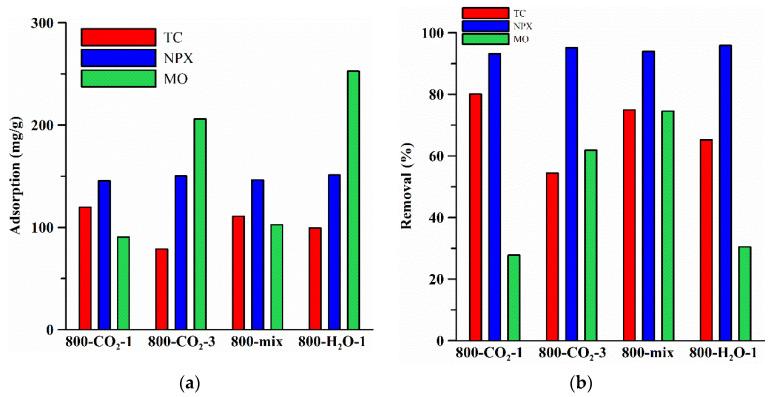
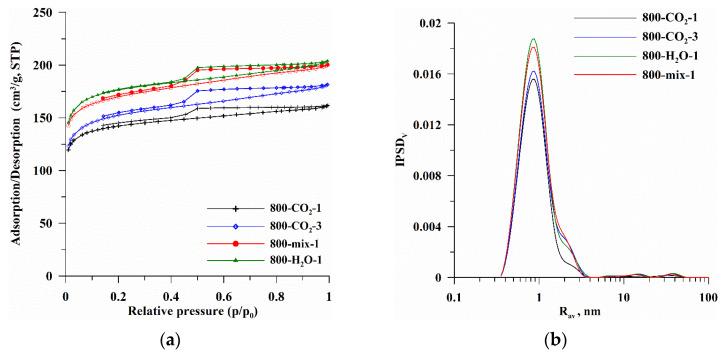
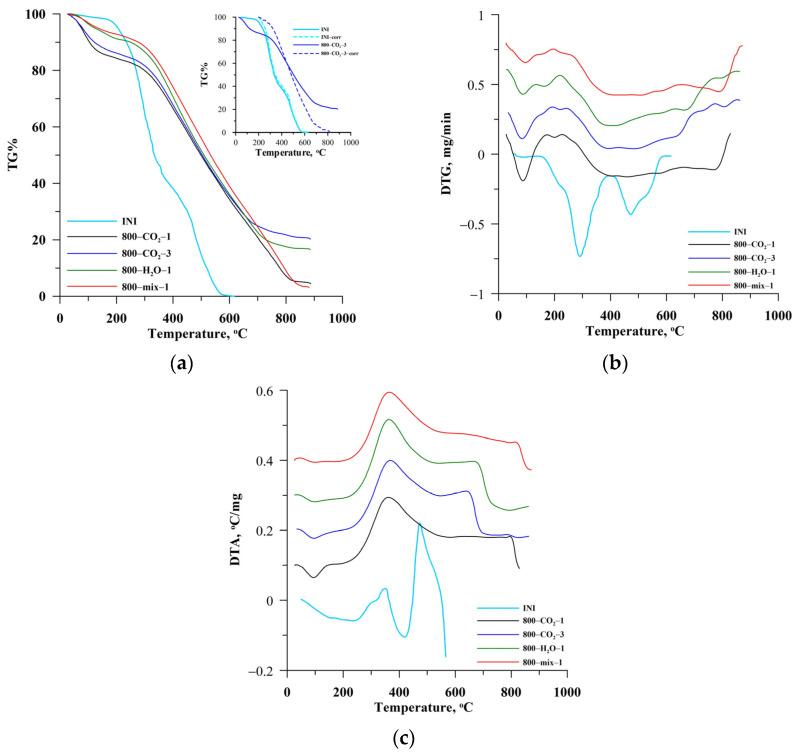
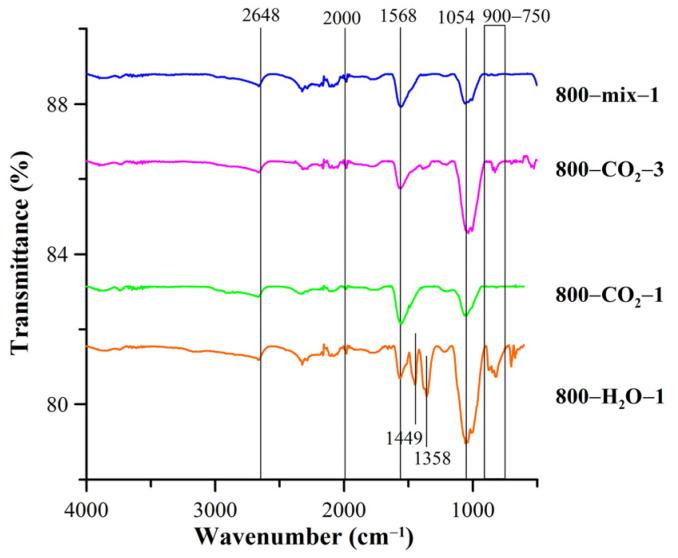
The aim of this paper was to obtain activated biocarbons from the natural biomass of horse chestnut seeds () by physical activation with two different activating agents, carbon dioxide and water vapor, and to evaluate their structural and adsorption properties. The effect of the pyrolysis atmosphere on the surface development and porosity as well as the structure and adsorption properties of the materials in relation to the selected organic adsorbates (tetracycline (TC), naproxen (NPX), and methyl orange (MO)), which may constitute a potential contamination of the aquatic environment, was evaluated. Activated biocarbons were characterized using N low-temperature adsorption/desorption, Raman and FT-IR spectroscopy, and thermogravimetric analysis (TGA). The nature of the surface (pH and Boehm titration) was also studied. Micro/mesoporous biocarbons were obtained with an S area in the range of 534 to 646 m/g, in which micropores constituted ~70%. It was proved that the obtained materials are characterized by high adsorption values (120 mg/g, 150 mg/g, and ~252 mg/g) and removal rates %R (80%, ~95%, and ~75%) for TC, NPX, and MO, respectively. The results indicate that chestnut-derived activated biocarbons are a promising, cost-effective and environmentally friendly alternative for removing organic contaminants from aqueous solutions. Future research should focus on optimizing activation parameters and assessing the long-term performance of adsorbents.
本文的目的是通过用两种不同的活化剂二氧化碳和水蒸气进行物理活化,从七叶树种子的天然生物质中获得活性生物炭,并评估其结构和吸附性能。评估了热解气氛对材料表面发展和孔隙率以及与选定有机吸附质(四环素(TC)、萘普生(NPX)和甲基橙(MO))相关的结构和吸附性能的影响,这些有机吸附质可能对水环境造成潜在污染。使用N2低温吸附/脱附、拉曼光谱和傅里叶变换红外光谱以及热重分析(TGA)对活性生物炭进行了表征。还研究了表面性质(pH值和 Boehm 滴定)。获得了微/介孔生物炭(比表面积在约534至646 m²/g范围内,其中微孔约占70%)。结果表明,所获得的材料对TC、NPX和MO的吸附值较高(分别约为120 mg/g、150 mg/g和252 mg/g),去除率%R分别约为80%、95%和75%。结果表明,七叶树衍生的活性生物炭是一种有前景的、具有成本效益且环境友好的从水溶液中去除有机污染物的替代方法。未来的研究应侧重于优化活化参数和评估吸附剂的长期性能。


 Zotero 插件