
微创心脏手术中的疼痛管理:当前临床证据综述
Pain Management in Minimally Invasive Cardiac Surgery: A Review of Current Clinical Evidence.
作者信息
Dost Burhan, Turunc Esra, Aydin Muhammed Enes, Kaya Cengiz, Aykut Aslihan, Demir Zeliha Asli, Narayanan Madan, De Cassai Alessandro
机构信息
Department of Anesthesiology and Reanimation, Ondokuz Mayis University Faculty of Medicine, Samsun, Türkiye.
Department of Anesthesiology and Reanimation, Ataturk University School of Medicine, Erzurum, Türkiye.
出版信息
Pain Ther. 2025 Jun;14(3):913-930. doi: 10.1007/s40122-025-00739-1. Epub 2025 Apr 24.
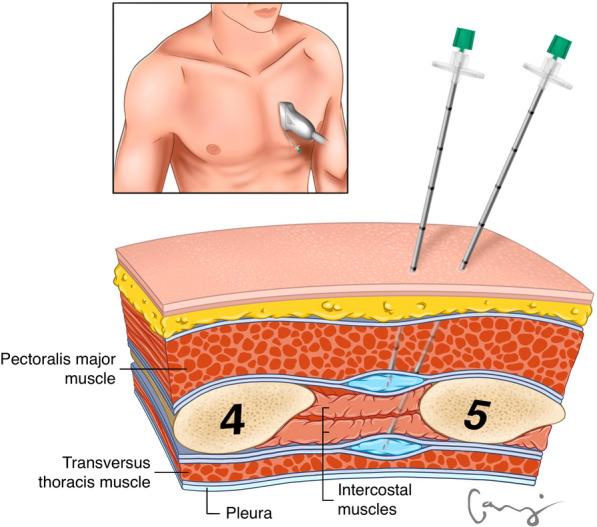
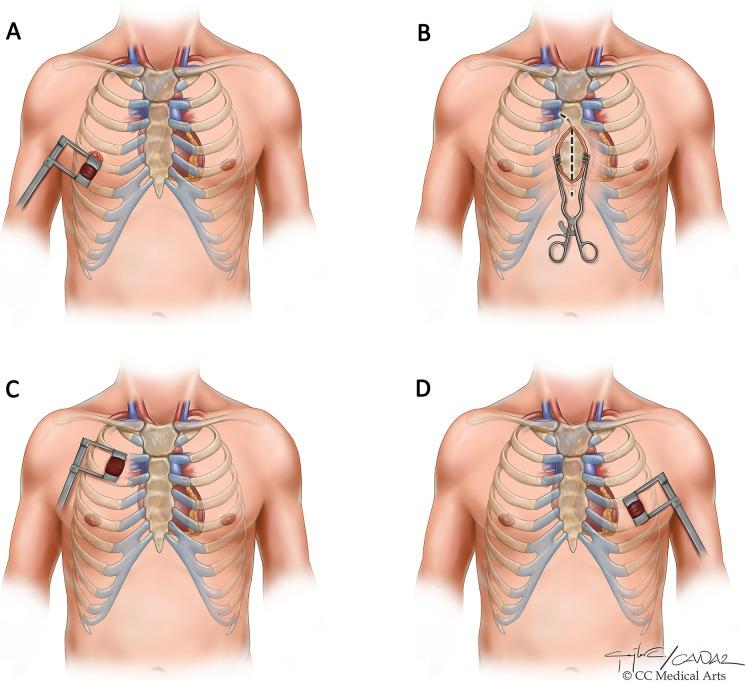
Compared with conventional sternotomy, minimally invasive cardiac surgery (MICS) is associated with significant advantages such as reduced tissue trauma, faster recovery, and shorter hospital stay. However, the management of postoperative pain caused by intercostal nerve injury, pleural irritation, and tissue retraction remains a major challenge. Despite the less invasive nature of MICS, patients often report experiencing pain similar to that experienced following conventional cardiac surgery, particularly during the acute postoperative period. Effective pain management is essential for optimizing recovery, reducing the consumption of opioids, and preventing the transition to chronic postsurgical pain. Regional anesthesia techniques play a key role in multimodal analgesia for MICS. Thoracic epidural analgesia exhibits strong analgesic efficacy; nevertheless, it remains underutilized owing to concerns regarding anticoagulation-related complications and hemodynamic instability. The thoracic paravertebral block is a safer alternative that provides comparable pain relief with fewer side effects. Similarly, ultrasound-guided fascial plane blocks, such as serratus anterior, parasternal intercostal, interpectoral + pectoserratus, and erector spinae plane blocks, have gained popularity owing to their safety and feasibility; however, the effectiveness of these blocks varies according to the surgical approach and type of incision. Systemic analgesia is an integral component of multimodal pain management in MICS. Despite the efficacy of opioids, a shift toward opioid-sparing strategies has been observed given the significant adverse effects associated with the use of opioids. Intravenous adjuncts such as dexmedetomidine, ketamine, and non-steroidal anti-inflammatory drugs can reduce opioid consumption and improve postoperative pain control. Despite advances in pain management, a single approach that can provide comprehensive analgesia for MICS remains to be established. A multimodal strategy that combines systemic and regional techniques must be developed to optimize pain management and long-term outcomes.
与传统开胸手术相比,微创心脏手术(MICS)具有显著优势,如组织创伤小、恢复快、住院时间短。然而,由肋间神经损伤、胸膜刺激和组织牵拉引起的术后疼痛管理仍然是一个重大挑战。尽管MICS的侵入性较小,但患者常报告经历与传统心脏手术后类似的疼痛,尤其是在术后急性期。有效的疼痛管理对于优化恢复、减少阿片类药物的使用以及预防向慢性术后疼痛的转变至关重要。区域麻醉技术在MICS的多模式镇痛中起着关键作用。胸段硬膜外镇痛具有强大的镇痛效果;然而,由于担心抗凝相关并发症和血流动力学不稳定,其使用率仍然较低。胸段椎旁阻滞是一种更安全的替代方法,能提供相当的疼痛缓解且副作用较少。同样,超声引导的筋膜平面阻滞,如前锯肌、胸骨旁肋间、胸肌间+胸肌前锯肌和竖脊肌平面阻滞,因其安全性和可行性而受到欢迎;然而,这些阻滞的效果因手术方式和切口类型而异。全身镇痛是MICS多模式疼痛管理的一个组成部分。尽管阿片类药物有效,但鉴于使用阿片类药物会产生重大不良反应,已观察到向减少阿片类药物使用策略的转变。静脉辅助药物如右美托咪定、氯胺酮和非甾体类抗炎药可以减少阿片类药物的使用并改善术后疼痛控制。尽管在疼痛管理方面取得了进展,但仍有待建立一种能为MICS提供全面镇痛的单一方法。必须制定一种结合全身和区域技术的多模式策略,以优化疼痛管理和长期预后。


 Zotero 插件