
儿童短暂性和持续性小肠套叠:基于超声和临床发现的决策树分析模型
Transient and persistent small-bowel intussusception in children: a decision tree analysis model based on ultrasound and clinical findings.
作者信息
Wang Shao, Wang Yu, Jia Liqun, Wang Xiaoman
机构信息
Department of Ultrasound, NationalCenterforChildren'sHealth, Beijing Children's Hospital, Capital Medical University, No.56 Nanlishi Road, Xicheng District, Beijing, China.
出版信息
BMC Gastroenterol. 2025 Apr 24;25(1):294. doi: 10.1186/s12876-025-03839-6.
PURPOSE
To develop a systematic and efficient decision tree analysis (DTA) model to improve the diagnostic accuracy of transient small-bowel intussusception (TSBI) and persistent small-bowel intussusception (PSBI) in children.
METHODS
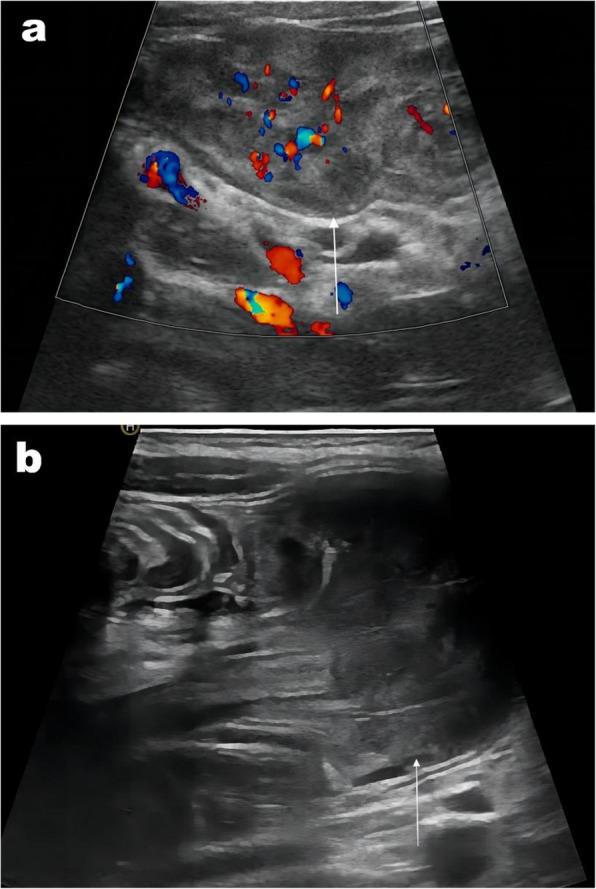
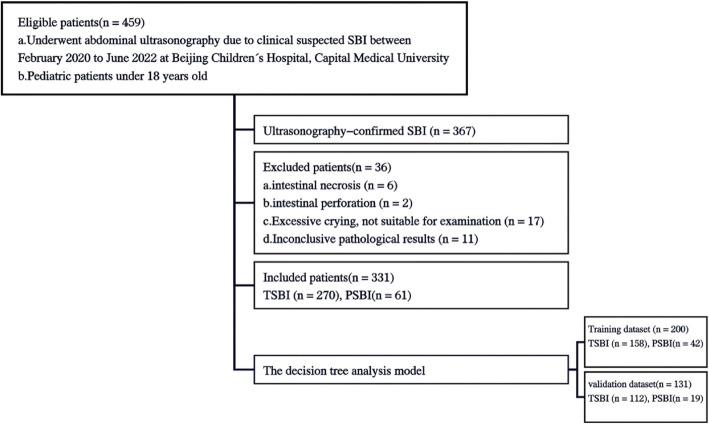
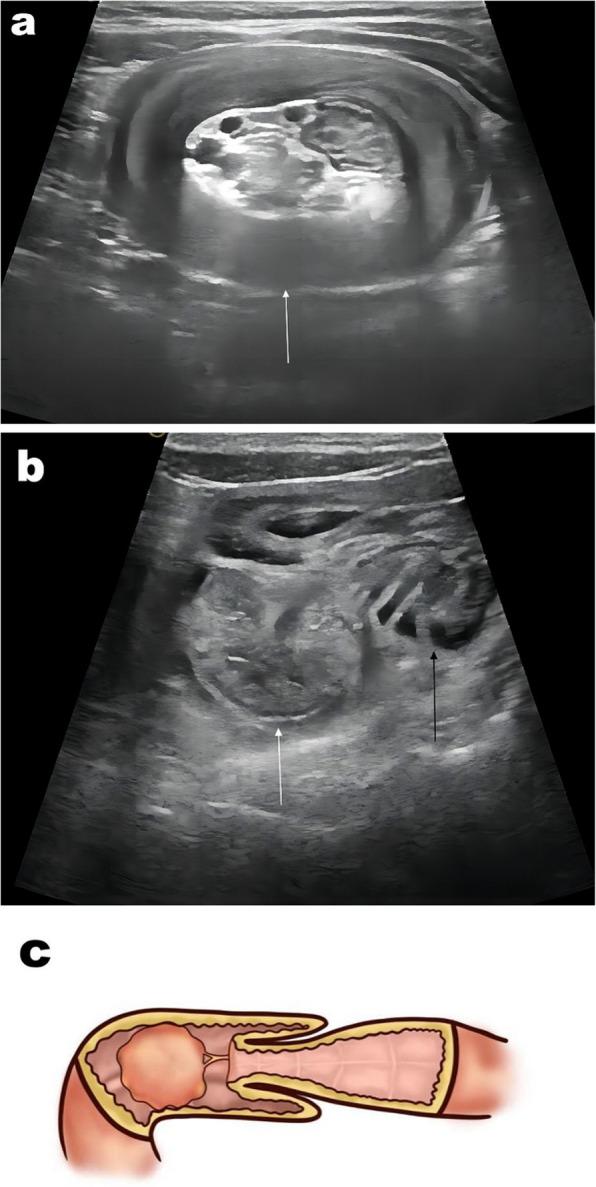
From February 2019 to June 2022, ultrasound (US) features and clinical findings of pediatric patients with small-bowel intussusception (SBI)-including SBI diameter, outer bowel wall thickness, thickness of the head and body of the intussusceptum, length of the intussusceptum, and presence of pathological lead points (PLPs)-were recorded and analyzed. A classification and regression tree algorithm was then used to develop a DTA model, which was trained and validated by randomly categorizing the patients into training (60%, 200/331) and validation (40%, 131/331) datasets to assess diagnostic performance.
RESULTS
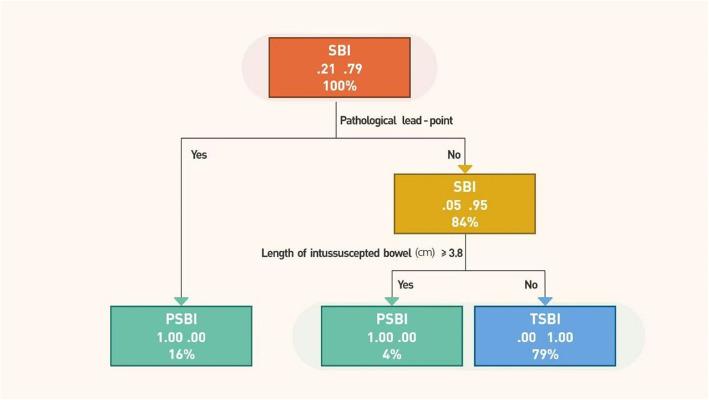
A total of 331 patients with SBI (270 with TSBI and 61 with PSBI) were included; the maximum age was 9 years. The initial diagnostic predictor in the DTA model was the detection of a PLP via US, followed by intussusceptum length (P < 0.001). The sensitivity, specificity, and accuracy of the DTA model were 98.2%, 100%, and 98.6%, respectively.
CONCLUSION
The DTA model developed in this study facilitated the differential diagnosis of TSBI and PSBI in pediatric patients with SBI, with a clinical concordance rate of 98.6%.
目的
建立一种系统、高效的决策树分析(DTA)模型,以提高儿童短暂性小肠套叠(TSBI)和持续性小肠套叠(PSBI)的诊断准确性。
方法
收集2019年2月至2022年6月期间小肠套叠(SBI)患儿的超声(US)特征和临床资料,包括SBI直径、肠壁外层厚度、套叠头部和体部厚度、套叠长度以及病理性引导点(PLP)的存在情况,并进行分析。然后使用分类回归树算法建立DTA模型,通过将患者随机分为训练集(60%,200/331)和验证集(40%,131/331)来评估诊断性能,对该模型进行训练和验证。
结果
共纳入331例SBI患者(270例TSBI和61例PSBI);最大年龄为9岁。DTA模型中的初始诊断预测指标是通过超声检测到PLP,其次是套叠长度(P < 0.001)。DTA模型的敏感性、特异性和准确性分别为98.2%、100%和98.6%。
结论
本研究建立的DTA模型有助于小儿SBI患者中TSBI和PSBI的鉴别诊断,临床符合率为98.6%。

 Zotero 插件