
HNF4α在结直肠癌发生和转移过程中的双重作用
Dual Role of HNF4α in Colorectal Adenocarcinoma During Carcinogenesis and Metastasis.
作者信息
Kim Ju Seok, Kim Kyung-Hee, Heo Jun Young, Choi Min Kyung, Yeo Min-Kyung
机构信息
Department of Internal Medicine, Chungnam National University School of Medicine, Daejeon 34134, Republic of Korea.
Department of Pathology, Translational Immunology Institute, Chungnam National University School of Medicine, Daejeon 34134, Republic of Korea.
出版信息
Cells. 2025 Apr 15;14(8):599. doi: 10.3390/cells14080599.
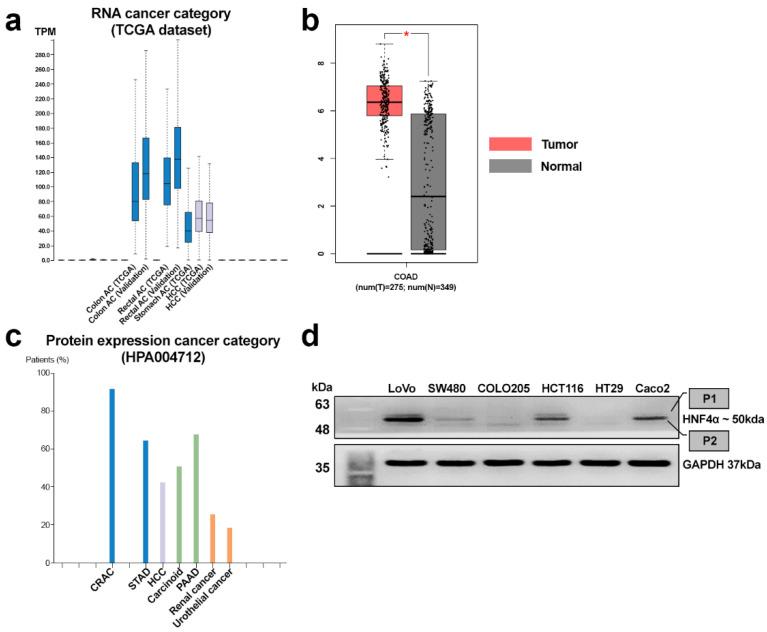
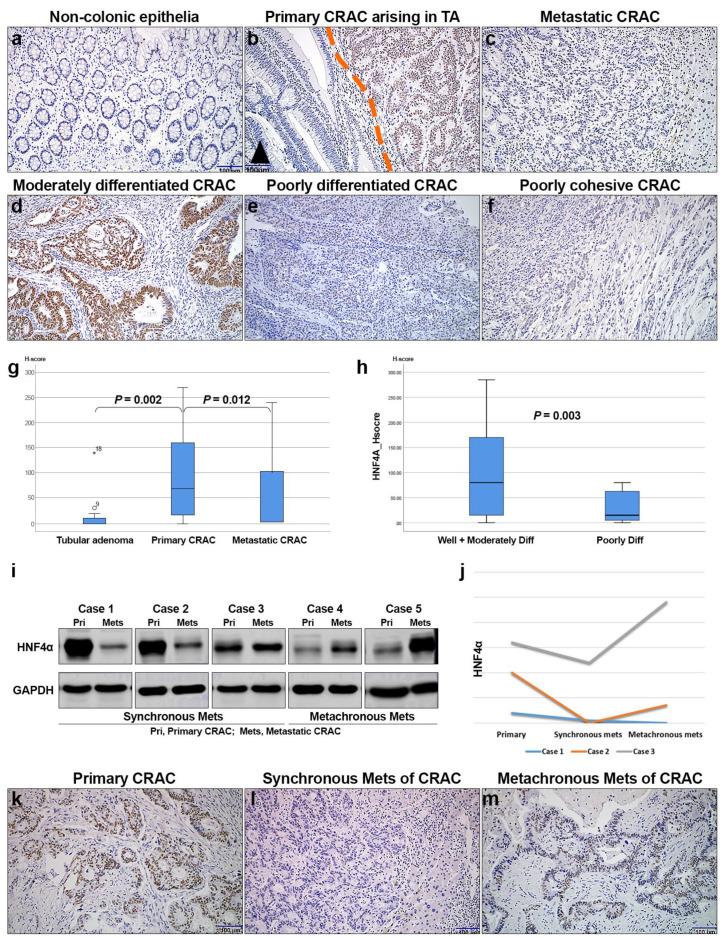
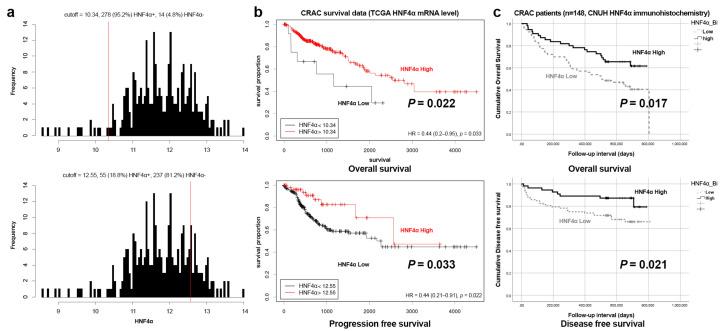
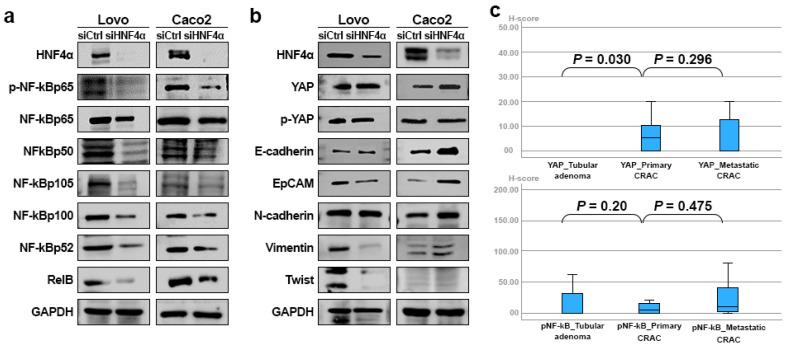
Hepatocyte nuclear factor 4α (HNF4α), a highly conserved member of the nuclear receptor superfamily of transcription factors, has been identified as a promising therapeutic candidate for colorectal adenocarcinoma (CRAC). This study was to investigate the significance of HNF4α in CRAC and mechanisms governing its function. The expression patterns and clinical relevance of HNF4α were evaluated in relation to nuclear factor kappa B (NF-κb), Yes-associated protein (YAP), and epithelial-mesenchymal transition markers. HNF4α exhibited upregulation during carcinogenesis compared to normal and precancerous lesions. The overexpression and inhibition of HNF4α were correlated with the modulation of CRAC cell migration and invasion, either promoting or suppressing these processes. Notably, levels of HNF4α were significantly diminished in metastatic and poorly differentiated CRAC relative to primary CRAC samples. Moreover, reduced HNF4α levels were associated with unfavorable prognostic factors. The inhibition of HNF4A induced a decrease in NF-κb protein levels, concomitant with an increase in YAP. Our results indicate a dual role of HNF4α in tumor progression, either as a promotor or inhibitor, depending on the pathologic condition of CRAC and the related signaling pathways. HNF4α exhibits a complex role, whereby its overexpression is linked to early carcinogenesis and reduced expression is associated with the progression and metastasis of CRAC.
肝细胞核因子4α(HNF4α)是转录因子核受体超家族中一个高度保守的成员,已被确定为结直肠癌(CRAC)一个有前景的治疗靶点。本研究旨在探讨HNF4α在CRAC中的意义及其功能调控机制。评估了HNF4α与核因子κB(NF-κb)、Yes相关蛋白(YAP)以及上皮-间质转化标志物相关的表达模式和临床相关性。与正常和癌前病变相比,HNF4α在致癌过程中表现出上调。HNF4α的过表达和抑制与CRAC细胞迁移和侵袭的调节相关,可促进或抑制这些过程。值得注意的是,相对于原发性CRAC样本,转移性和低分化CRAC中HNF4α水平显著降低。此外,HNF4α水平降低与不良预后因素相关。抑制HNF4A导致NF-κb蛋白水平下降,同时YAP增加。我们的结果表明,HNF4α在肿瘤进展中具有双重作用,根据CRAC的病理状况和相关信号通路,它既可以是促进因子也可以是抑制因子。HNF4α发挥着复杂的作用,其过表达与早期致癌作用相关,而表达降低与CRAC的进展和转移相关。


 Zotero 插件