
城市环境中成人过敏性疾病患者的个人颗粒物暴露及相关因素:一项队列研究。
Personal PM Exposure and Associated Factors Among Adults with Allergic Diseases in an Urban Environment: A Panel Study.
作者信息
Park Shin-Young, Jang Hyeok, Kwon Jaymin, Park Chan-Mi, Lee Cheol-Min, Song Dae-Jin
机构信息
Department of Environmental & Chemical Engineering, Seokyeong University, Seoul 02713, Republic of Korea.
Department of Public Health, California State University, Fresno, CA 93740, USA.
出版信息
Toxics. 2025 Apr 18;13(4):317. doi: 10.3390/toxics13040317.
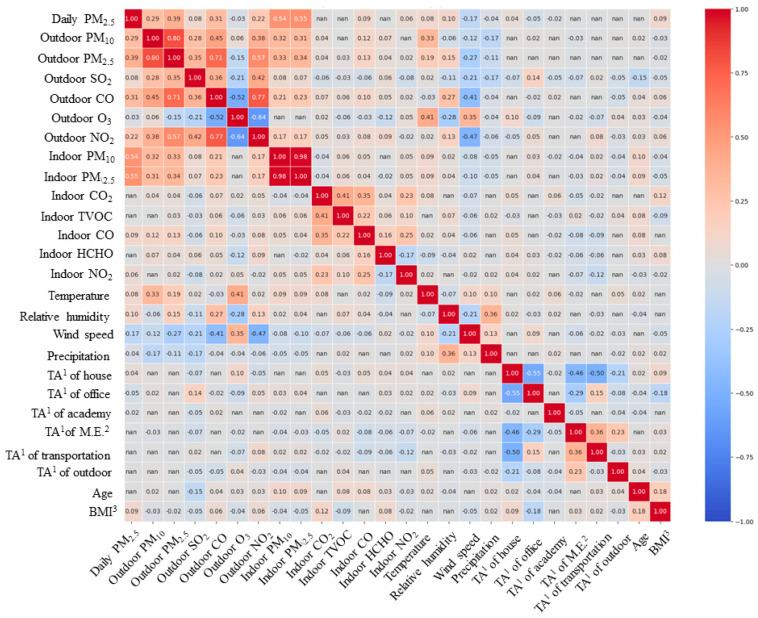
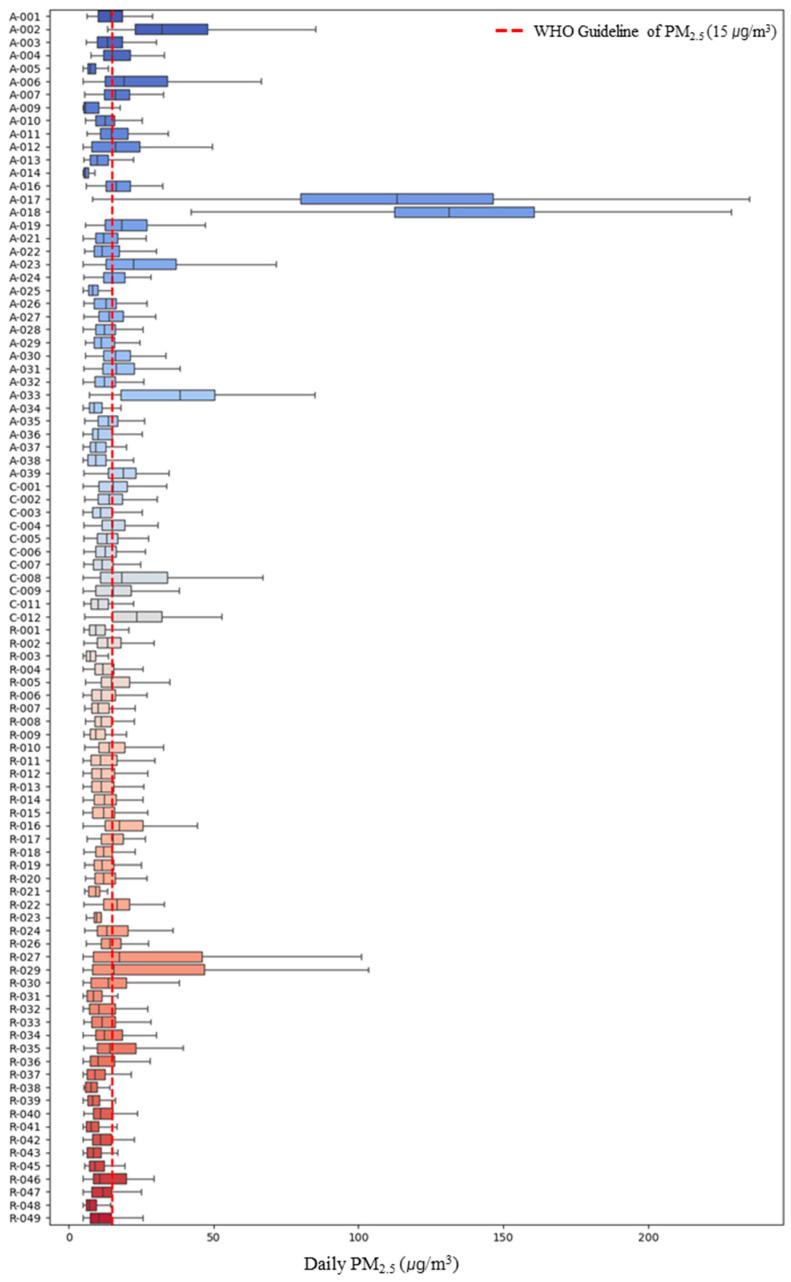
This study analyzed the factors influencing personal PM exposure levels among adults with allergic diseases in Seoul using a linear mixed-effects (LMEs) model. The average personal PM exposure concentration of the study participants was 17.38 μg/m, exceeding the World Health Organization (WHO) daily recommended guideline (15.00 μg/m), though it was relatively low compared to global levels. Inter-individual exposure variability was approximately 43.5%, with exposure levels varying significantly depending on microenvironments. Notably, 58% of participants exhibited higher exposure on weekends compared to weekdays, likely associated with increased outdoor activities. The LMEs model results identified smoking (90.81% higher in smokers), temperature, relative humidity, outdoor pollutants (PM, O, CO), indoor PM and CO concentrations, and time spent in residential environments as factors increasing exposure, while rainfall (91.23% reduction), wind speed, and air purifier use were identified as factors reducing exposure. These findings suggest that individual activity patterns and environmental factors significantly influence exposure levels, highlighting the need for personalized mitigation strategies and national fine dust policies. This study is expected to provide scientific evidence contributing to the reduction in health risks and improvement of quality of life for individuals with allergic diseases.
本研究使用线性混合效应(LMEs)模型分析了影响首尔过敏性疾病成年人个人颗粒物暴露水平的因素。研究参与者的个人颗粒物平均暴露浓度为17.38μg/m³,超过了世界卫生组织(WHO)的每日推荐指南(15.00μg/m³),不过与全球水平相比相对较低。个体间的暴露变异性约为43.5%,暴露水平因微环境而异。值得注意的是,58%的参与者在周末的暴露水平高于工作日,这可能与户外活动增加有关。LMEs模型结果确定吸烟(吸烟者高出90.81%)、温度、相对湿度、室外污染物(颗粒物、臭氧、一氧化碳)、室内颗粒物和一氧化碳浓度以及在居住环境中花费的时间是增加暴露的因素,而降雨(降低91.23%)、风速和使用空气净化器是降低暴露的因素。这些发现表明,个体活动模式和环境因素显著影响暴露水平,凸显了个性化缓解策略和国家细颗粒物政策的必要性。本研究有望为减少过敏性疾病患者的健康风险和提高生活质量提供科学依据。


 Zotero 插件