
根据组织学类型,宫颈癌中“癌症特征”基因的表达受GPER1过表达的影响存在差异。
Expression of "Hallmarks of Cancer" Genes in Cervical Carcinoma Is Differentially Affected by GPER1 Overexpression Depending on Histologic Entity.
作者信息
Hambach Lena, Gallwas Julia, Gründker Carsten
机构信息
University Medical Center Göttingen, Department of Gynecology and Obstetrics, Göttingen, Germany.
University Medical Center Göttingen, Department of Gynecology and Obstetrics, Göttingen, Germany
出版信息
Cancer Genomics Proteomics. 2025 May-Jun;22(3):415-433. doi: 10.21873/cgp.20510.
BACKGROUND/AIM: Cervical cancer (CC) remains the fourth most common malignancy in women worldwide. Current treatments primarily consist of surgery and combined radiochemotherapy, while targeted therapies, as seen in other malignancies, remain underdeveloped. The G-protein-coupled estrogen receptor (GPER1) is implicated in various cancers and can differentially influence tumor behavior, though its precise role in CC remains unclear, with both tumor-promoting and tumor-suppressive effects reported. We previously explored the impact of stable GPER1 overexpression (OE) in CC cell lines, SiHa (cervical squamous cell carcinoma, CSCC) and HeLa (cervical adenocarcinoma, CAC), analyzing proliferation, migration, invasion, apoptosis, and stem cell properties. GPER1-OE enhanced tumorigenic properties in CSCC cells but demonstrated tumor-suppressive effects in CAC cells. To investigate the underlying mechanisms, we conducted next-generation sequencing (NGS) analyses, which supported our earlier findings.
MATERIALS AND METHODS
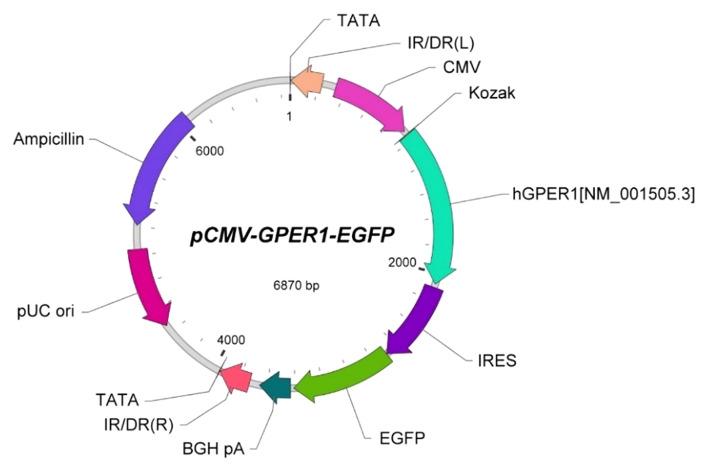
SiHa CSCC and HeLa CAC cells with stable GPER1-OE were generated. The effects of GPER1-OE on gene expression were then examined using next-generation sequencing (NGS) analyses.
RESULTS
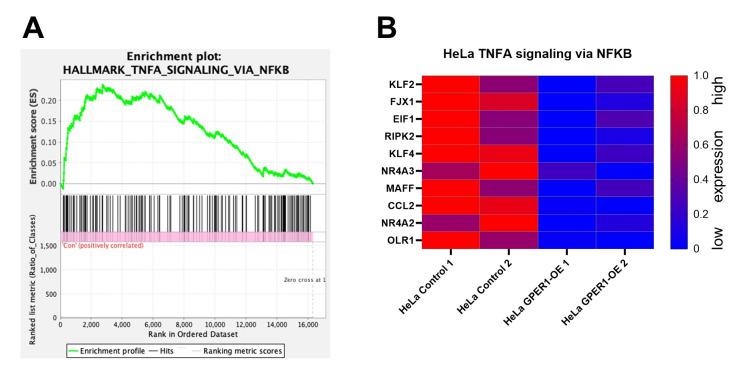
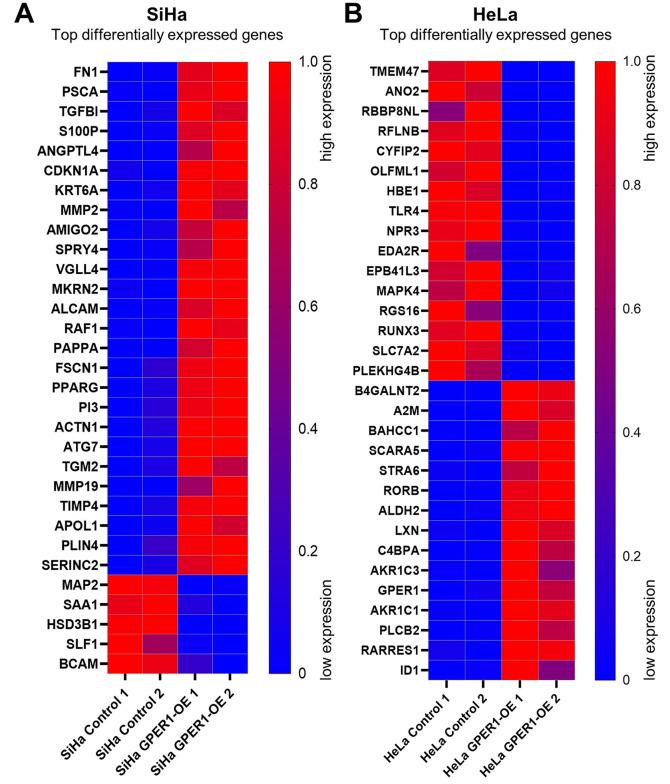
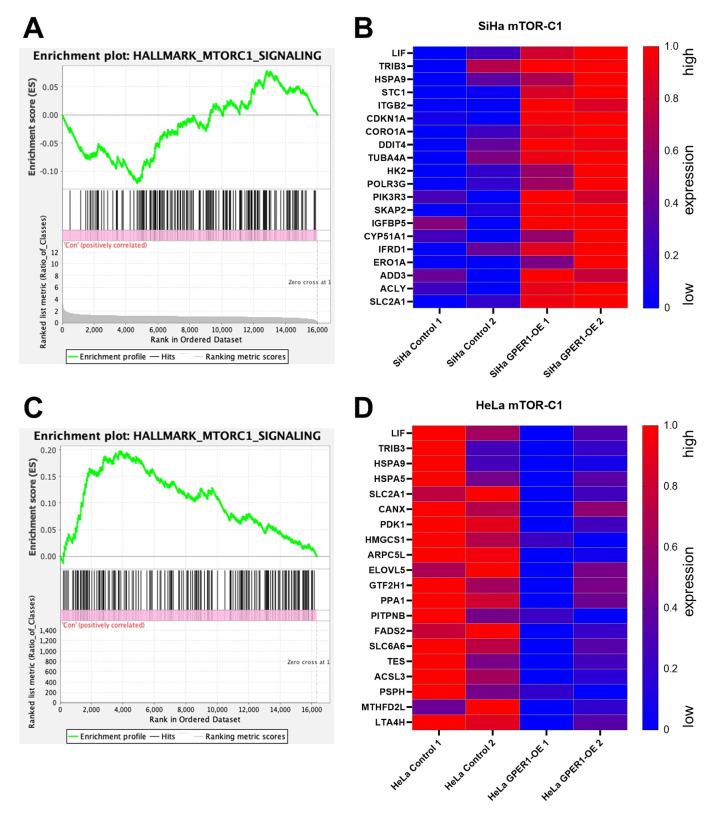
In CSCC cells, GPER1-OE upregulated genes involved in tumorigenic pathways, including epithelial-to-mesenchymal transition (EMT), mTOR-C1, Myc, p53, hypoxia, and angiogenesis signaling. In CAC cells, however, GPER1-OE downregulated these pathways, along with additional pathways such as KRAS, Hedgehog, TNFα ( NFκB), and Wnt/Beta-Catenin signaling.
CONCLUSION
The results highlight the divergent roles of GPER1-OE in CC cells, promoting oncogenesis in CSCC while exerting tumor-suppressive effects in CAC by modulating oncogenic signaling pathways.
背景/目的:宫颈癌(CC)仍是全球女性中第四大常见恶性肿瘤。目前的治疗主要包括手术和放化疗联合,而与其他恶性肿瘤不同的是,靶向治疗仍未得到充分发展。G蛋白偶联雌激素受体(GPER1)与多种癌症有关,可不同程度地影响肿瘤行为,但其在CC中的具体作用仍不清楚,有报道称其具有促肿瘤和抑肿瘤作用。我们之前探讨了稳定过表达(OE)GPER1对CC细胞系SiHa(宫颈鳞状细胞癌,CSCC)和HeLa(宫颈腺癌,CAC)的影响,分析了增殖、迁移、侵袭、凋亡和干细胞特性。GPER1过表达增强了CSCC细胞的致瘤特性,但在CAC细胞中表现出抑肿瘤作用。为了研究潜在机制,我们进行了下一代测序(NGS)分析,结果支持了我们早期的发现。
材料和方法
构建了稳定过表达GPER1的SiHa CSCC和HeLa CAC细胞系。然后使用下一代测序(NGS)分析检测GPER1过表达对基因表达的影响。
结果
在CSCC细胞中,GPER1过表达上调了与致瘤途径相关的基因,包括上皮-间质转化(EMT)、mTOR-C1、Myc、p53、缺氧和血管生成信号通路。然而,在CAC细胞中,GPER1过表达下调了这些途径以及其他途径,如KRAS、Hedgehog、TNFα(NFκB)和Wnt/β-连环蛋白信号通路。
结论
结果突出了GPER1过表达在CC细胞中的不同作用,在CSCC中促进肿瘤发生,而在CAC中通过调节致癌信号通路发挥抑肿瘤作用。



 Zotero 插件