
糖尿病伤口代谢异常的机制与治疗机遇:一篇综述
Mechanisms and therapeutic opportunities in metabolic aberrations of diabetic wounds: a narrative review.
作者信息
Xiong Yuan, Knoedler Samuel, Alfertshofer Michael, Kim Bong-Sung, Jiang Dongsheng, Liu Guohui, Rinkevich Yuval, Mi Bobin
机构信息
Department of Orthopedics, Tongji Hospital, Tongji Medical College, Huazhong University of Science and Technology, Wuhan, 430030, China.
Department of Orthopedics, Union Hospital, Tongji Medical College, Huazhong University of Science and Technology, Wuhan, 430022, China.
出版信息
Cell Death Dis. 2025 Apr 25;16(1):341. doi: 10.1038/s41419-025-07583-3.
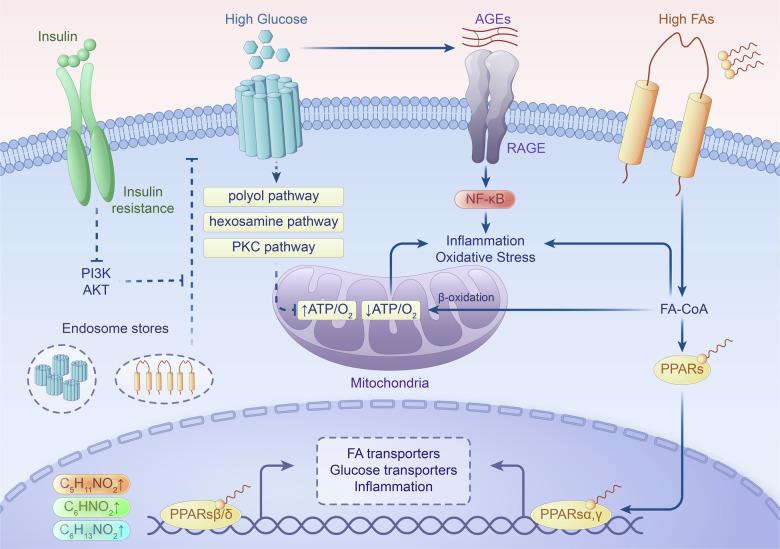
Metabolic aberrations are fundamental to the complex pathophysiology and challenges associated with diabetic wound healing. These alterations, induced by the diabetic environment, trigger a cascade of events that disrupt the normal wound-healing process. Key factors in this metabolic alternation include chronic hyperglycemia, insulin resistance, and dysregulated lipid and amino acid metabolism. In this review, we summarize the underlying mechanisms driving these metabolic changes in diabetic wounds, while emphasizing the broad implications of these disturbances. Additionally, we discuss therapeutic approaches that target these metabolic anomalies and how their integration with existing wound-healing treatments may yield synergistic effects, offering promising avenues for innovative therapies.
代谢异常是糖尿病伤口愈合相关复杂病理生理学及挑战的根本所在。由糖尿病环境引发的这些改变会触发一系列破坏正常伤口愈合过程的事件。这种代谢改变的关键因素包括慢性高血糖、胰岛素抵抗以及脂质和氨基酸代谢失调。在本综述中,我们总结了驱动糖尿病伤口这些代谢变化的潜在机制,同时强调了这些紊乱的广泛影响。此外,我们还讨论了针对这些代谢异常的治疗方法,以及它们与现有伤口愈合治疗方法的整合如何产生协同效应,为创新疗法提供了有前景的途径。


 Zotero 插件