
自闭症相关微小RNA的生物信息学分析及其作为自闭症表观遗传遗传生物标志物的潜力
Bioinformatic Analysis of Autism-Related miRNAs and Their PoTential as Biomarkers for Autism Epigenetic Inheritance.
作者信息
Acerbi da Silva Larissa Naísa, Stumpp Taiza
机构信息
Laboratory of Developmental Biology, Department of Morphology and Genetics-Paulista Medicine School, Federal University of São Paulo (UNIFESP), Sao Paulo 04021-001, Brazil.
出版信息
Genes (Basel). 2025 Mar 31;16(4):418. doi: 10.3390/genes16040418.
BACKGROUND/OBJECTIVES: The dysregulation of miRNA expression in samples from autistic individuals indicates that they are involved in autism. The participation of miRNAs in paternal epigenetic inheritance has also been reported. This study used bioinformatics tools to analyze the literature and genetic databases to search for miRNAs associated with autism, aiming to explore their suitability to investigate paternal epigenetic inheritance.
METHODS
Autism-related miRNAs were searched in public databases using bioinformatic tools (miRNA-to-genes analysis). The genes targeted by these autism-related miRNAs, which are common to neurons, sperm, and PBMCs, were identified. Enrichment analyses were performed to identify the biological processes regulated by the candidate miRNAs. Autism-related miRNAs were also identified by an inverse analysis (genes-to-miRNA analysis), starting from autism-related genes.
RESULTS
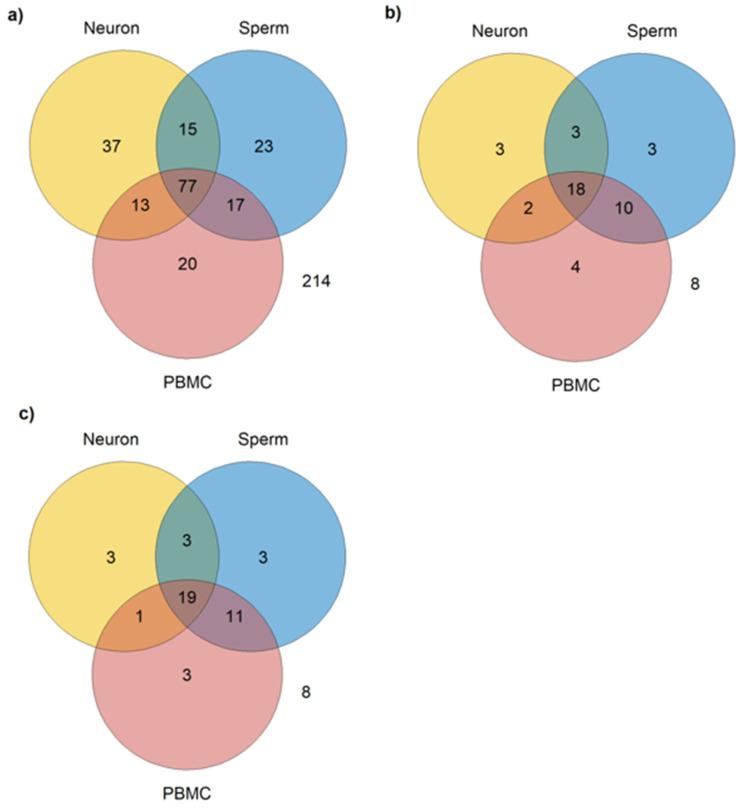
In the miRNA-to-gene analysis, 416 miRNAs involved in autism were found, of which 77 were expressed in sperm, PBMCs, and neurons. From these, 18 were differentially expressed in the brain and in at least one peripheral sample (saliva or blood), suggesting that they might be suitable to be used in the investigation of autism biomarkers and inheritance. In the genes-to-miRNA analysis, 36 miRNAs were identified, from which 9 coincided with the results of direct analysis.
CONCLUSIONS
Although there is no consensus about miRNAs related to autism, there are candidate miRNAs that show clear potential to be explored as biomarkers. The coincidence in the expression of miRNAs in sperm, neurons, and PBMCs indicates that they are valuable biological samples to study the role of miRNAs in the paternal epigenetic inheritance of autism.
背景/目的:自闭症个体样本中miRNA表达失调表明它们与自闭症有关。也有报道称miRNA参与父系表观遗传。本研究使用生物信息学工具分析文献和基因数据库,以寻找与自闭症相关的miRNA,旨在探索它们在研究父系表观遗传方面的适用性。
方法
使用生物信息学工具(miRNA-基因分析)在公共数据库中搜索与自闭症相关的miRNA。确定这些与自闭症相关的miRNA所靶向的、在神经元、精子和外周血单核细胞中共同存在的基因。进行富集分析以确定候选miRNA调控的生物学过程。还通过反向分析(基因- miRNA分析),从自闭症相关基因出发,鉴定与自闭症相关的miRNA。
结果
在miRNA-基因分析中,发现416个与自闭症相关的miRNA,其中77个在精子、外周血单核细胞和神经元中表达。其中,18个在大脑和至少一种外周样本(唾液或血液)中差异表达,表明它们可能适合用于自闭症生物标志物和遗传研究。在基因- miRNA分析中,鉴定出36个miRNA,其中9个与直接分析结果一致。
结论
虽然对于与自闭症相关的miRNA尚无共识,但有一些候选miRNA显示出作为生物标志物进行探索的明显潜力。miRNA在精子、神经元和外周血单核细胞中的表达一致性表明,它们是研究miRNA在自闭症父系表观遗传中作用的有价值的生物样本。



 Zotero 插件