
液体活检作为胶质母细胞瘤的诊断和监测工具
Liquid Biopsy as a Diagnostic and Monitoring Tool in Glioblastoma.
作者信息
Tataranu Ligia Gabriela
机构信息
Department of Neurosurgery, Carol Davila University of Medicine and Pharmacy, 020021 Bucharest, Romania.
Department of Neurosurgery, Bagdasar-Arseni Emergency Clinical Hospital, 041915 Bucharest, Romania.
出版信息
Medicina (Kaunas). 2025 Apr 13;61(4):716. doi: 10.3390/medicina61040716.
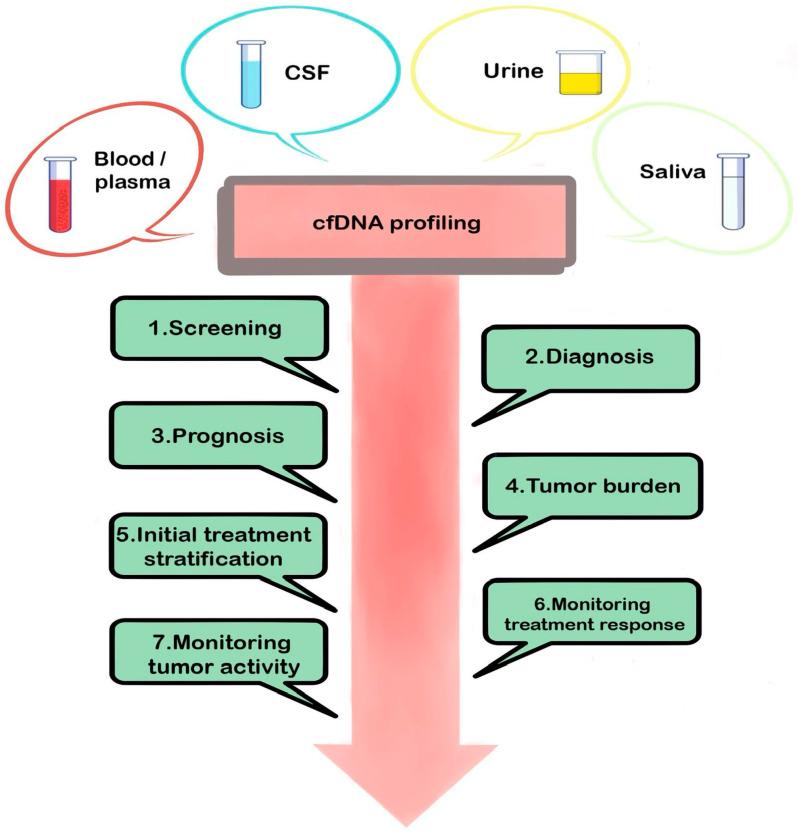
Glioblastoma (GBM) is the most prevalent and aggressive primary central nervous system (CNS) tumor in adults. GBMs exhibit genetic and epigenetic heterogeneity, posing difficulties in surveillance and being associated with high rates of recurrence and mortality. Nevertheless, due to the high infiltrating ability of glioblastoma cells, and regardless of the considerable progress made in radiotherapeutic, chemotherapeutic, and surgical protocols, the treatment of GBM is still inefficient. Conventional diagnostic approaches, such as neuroimaging techniques and tissue biopsies, which are invasive maneuvers, present certain challenges and limitations in providing real-time information, and are incapable of differentiating pseudo-progression related to treatment from real tumor progression. Liquid biopsy, the analysis of biomarkers such as nucleic acids (DNA/RNA), circulating tumor cells (CTCs), extracellular vesicles (EVs), or tumor-educated platelets (TEPs) that are present in body fluids, provides a minimally invasive and dynamic method of diagnosis and continuous monitoring for GBM. It represents a new preferred approach that enables a superior manner to obtain data on possible tumor risk, prognosis, and recurrence assessment. This article is a literature review that aims to provide updated information about GBM biomarkers in body fluids and to analyze their clinical efficiency.
胶质母细胞瘤(GBM)是成人中最常见且侵袭性最强的原发性中枢神经系统(CNS)肿瘤。胶质母细胞瘤表现出遗传和表观遗传异质性,这给监测带来困难,并与高复发率和死亡率相关。然而,由于胶质母细胞瘤细胞的高浸润能力,尽管在放射治疗、化学治疗和手术方案方面取得了显著进展,但胶质母细胞瘤的治疗仍然效率低下。传统的诊断方法,如神经影像学技术和组织活检(这些都是侵入性操作),在提供实时信息方面存在一定挑战和局限性,并且无法区分与治疗相关的假性进展和真正的肿瘤进展。液体活检是对存在于体液中的生物标志物进行分析,如核酸(DNA/RNA)、循环肿瘤细胞(CTC)、细胞外囊泡(EV)或肿瘤诱导血小板(TEP),它为胶质母细胞瘤提供了一种微创且动态的诊断和持续监测方法。它代表了一种新的首选方法,能够以更优的方式获取有关可能的肿瘤风险、预后和复发评估的数据。本文是一篇文献综述,旨在提供有关体液中胶质母细胞瘤生物标志物的最新信息,并分析其临床效率。

 Zotero 插件